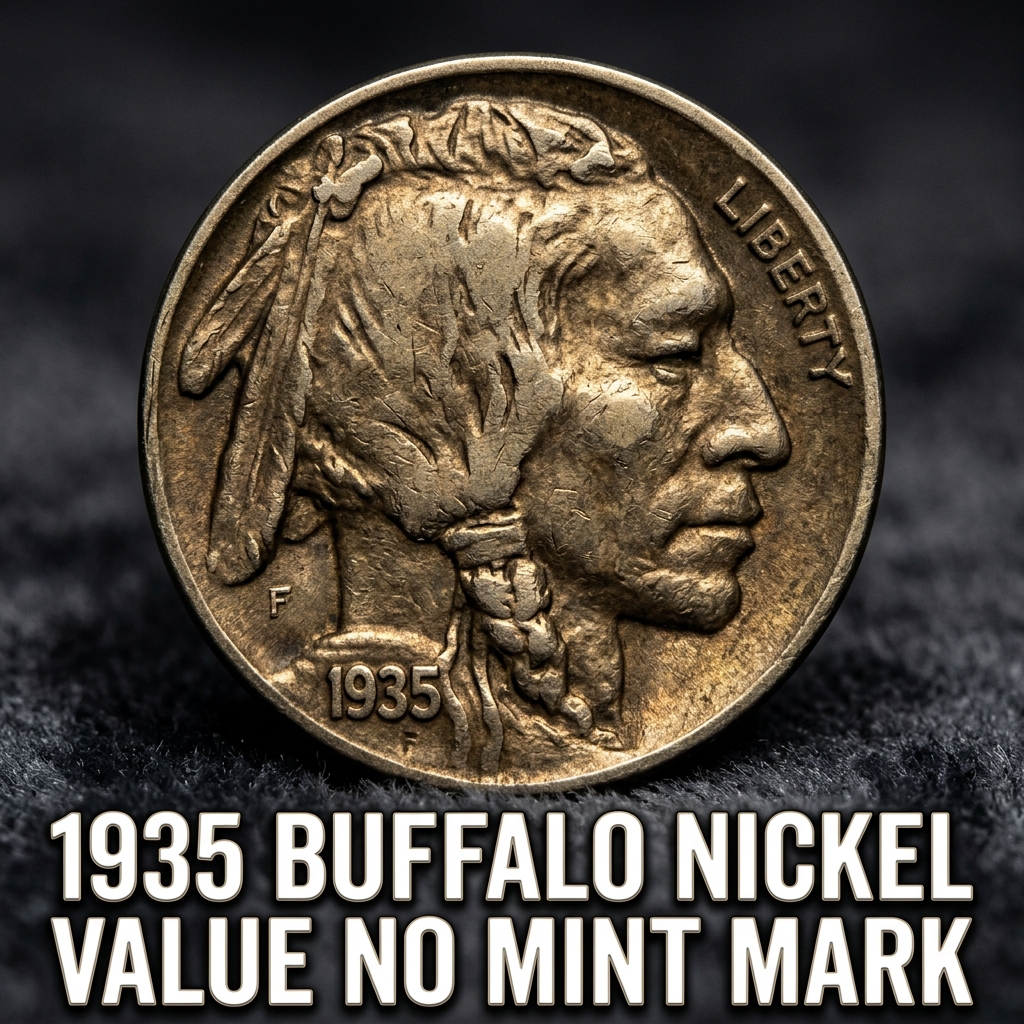

The 1935 Buffalo Nickel with no mint mark is worth anywhere from $1 to $2 in heavily worn condition, rising to $15–$30 in fine shape, and potentially $100 or more in uncirculated grades. If you pulled one of these out of an old jar or drawer, you might be holding onto something genuinely interesting — and possibly worth a little cash.
If you’re not sure which mint made your coin or what condition it’s in, the easiest first step is to use a free coin identifier app to scan it right from your phone. It takes about ten seconds and can point you in the right direction before you dig deeper.
—
What Makes the 1935 No Mint Mark Buffalo Nickel Special
The 1935 Buffalo Nickel without a mint mark was struck at the Philadelphia Mint, which was the largest producer of coins in the United States at the time. Philadelphia didn’t put a mint mark on its coins back then — so a blank space below the words “FIVE CENTS” on the reverse actually tells you something specific about where your coin came from.
That year, Philadelphia produced over 58 million Buffalo Nickels, making this a relatively common date compared to earlier issues. However, age alone makes it interesting. This coin is now nearly 90 years old, and finding one in decent condition is becoming less common as the years go by.
The Buffalo Nickel series, designed by James Earle Fraser, features a Native American portrait on the obverse and an American bison on the reverse. It’s one of the most beloved designs in U.S. coin history, which keeps collector demand steady even for the more common dates like 1935.
—
1935 Buffalo Nickel Value by Grade
Condition — or “grade” in coin collecting language — is the single biggest factor in determining what your coin is worth. A coin that looks beat up is worth a fraction of one that still shows sharp detail.
Here’s a quick look at typical values for the 1935 Philadelphia Mint Buffalo Nickel:
| Grade | Description | Estimated Value |
|---|---|---|
| Good (G-4) | Heavy wear, outlines visible | $1 – $2 |
| Fine (F-12) | Moderate wear, some detail | $6 – $12 |
| Extremely Fine (EF-40) | Light wear on high points | $18 – $30 |
| About Uncirculated (AU-55) | Slight wear, mostly sharp | $35 – $55 |
| Mint State (MS-63) | No wear, minor marks | $65 – $120 |
| Mint State (MS-65) | Gem quality, nearly flawless | $200+ |
For a more detailed breakdown of auction results and certified coin prices, you can review 1935 Buffalo Nickel MS grade price data across multiple auction records to see what real buyers have paid recently.
—
How to Tell What Grade Your Coin Is
You don’t need to be an expert to get a rough idea of your coin’s grade. Start by looking at the bison’s shoulder and hip — these are the highest points on the design and wear down first. If the shoulder looks flat and featureless, your coin is likely in Good or Fine condition.
Next, check the Native American’s cheekbone and hair braid. On a well-preserved coin, you’ll see individual strands of hair and clear facial features. If those details are mushy or gone, the coin has circulated heavily.
Look for any luster — that’s the faint sheen left from the original minting process. Coins that still have luster around the fields (the flat areas of the coin) are often in About Uncirculated or better grades, and those are where values start to climb significantly.
Using CoinKnow to photograph your coin in good lighting can help you see details you might miss with the naked eye, and the app’s grading guide walks you through what to look for step by step.
—
Are Any 1935 No Mint Mark Nickels Worth Big Money
For most people, the 1935 Buffalo Nickel no mint mark is a nice find but not a life-changing one. However, there are a few situations where values jump considerably.
Coins graded MS-66 or higher by professional grading services like PCGS or NGC have sold for $500 to over $1,000 at auction. The rarest certified examples in MS-67 condition have crossed $2,000. These extreme grades are exceptional — the coin has to have virtually no marks and full, original luster.
There’s also a 1935 doubled die variety that collectors watch for. On some coins, slight doubling is visible in the date or lettering under magnification. These varieties carry premiums if authenticated. For a full picture of what your specific 1935 Buffalo Nickel might fetch today, check out current 1935 nickel value estimates based on grade and mint mark — it’s a solid reference whether you’re buying, selling, or just curious.
CoinKnow also lets you scan varieties and compare your coin against known reference images, which is helpful if you suspect you’ve got something unusual.
—
FAQ
Q: How do I know if my 1935 Buffalo Nickel is from Philadelphia?
A: Look at the reverse of the coin just below “FIVE CENTS.” If there’s no mint mark there, it was made in Philadelphia. Denver coins show a “D” and San Francisco coins show an “S” in that spot.
Q: Is a 1935 Buffalo Nickel with no mint mark rare?
A: Not particularly — over 58 million were made at Philadelphia in 1935. But coins in high uncirculated grades are genuinely scarce, and those are the ones collectors pay a premium for.
Q: Should I clean my 1935 Buffalo Nickel before selling it?
A: No — please don’t clean it. Cleaning removes the original surface and actually lowers the value significantly. Even a coin that looks dirty is better left untouched. Collectors and dealers always prefer original, uncleaned coins.