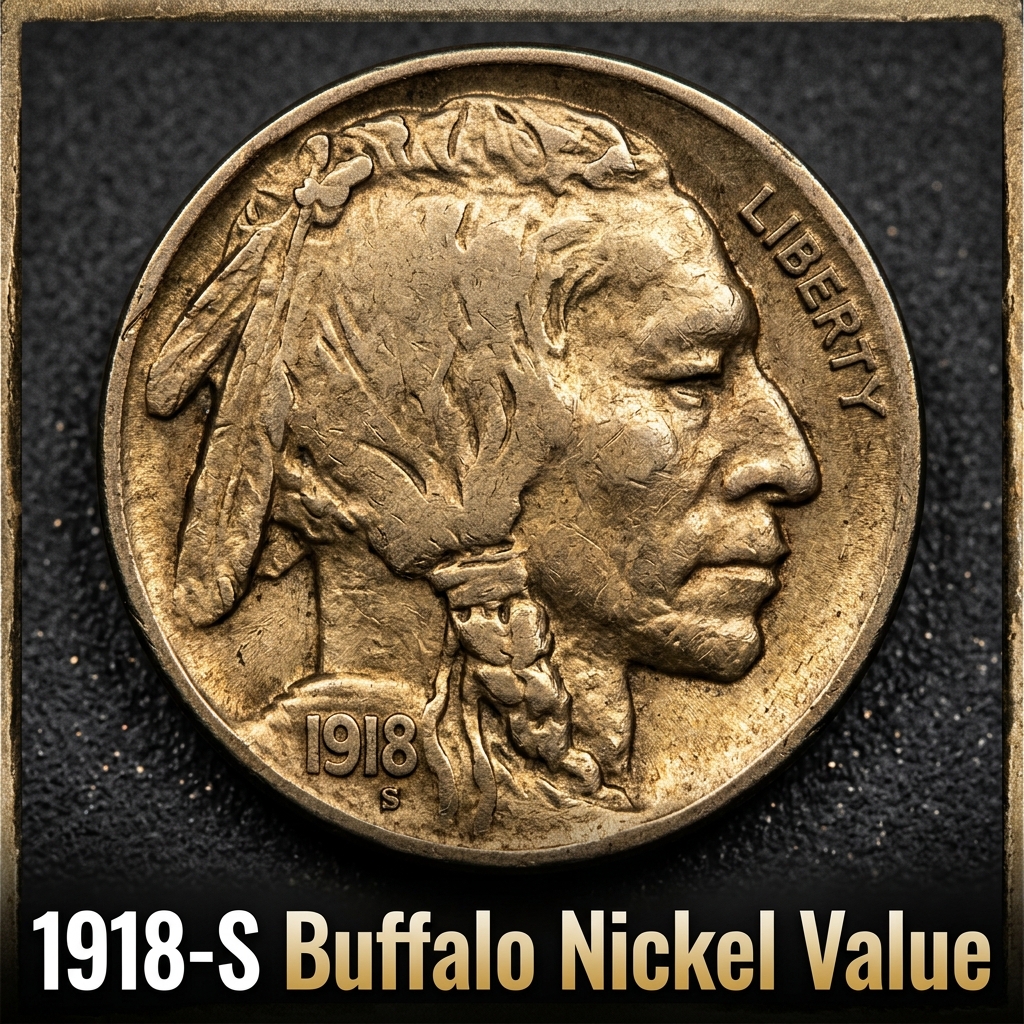

The 1918-S Buffalo Nickel is worth anywhere from $10 in heavily worn condition to over $2,000 or more in high mint state grades — and if you’ve got one sitting in an old jar or collection, it’s absolutely worth a closer look. This San Francisco-struck coin is one of the more sought-after issues in the Buffalo Nickel series, and collectors are always on the hunt for nice examples.
What Makes the 1918-S Buffalo Nickel Special?
The Buffalo Nickel, also called the Indian Head Nickel, was designed by sculptor James Earle Fraser and minted from 1913 to 1938. The “S” mintmark on the 1918 issue tells you it was struck at the San Francisco Mint, which gives it a bit of extra collector appeal compared to the Philadelphia issue.
In 1918, the U.S. Mint produced around 4.88 million Buffalo Nickels at San Francisco — a relatively modest mintage that helps support its value today. Coins from this era were heavily circulated, so finding one in decent condition is genuinely exciting.
If you’re not sure what you’ve got, a free coin identifier app can help you quickly figure out the date, mintmark, and grade range of your coin before you take it to a dealer or auction site. Tools like CoinKnow make this process incredibly easy, even if you’ve never looked at coins before.
1918-S Buffalo Nickel Value by Grade
The condition of your coin makes an enormous difference in what it’s worth. Coin grading runs from Poor (P-1) all the way up to Mint State 70 (MS-70), and even moving a few grades up can dramatically change the dollar amount.
Here’s a general value table for the 1918-S Buffalo Nickel based on grade:
| Grade | Description | Estimated Value |
|---|---|---|
| G-4 (Good) | Heavy wear, major features visible | $10 – $20 |
| VG-8 (Very Good) | Moderate wear, some detail | $20 – $40 |
| F-12 (Fine) | Even wear, legends clear | $40 – $75 |
| VF-20 (Very Fine) | Light to moderate wear | $75 – $150 |
| EF-40 (Extremely Fine) | Slight wear on high points | $150 – $300 |
| MS-63 (Mint State) | No wear, some marks | $600 – $1,200 |
| MS-65 (Gem Mint State) | Strong luster, minimal marks | $2,000+ |
For the most current auction records and certified coin sales, you can check out recent 1918-S Buffalo Nickel prices in mint state grades to see what collectors are actually paying right now.
How to Tell What Grade Your 1918-S Nickel Is In
Grading coins takes a bit of practice, but there are some quick things to look for on a Buffalo Nickel. Start with the bison on the reverse — specifically the horn and the fur details on its hump. On a Good-grade coin, the horn is nearly flat. On a Very Fine coin, you’ll see clear separation in the fur lines.
On the obverse, check the cheekbone and hair braid of the Native American portrait. The more detail you can see, the higher the grade.
One thing to watch out for: many 1918-S nickels have weak strikes due to the die and planchet pressures at the San Francisco Mint during that era. A weakly struck MS-64 might actually look like a worn Fine to an untrained eye — so don’t undersell your coin before getting a second opinion.
CoinKnow is a great app for getting a quick grade estimate at home using just your phone camera. It’s helped thousands of everyday people figure out whether their old coins are worth more than face value.
Where to Sell Your 1918-S Buffalo Nickel
If you’ve determined your coin is in decent shape, there are several solid options for selling. eBay is the most accessible marketplace, but you’ll face competition and fees. PCGS and NGC are the top coin grading services — having your coin professionally graded (“slabbed”) in a plastic holder can significantly increase buyer confidence and selling price.
Local coin dealers are another option if you want cash quickly, though they’ll typically offer 50–70% of retail value. For coins in higher grades (EF and above), submitting to auction through Heritage Auctions or Stack’s Bowers can yield top dollar.
You can also check a detailed breakdown of the 1918 nickel’s value across all mint marks and grades to compare how the “S” version stacks up against the Philadelphia and Denver issues before you decide to sell.
Is the 1918-S Buffalo Nickel Rare?
The 1918-S isn’t considered a key date, but it’s definitely a semi-key issue in the Buffalo Nickel series. With under 5 million produced and most of those heavily worn from everyday use over a century ago, coins in problem-free, higher circulated grades are genuinely scarce.
In mint state, it becomes quite rare. PCGS population reports show relatively few MS-65 examples certified, which explains why gem-quality specimens fetch strong premiums.
If you’re building a Buffalo Nickel set, the 1918-S is one of those coins you’ll need — and one you’ll be proud to own. And if you just found one in grandma’s change drawer, you might be sitting on a nice little windfall.
CoinKnow can help you document your find, estimate its grade, and connect you with current market data all in one place — no coin expertise required.
—
FAQ
Q: How do I find the mintmark on my 1918 Buffalo Nickel?
A: Flip the coin to the reverse side. The mintmark — either “D” for Denver or “S” for San Francisco — is located just below the words “FIVE CENTS” on the lower right area of the bison’s body. Philadelphia-minted coins have no mintmark.
Q: Is a 1918-S Buffalo Nickel with no date still worth anything?
A: Yes, even dateless Buffalo Nickels have some value — usually $1 to $3 — because they’re still 75% copper and 25% nickel. However, the date is essential for full collector value, so a readable 1918-S is far more desirable.
Q: Should I clean my 1918-S Buffalo Nickel before selling it?
A: Absolutely not. Cleaning a coin — even with a gentle cloth — removes the natural patina and can drastically reduce its value. Collectors and dealers always prefer original, uncleaned coins, even if they look a little dark or dingy. Leave it as-is and let a professional assess it.