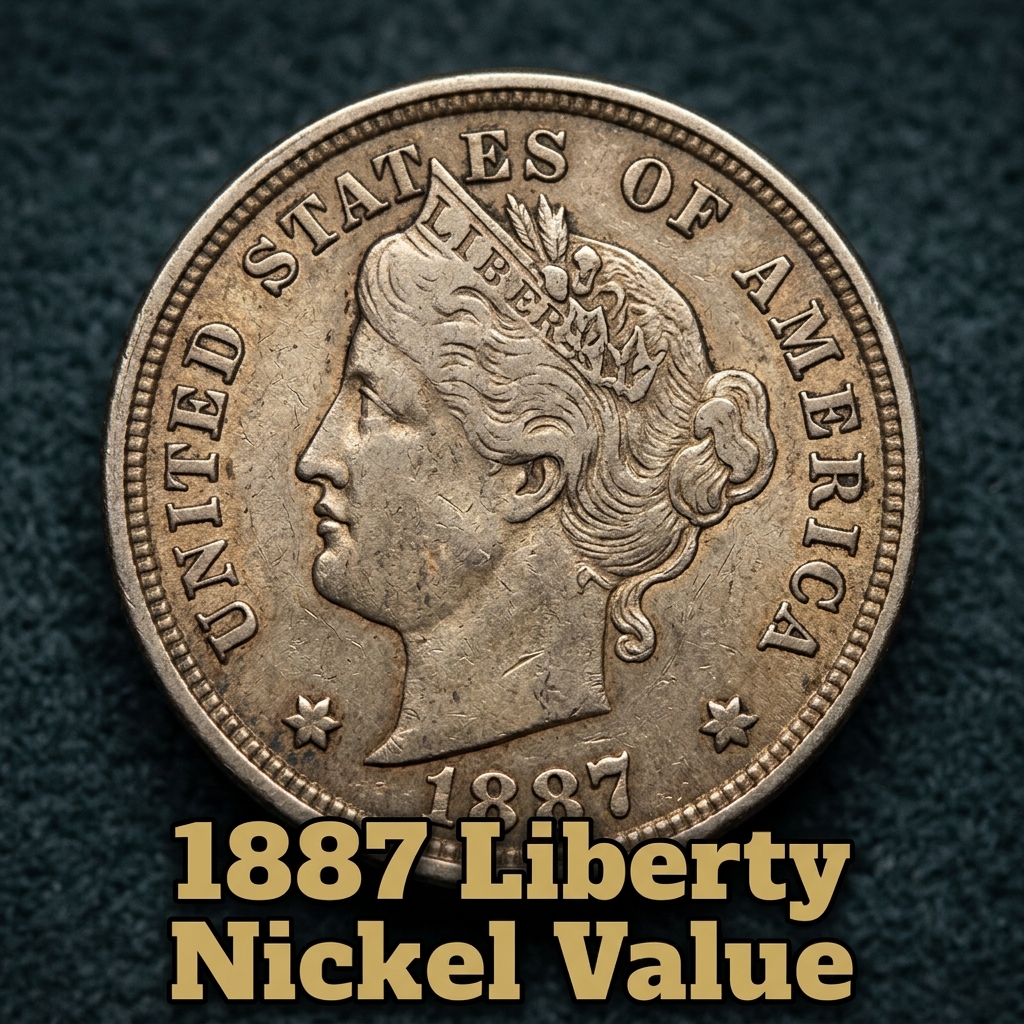

The 1887 Liberty Nickel is worth anywhere from $2 in heavily worn condition to over $200 or more in higher mint state grades. If you’ve found one of these old nickels tucked away in a coin jar or inherited collection, you might be sitting on something more valuable than you’d expect.
What Is the 1887 Liberty Nickel?
The 1887 Liberty Nickel is part of the Liberty Head nickel series, also known as the “V Nickel” because of the Roman numeral “V” on the reverse side. Designed by Charles Barber, this coin was minted at the Philadelphia Mint and contains no silver — it’s made of 75% copper and 25% nickel.
These coins were in everyday circulation during the late 1800s, which means most surviving examples show significant wear. That said, well-preserved specimens are genuinely sought after by collectors. If you’re not sure what you’re holding, using a free coin identifier app is a quick and easy way to get a starting point before diving deeper into valuation.
Understanding the grade of your coin is the single most important factor in determining its value, so let’s break that down clearly.
1887 Liberty Nickel Value by Grade
Coin values vary significantly depending on condition. Collectors use a grading scale from Poor (P-1) all the way to Perfect Mint State (MS-70). For the 1887 Liberty Nickel, here’s what you can generally expect:
| Grade | Condition Description | Estimated Value |
|---|---|---|
| Good (G-4) | Heavy wear, major details visible | $2 – $5 |
| Fine (F-12) | Moderate wear, all lettering clear | $10 – $20 |
| Extremely Fine (EF-40) | Light wear on high points | $40 – $70 |
| About Uncirculated (AU-55) | Slight friction, nearly full luster | $80 – $130 |
| Mint State (MS-63) | Uncirculated, minor contact marks | $175 – $250+ |
For the most up-to-date auction results and certified coin prices, you can check out 1887 Liberty Nickel mint state price data to see how recent sales are trending across different grade levels.
How Many Were Minted and Does That Matter?
The Philadelphia Mint produced approximately 15,263,652 Liberty Nickels in 1887. That’s a fairly large mintage for the era, which is one reason why circulated examples in lower grades remain affordable for most collectors.
However, large mintage doesn’t always mean low value. What matters more is how many coins survived in collectible condition.
Most 1887 Liberty Nickels saw heavy use in commerce. Finding one in Extremely Fine or better condition is genuinely uncommon, and in mint state, they’re hard to come by without paying a premium. The 1887 issue is not considered a rare date, but quality examples absolutely command real money.
CoinKnow is a great tool to scan your coin and instantly compare it against a database of known grades and recent sales — it takes the guesswork out of figuring out what you’ve got.
What Affects the Value of Your 1887 Liberty Nickel
Beyond grade, a few other factors influence what your coin might sell for:
Luster and eye appeal — Coins with original, unclean surfaces and natural luster consistently sell for more than cleaned or polished coins. If someone has wiped your coin with a cloth or soaked it in a cleaning solution, that can reduce its value significantly, even if it “looks” shinier.
Strike quality — Some 1887 nickels were struck with more detail than others. A sharply struck coin with full hair detail on Liberty’s portrait will always attract more buyer interest.
Certification — A coin graded and encapsulated by PCGS or NGC is easier to sell and typically fetches a higher price than a raw (ungraded) coin. If you think your 1887 Liberty Nickel is in AU or better condition, professional grading is worth considering.
If you’re curious how the Liberty Nickel’s value compares to other late 19th-century coins, you might also find it helpful to browse 1887 silver dollar value and pricing information — it puts the era’s coin market into useful perspective.
Should You Clean or Sell Your 1887 Liberty Nickel?
The number one mistake new collectors make is cleaning their old coins. Never clean a coin you think might be valuable. Cleaning removes the natural patina that collectors and graders look for, and it permanently damages the surface under magnification — even if it’s invisible to the naked eye.
If you’re thinking about selling, options include local coin shops, online platforms like eBay or Heritage Auctions, and coin shows. Always get more than one opinion before selling.
CoinKnow can help you identify your coin, estimate a rough grade, and understand the current market before you walk into any shop or list it online. It’s one of the smartest first steps you can take.
FAQ
Q: Is the 1887 Liberty Nickel made of silver?
A: No. Despite its silver appearance, the 1887 Liberty Nickel is made of 75% copper and 25% nickel. It contains no silver at all.
Q: How do I know if my 1887 Liberty Nickel is worth getting professionally graded?
A: If your coin appears to be in About Uncirculated (AU) or Mint State condition — meaning it shows little to no wear — professional grading from PCGS or NGC is usually worth the cost. For heavily worn circulated coins, grading fees may not be justified given the lower value. Use CoinKnow to get a quick preliminary assessment before spending money on grading services.
Q: Where is the mint mark on the 1887 Liberty Nickel?
A: The 1887 Liberty Nickel was only produced at the Philadelphia Mint, which did not use a mint mark at the time. So there is no mint mark on this coin — that’s completely normal and expected.