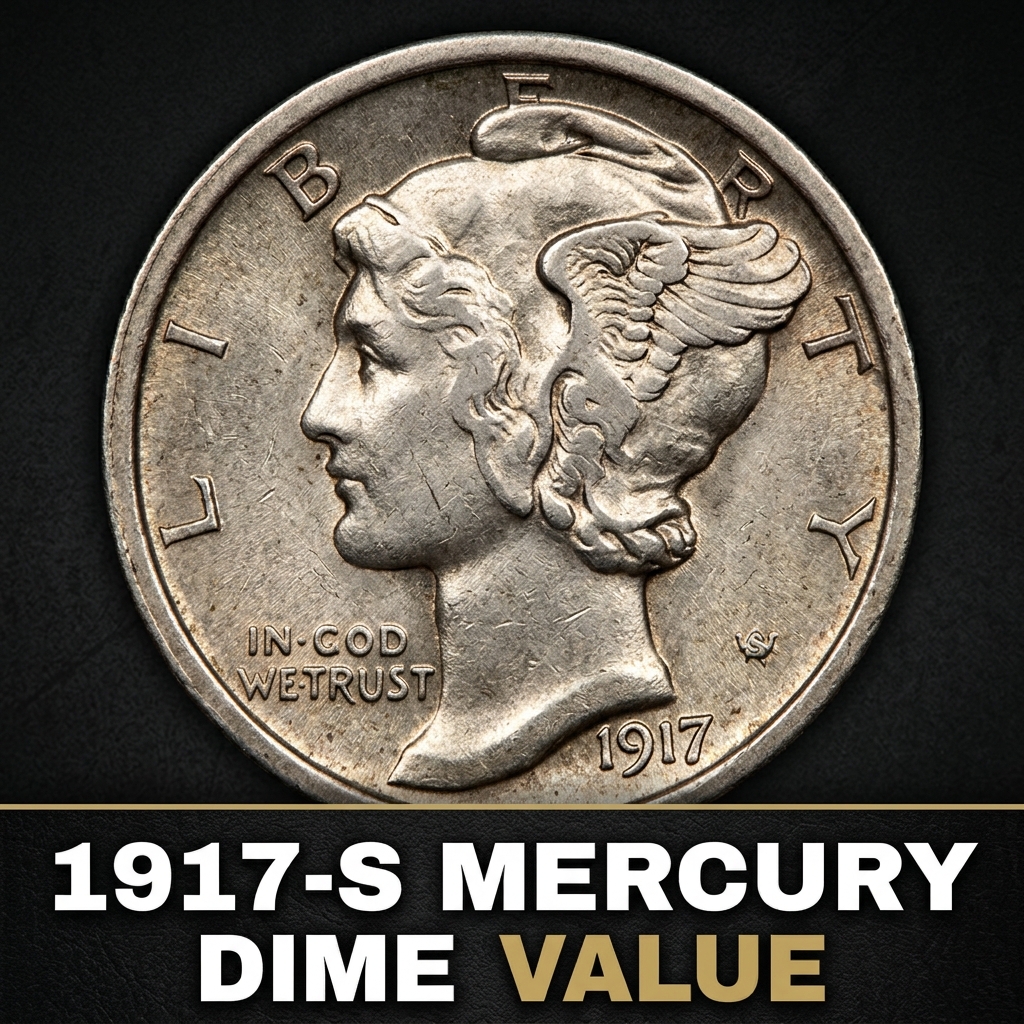

The 1917-S Mercury Dime is worth anywhere from $4 to $10 in heavily worn condition, but well-preserved examples can fetch $30 to $80 or more — and gem-quality specimens have sold for hundreds of dollars at auction. If you found one of these small silver coins, keep reading to find out exactly what you’ve got.
What Makes the 1917-S Mercury Dime Special
The 1917-S Mercury Dime was struck at the San Francisco Mint during the very first year the Mercury Dime design was produced — a milestone in American coin history. Designed by Adolph Weinman, the obverse features Liberty wearing a winged cap, often mistaken for the Roman god Mercury (hence the nickname).
The “S” mintmark on the reverse, tucked just to the left of the fasces bundle, tells you this coin was made in San Francisco. San Francisco produced 27,330,000 Mercury Dimes in 1917, which makes it more common than some other branch mint issues but still a coin worth examining closely.
Its 90% silver composition alone gives it real melt value, and collectors prize the 1917 issue for being a first-year coin. If you’re trying to figure out what you’ve got in your hand, a free coin identifier app can help you read mintmarks and grade the condition before you do anything else.
1917-S Mercury Dime Value by Grade
Condition is everything with old dimes. Mercury Dimes circulated for decades, and most surviving examples show significant wear. Here’s a general breakdown of what you can expect:
| Grade | Description | Estimated Value |
|---|---|---|
| Good (G-4) | Heavy wear, design visible but flat | $4 – $6 |
| Very Good (VG-8) | Moderate wear, some detail remains | $6 – $9 |
| Fine (F-12) | Light wear on high points | $9 – $15 |
| Very Fine (VF-20/30) | Moderate detail, sharp features visible | $15 – $30 |
| Extremely Fine (EF-40) | Light wear on highest points only | $30 – $55 |
| About Uncirculated (AU-50) | Slight friction, nearly full luster | $55 – $90 |
| Mint State (MS-63+) | No wear, full luster, minor marks | $100 – $300+ |
For the most current auction results and dealer pricing, you can check out detailed 1917-S Mercury Dime price data across mint state grades to see how the market is trending right now.
How to Tell If Your 1917-S Mercury Dime Is the Real Deal
First, check the mintmark. Flip the coin over and look on the reverse, to the left of the “ONE DIME” text near the bottom. A small “S” confirms it’s the San Francisco issue. No mintmark means it was struck in Philadelphia; a “D” means Denver.
Next, look at the bands on the fasces (the bundle of rods on the reverse). Collectors specifically look for “Full Bands” (FB) — two fully separated horizontal bands crossing the center of the fasces. A Full Bands designation can dramatically increase a coin’s value, sometimes doubling or tripling what a standard example fetches at the same grade.
CoinKnow is a great tool for this. Just snap a photo of your coin and the app can help identify mintmarks, highlight key design details, and give you a ballpark condition assessment — especially useful if you’re new to coin grading.
Is the 1917-S Mercury Dime Worth Getting Graded?
If your coin looks uncirculated or close to it — strong luster, no visible wear, sharp design details — professional grading by PCGS or NGC could absolutely be worth the cost. A certified MS-65 Full Bands example has sold for well over $500 at major auction houses.
For circulated coins in Good to Fine condition, the cost of grading usually outweighs the benefit unless you suspect you have a rare variety or error coin. For a broader look at what the 1917 Mercury Dime is worth across all mint facilities, including Philadelphia and Denver issues, comparing the three can help you put your S-mint coin in context.
CoinKnow makes this comparison easy — you can pull up multiple Mercury Dime dates and mintmarks side by side and see current market values without digging through auction archives manually.
Silver Melt Value and Why It Matters
Even a heavily worn 1917-S Mercury Dime isn’t worthless. Each coin contains approximately 0.0723 troy ounces of pure silver. With silver hovering around $28–$30 per ounce (prices vary), the raw metal value alone is roughly $2.00 to $2.20 per coin.
That’s your floor. No matter how beat up the coin looks, it’s always worth at least that much in silver. Coins in better condition carry a collector premium well above melt value, which is why condition matters so much when pricing these old dimes.
—
Frequently Asked Questions
Q: How do I know if my 1917-S Mercury Dime has Full Bands?
A: Look at the reverse of the coin and locate the fasces — the bundle of rods bound together. In the center, there are two horizontal bands crossing them. If those bands are fully separated and clearly defined, the coin qualifies as Full Bands (FB). This detail significantly increases value in mint state grades. CoinKnow can help you identify this feature from a photo if you’re not sure what you’re looking for.
Q: What’s the difference between the 1917 Philadelphia, Denver, and San Francisco Mercury Dimes?
A: The main differences are mintmark and mintage numbers. Philadelphia (no mintmark) struck the most coins in 1917. Denver (“D”) and San Francisco (“S”) are branch mint issues. The 1917-D is generally considered slightly more valuable than the 1917-S in mid-grades, but all three are popular first-year coins among Mercury Dime collectors.
Q: Should I clean my 1917-S Mercury Dime before selling it?
A: No — never clean an old coin. Cleaning removes the natural patina and surface metal, which destroys collector value and can turn a $50 coin into a $5 coin instantly. Even if the coin looks dirty or dull, leave it alone. Buyers and grading services can spot cleaning immediately, and it significantly lowers what dealers and collectors will pay.