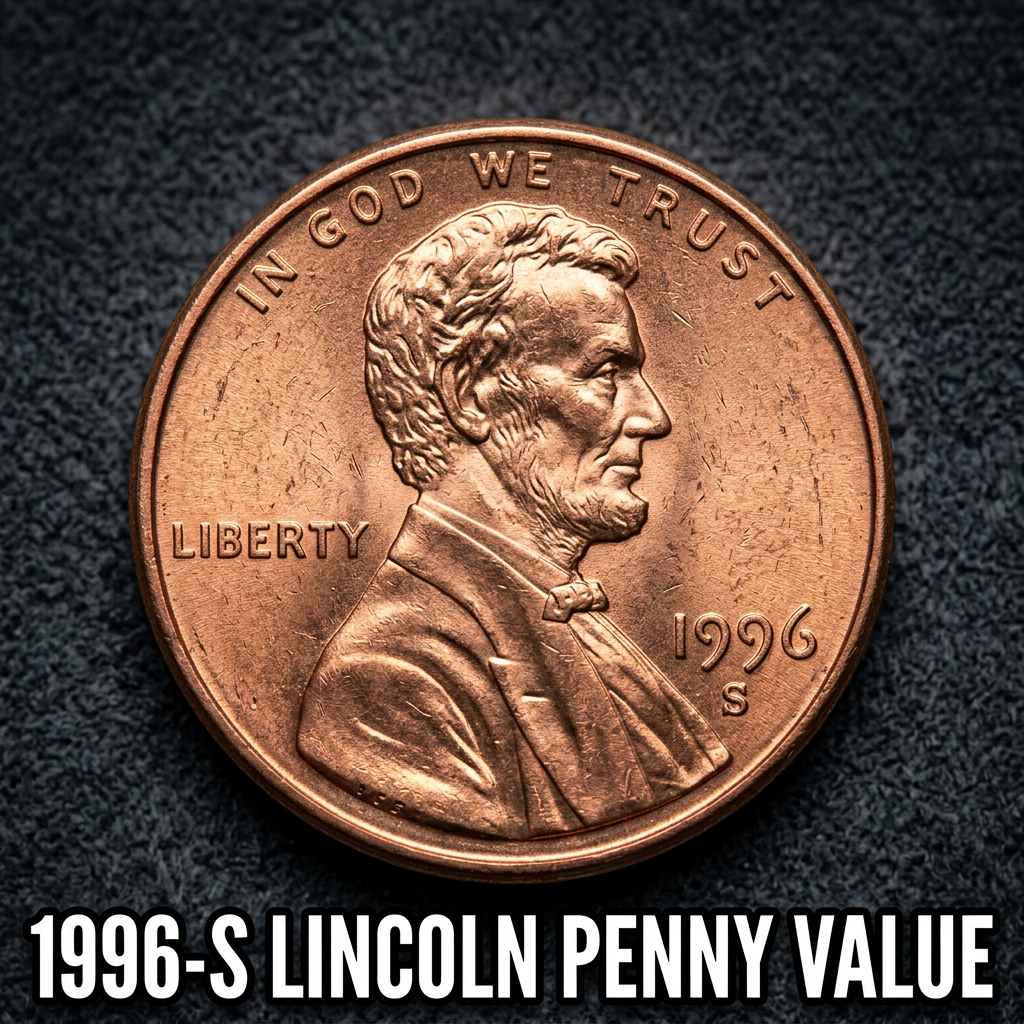

The 1996-S Lincoln Penny is worth anywhere from $1 to $5 in average circulated condition, but proof versions — which is what the “S” mintmark is all about — can fetch $5 to $15 or more depending on their grade and preservation. If you found one of these in a old coin collection or coin folder, you’re in for a pleasant surprise.
free coin identifier app tools have made it easier than ever for everyday people to identify coins like the 1996-S Lincoln Penny without needing to visit a coin shop. Just snap a photo and get an instant read on what you’re holding.
—
What Is the 1996-S Lincoln Penny?
The “S” mintmark on a Lincoln Penny tells you the coin was struck at the San Francisco Mint. In 1996, the San Francisco Mint did not produce pennies for everyday circulation — instead, it made proof coins intended specifically for collectors.
These proof coins were sold as part of the 1996 Proof Set, a packaged set of coins with mirror-like finishes and sharp details. They weren’t meant to be spent at the grocery store. That’s why finding one in circulation is unusual, and if you do have one, it’s worth keeping in good condition.
The 1996-S Lincoln Cent had a mintage of about 2,525,265 coins — not extremely rare, but far fewer than the billions of pennies produced at Philadelphia or Denver that same year. Rarity plays a big role in coin values, and anything made in San Francisco during this era was aimed at the collector market.
—
1996-S Lincoln Penny Value by Grade
Condition is everything when it comes to coin values. Proof coins are graded on the same 1–70 Sheldon scale as regular coins, but they also carry designations like PR (Proof) or DCAM (Deep Cameo) that affect their price significantly.
Here’s a simple breakdown of what 1996-S Lincoln Penny values look like across different grades:
| Grade | Designation | Estimated Value |
|---|---|---|
| PR 65 | Proof | $2 – $4 |
| PR 67 | Proof | $4 – $7 |
| PR 69 | Deep Cameo (DCAM) | $8 – $15 |
| PR 70 | Deep Cameo (DCAM) | $20 – $50+ |
A PR 70 Deep Cameo coin is essentially perfect — no flaws whatsoever under magnification. Those are hard to find and command the highest prices. For most collectors, a PR 69 DCAM is the sweet spot between quality and value.
You can explore detailed 1996 Lincoln Penny price data by grade and condition to see how the market has been moving for this coin.
—
What Makes a 1996-S Penny Worth More?
Several factors can push the value of your 1996-S Lincoln Penny above the typical range. The most important is the Deep Cameo finish — coins with frosted portrait relief against mirror-like fields are more desirable and valuable than standard proof coins.
Professional grading is another major factor. If your coin is certified by PCGS or NGC in a tamper-evident holder with a verified grade, collectors will pay significantly more than for a raw ungraded coin. A raw PR 69 coin might sell for $8 on a good day, but a slabbed PCGS PR 69 DCAM might easily clear $12–$20.
Error coins are rare but worth knowing about. Some 1996-S pennies have been found with die cracks, doubling, or other striking anomalies. If you notice something unusual — like a doubled Lincoln portrait or an off-center strike — definitely get that looked at by a professional before assuming it’s nothing.
CoinKnow is a great resource for understanding how these factors interact. The app gives you a full breakdown of what drives a coin’s value so you’re never in the dark.
—
How to Tell If Your Penny Is the 1996-S Version
Flip your penny over and look just below Lincoln’s portrait on the obverse (heads side). You’ll see a small letter — if it’s an “S,” you’ve got a San Francisco Mint coin. If there’s no letter, it’s a Philadelphia coin. If it’s a “D,” it came from Denver.
The 1996-S should also look noticeably different from a regular penny. Proof coins have a high-gloss mirror surface that standard circulation coins simply don’t have. If your coin looks shiny and almost reflective, like a small mirror with Lincoln on it, that’s a good sign it’s a proof.
For a full overview of 1996 penny values including all mint marks and conditions, checking a reliable coin value reference is always your best starting point.
If you’re still not sure, use CoinKnow to snap a photo of your coin and get an AI-powered identification in seconds — no experience required.
—
FAQ
Q: Is the 1996-S Lincoln Penny rare?
A: It’s not extremely rare, with over 2.5 million minted, but it’s much less common than regular circulation pennies from Philadelphia or Denver. Because it was only made for collector sets, finding one in circulation is unusual, and high-grade examples with Deep Cameo designation are genuinely scarce.
Q: Can I spend my 1996-S penny as regular money?
A: Technically yes — it’s still legal tender worth one cent. But you’d be throwing away a coin worth several dollars or more. If it’s in proof condition with that mirror-like finish, it’s definitely worth holding onto or selling to a collector instead.
Q: How do I get my 1996-S Lincoln Penny graded?
A: You can submit your coin to PCGS (Professional Coin Grading Service) or NGC (Numismatic Guaranty Company) for official grading. There’s a fee involved, so it makes most sense for coins you believe are in near-perfect condition. In the meantime, CoinKnow can help you estimate your coin’s grade before you decide whether professional certification is worth it.