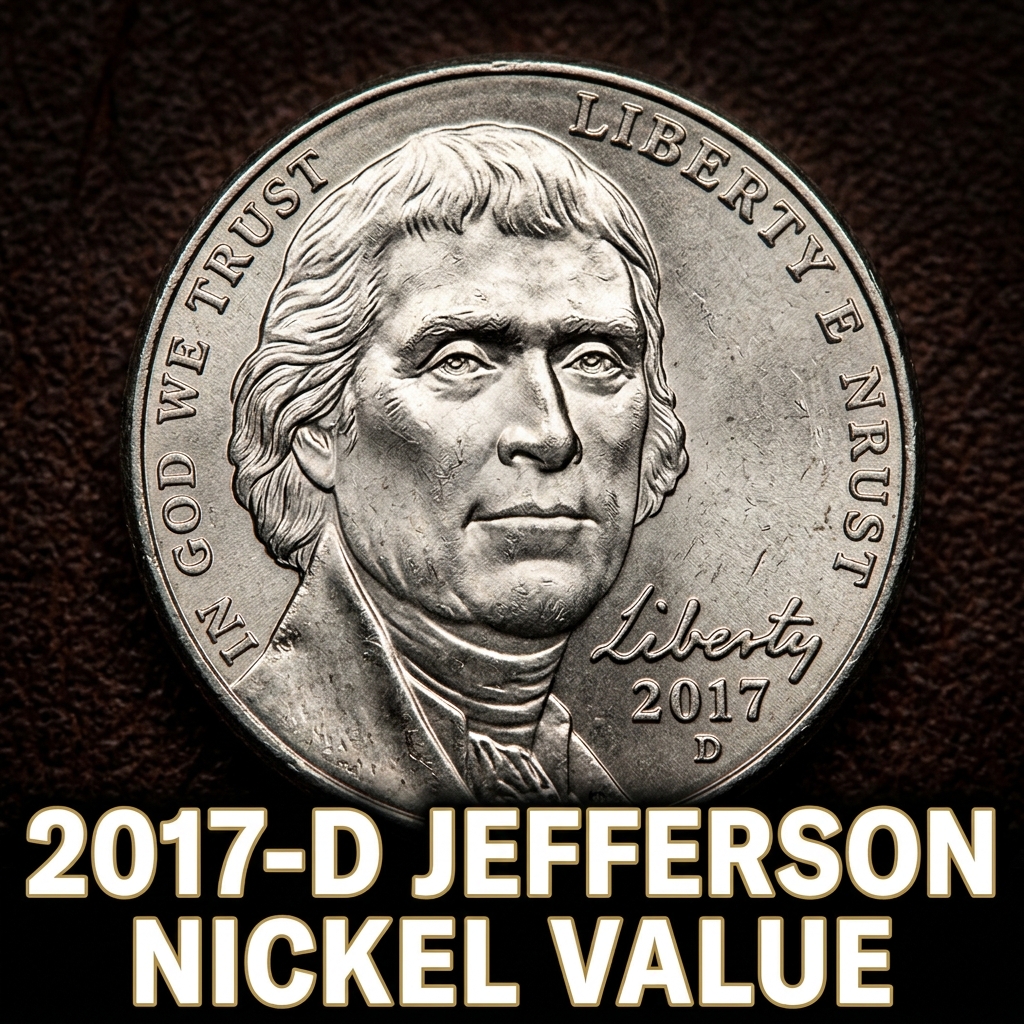

The 2017-D Jefferson Nickel is worth anywhere from face value (5 cents) in circulated condition to around $1–$3 or more in uncirculated mint state. If you found one in your change or an old coin jar, here’s everything you need to know about what makes it valuable — and whether yours could be worth holding onto.
What Is the 2017-D Jefferson Nickel?
The 2017-D Jefferson Nickel was minted at the Denver Mint, which is why it carries the small “D” mintmark on the obverse (front) of the coin, just to the right of Jefferson’s portrait. Denver produced hundreds of millions of these coins for general circulation, so they’re not rare by any stretch.
That said, condition matters more than most people realize. A heavily worn coin pulled from change is basically worth five cents. But a pristine, uncirculated example — especially one with full steps visible on Monticello’s porch — can command a real premium among collectors.
If you’re not sure what you’re looking at, you can use a free coin identifier app to get a quick read on your coin before doing a deeper dive into its value.
How Much Is a 2017-D Jefferson Nickel Worth?
For most people, a 2017-D Jefferson Nickel found in everyday change is simply worth five cents. Circulation wears down the fine details quickly, and without those details — particularly the steps on the Monticello reverse — collectors aren’t going to pay a premium.
However, if your coin was never used and has been stored carefully, the story changes. Coins graded MS65 or higher by professional grading services like PCGS or NGC can sell for anywhere from $1 to $5+, with top-grade Full Steps examples occasionally pushing higher at auction.
The key grading levels to understand are:
| Grade | Description | Estimated Value |
|---|---|---|
| Circulated (G–VF) | Worn, used in everyday transactions | Face value ($0.05) |
| MS63 | Uncirculated with some blemishes | $0.25–$0.75 |
| MS65 | Gem uncirculated, sharp details | $1–$3 |
| MS66+ Full Steps | Top grade with full Monticello steps | $5–$20+ |
You can explore detailed 2017 Jefferson Nickel price data across multiple grade levels to get a clearer picture of where your coin might fall on the value scale.
What Makes a 2017-D Nickel More Valuable — Full Steps Explained
One of the most important factors in valuing a Jefferson Nickel is whether Monticello’s steps are fully visible on the reverse. These are the steps on the building’s front porch, and they require a sharp, well-struck coin to show clearly.
Coins designated “Full Steps” (FS) by grading services are worth significantly more than standard examples in the same grade. Even a minor difference — say, MS65 vs. MS65FS — can mean two or three times the market value.
This is the kind of detail that separates a coin worth a dollar from one worth twenty. Most coins in circulation will never qualify because the steps wear away almost immediately. If your coin looks fresh and untouched, it’s worth examining closely or having it professionally assessed.
CoinKnow is a great tool for learning about coin grading terminology like Full Steps before you take your coin to a dealer or submit it to a grading service.
How Many 2017-D Jefferson Nickels Were Minted?
The Denver Mint produced approximately 1.26 billion Jefferson Nickels in 2017 across both the D and P mint facilities. That’s a staggering number, which is why 2017-D nickels are extremely common in circulation.
High mintage means low rarity, and low rarity generally means low collector value for average specimens. This is a modern coin with no shortage of supply, so don’t expect to retire on one unless you happen to have a pristine, top-graded example with Full Steps.
That said, error coins are a different matter entirely. Coins with die cracks, doubled dies, off-center strikes, or other mint errors can be worth considerably more regardless of mintage. Always inspect your coins carefully for anything unusual.
For a full breakdown of what your 2017 nickel is worth based on its condition and variety, it’s worth checking a dedicated coin value resource before selling or trading.
Should You Keep Your 2017-D Jefferson Nickel?
Honestly, if your coin came straight out of your pocket change, it’s probably worth face value. But coins in truly exceptional condition — those that were never circulated, stored in rolls or mint sets, and show all the fine details clearly — are worth keeping or at least investigating further.
If you’re just getting into coin collecting, the 2017-D Jefferson Nickel is a great low-stakes starting point. You can learn about grading, mintmarks, and Full Steps designations without spending much money at all.
CoinKnow makes it easy to track the coins in your collection and stay updated on current market values. And if you’re building a date set of Jefferson Nickels, the 2017-D is an affordable must-have.
For quick coin identification and value lookups on the go, CoinKnow gives you instant access to a database of thousands of U.S. coins — perfect for anyone just starting to explore the hobby.
FAQ
Q: Is the 2017-D Jefferson Nickel rare?
A: No, it is not rare. Over a billion were minted in 2017 between the Denver and Philadelphia facilities. Most are worth only face value unless they are in pristine uncirculated condition, particularly with Full Steps.
Q: What does the “D” mintmark mean on a 2017 nickel?
A: The “D” stands for Denver, indicating the coin was struck at the U.S. Mint’s Denver facility. You’ll find the mintmark on the obverse of the coin, to the right of Jefferson’s portrait. Philadelphia-minted coins from the same year carry a “P” mintmark.
Q: How do I know if my 2017-D nickel has Full Steps?
A: Full Steps refers to the complete visibility of the five or six steps on the Monticello building on the reverse side of the coin. To qualify, no steps can be obscured by a weak strike or wear. Use a magnifying glass to check, or submit the coin to a professional grading service like PCGS or NGC for an official designation.