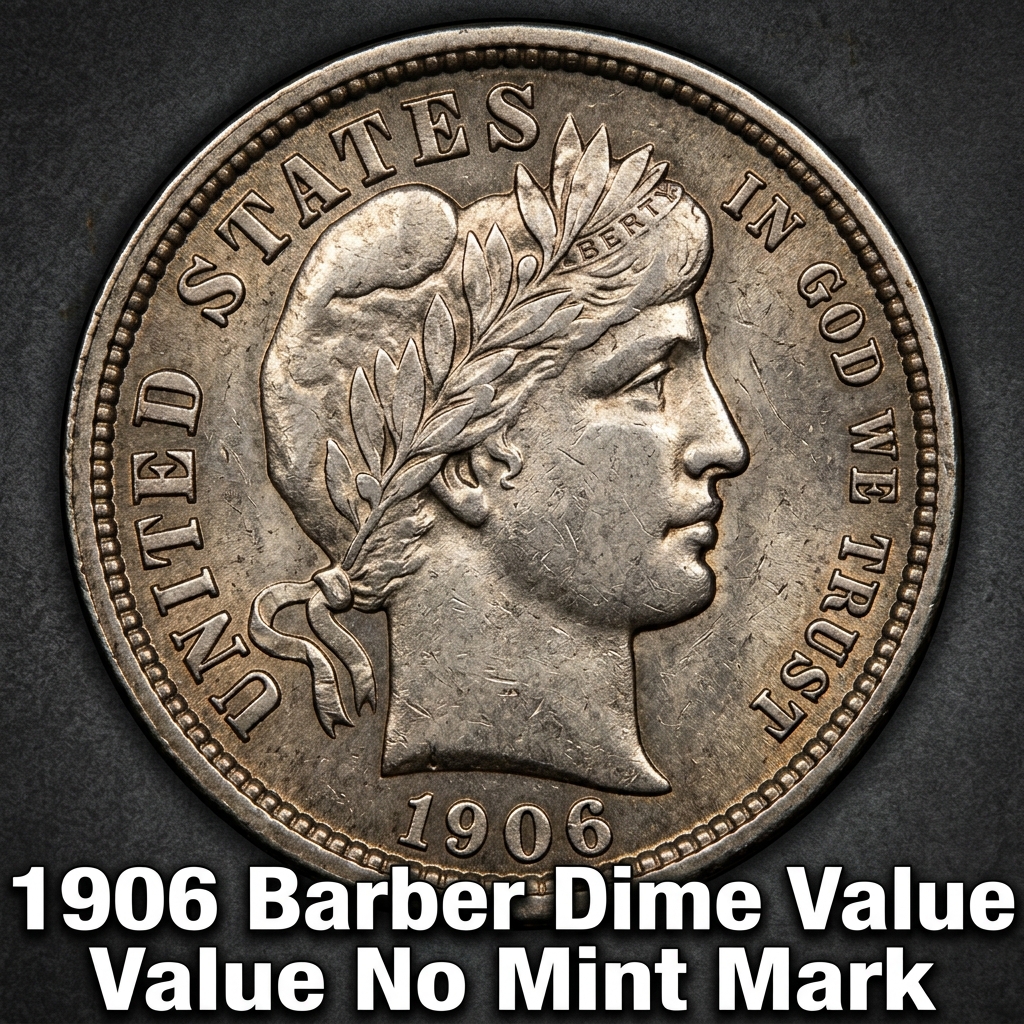

The 1906 Barber Dime with no mint mark is worth anywhere from $3 in heavily worn condition to well over $100 in uncirculated grades — and in rare high-grade examples, it can fetch $500 or more at auction. If you found one of these silver dimes tucked away in an old jar or inherited coin collection, you’re in the right place to find out exactly what it’s worth.
What Is the 1906 Barber Dime?
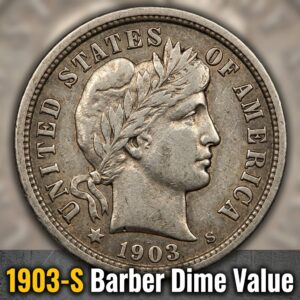
The 1906 Barber Dime is a 10-cent silver coin produced by the United States Mint in Philadelphia. Because it was struck at the Philadelphia Mint, it carries no mint mark — which is completely normal for coins from that facility during this era.
The coin features the portrait of Lady Liberty on the obverse, designed by Chief Engraver Charles E. Barber (which is how the series got its nickname). The reverse shows a wreath surrounding the words “ONE DIME.” These coins were made of 90% silver, giving them real intrinsic metal value even if the design is worn flat.
If you’ve got one in your hands and want a quick ID check, try a free coin identifier app before you do anything else. It can help you confirm what you have and point you in the right direction.
How Much Is the 1906 Barber Dime No Mint Mark Worth?
The value of your 1906 Barber Dime depends almost entirely on its condition, also called “grade” in the coin world. A coin that’s been rattling around in pockets and cash registers for decades is going to look a lot different — and be worth a lot less — than one that was carefully preserved right from the start.
Here’s a simple breakdown of typical values based on grade:
| Grade | Description | Estimated Value |
|---|---|---|
| Good (G-4) | Heavy wear, design visible but flat | $3 – $5 |
| Fine (F-12) | Moderate wear, some detail remains | $8 – $15 |
| Extremely Fine (EF-40) | Light wear on high points only | $35 – $60 |
| About Uncirculated (AU-55) | Slight friction, mostly original luster | $75 – $120 |
| Mint State (MS-63) | No wear, some minor contact marks | $200 – $500+ |
For a deeper look at how these values compare across different grades and recent auction results, check out this detailed 1906 Barber Dime value guide with up-to-date pricing data.
The Silver Content Factor — It’s Never Worthless
One thing that many people don’t realize is that even a beat-up, nearly unreadable 1906 Barber Dime is still worth something — because it’s made of real silver.
Each Barber Dime contains 0.07234 troy ounces of pure silver. With silver prices hovering around $28–$30 per ounce in recent years, the raw melt value of a worn 1906 no mint mark dime is roughly $2.00 to $2.20. That means the floor on this coin is pretty solid.
So even in the absolute worst condition, you’re not holding a worthless piece of metal. You’re holding a genuine piece of 90% silver American history — and that matters to collectors and silver stackers alike.
What Affects the Value of Your 1906 Barber Dime
Beyond condition, a few other factors can nudge the value of your 1906 Philadelphia dime up or down.
Eye appeal is huge. Two coins graded the same can look completely different. A coin with original, natural toning and clean surfaces will always sell for more than one that’s been cleaned or polished. Cleaning a coin almost always destroys value — so please, don’t rub it with anything.
Strike quality also plays a role. Some 1906 Barber Dimes came out of the dies weakly struck, especially in the hair detail above Liberty’s ear. A coin with a sharp, full strike is more desirable.
Population rarity in high grades matters too. In MS-65 or better, the 1906 Philadelphia Barber Dime becomes genuinely scarce, and prices climb sharply. Only a small number have been certified at that level by major grading services like PCGS and NGC.
Using CoinKnow is a great way to quickly look up where your coin falls on the value spectrum. CoinKnow gives you real collector-level data in a simple, easy-to-use format — no experience required.
Should You Get It Graded or Just Sell It?
If your coin is in Good to Fine condition, professional grading probably isn’t worth the cost. The grading fee alone could exceed what the coin sells for, so it makes more sense to sell it raw to a local coin dealer or on eBay.
However, if your coin looks beautiful — near-uncirculated or better with original luster and no obvious problems — it might be worth submitting to PCGS or NGC. A certified MS-63 or higher example can easily sell for $200 to $500, and the grading cost would be well worth it.
Not sure where your coin stands? CoinKnow can help you assess condition using photo-based comparisons so you can make a smarter decision before spending money on grading.
Frequently Asked Questions
Q: Is a 1906 Barber Dime with no mint mark rare?
A: Not particularly. The Philadelphia Mint produced a large number of Barber Dimes in 1906, so circulated examples are fairly common. However, finding one in high uncirculated grades (MS-64 or better) is genuinely rare and valuable.
Q: How do I know if my 1906 dime has been cleaned?
A: Look for an unnatural bright white or shiny surface, or tiny parallel scratches under magnification. Original coins have a softer, more muted luster. Cleaning significantly reduces collector value, even if the coin looks “nicer” to the naked eye.
Q: Where is the best place to sell a 1906 Barber Dime?
A: For worn examples, local coin shops or eBay work well. For high-grade or certified examples, major auction houses like Heritage Auctions or Stack’s Bowers will get you the best price from serious collectors.