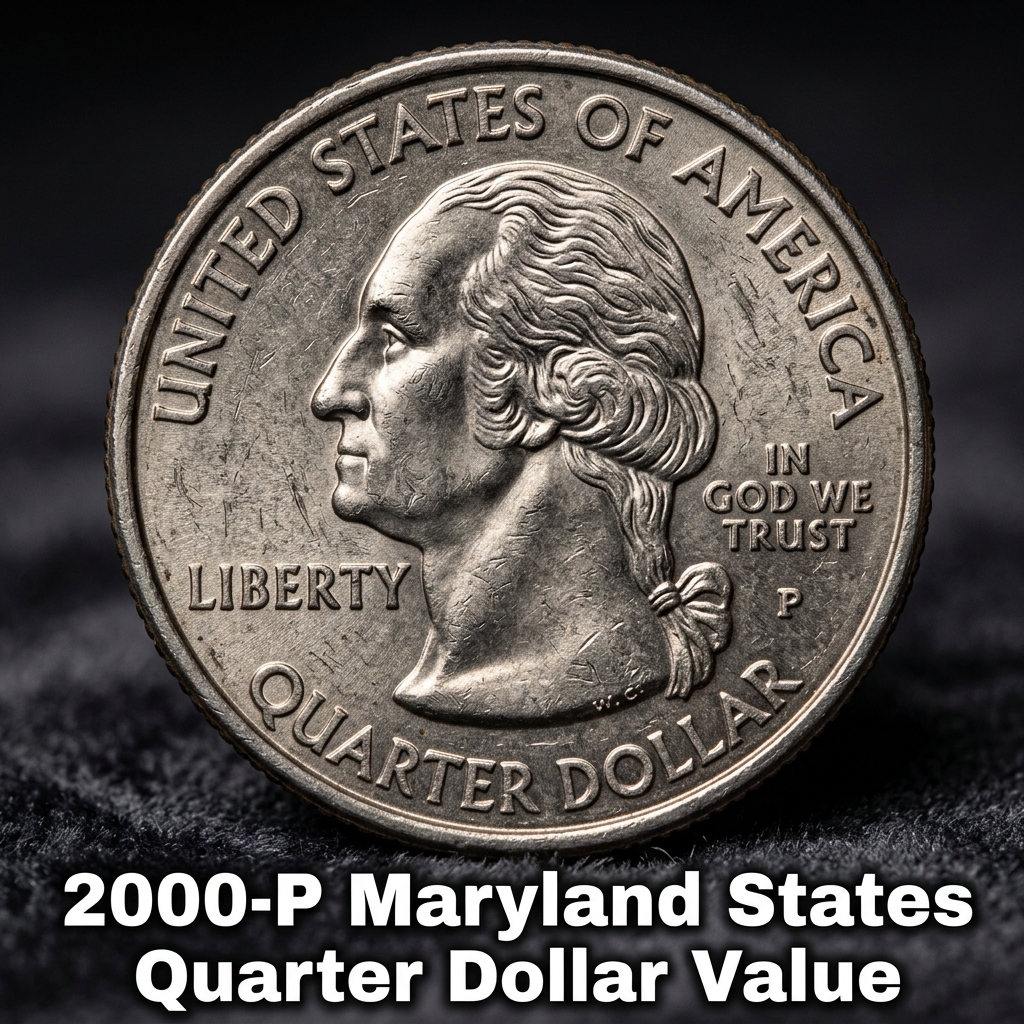

The 2000-P Maryland State Quarter is worth anywhere from 25 cents in heavily circulated condition to over $15 or more in pristine mint state — and certain error coins can fetch hundreds of dollars from the right collector. If you found one of these quarters in your change jar or inherited a collection, you’re in the right place to find out exactly what it’s worth.
What Is the 2000-P Maryland State Quarter?
The 2000-P Maryland State Quarter was struck at the Philadelphia Mint (“P” mint mark) as part of the popular 50 State Quarters Program launched by the U.S. Mint in 1999. Maryland was the seventh state honored in the series, released on March 13, 2000.
The coin’s reverse design features the Maryland State House dome — the oldest state capitol building still in legislative use — flanked by white oak branches and the state’s nickname, “The Old Line State.” It’s a beautifully detailed coin that many Americans still recognize today.
Over 678 million of these quarters were minted at the Philadelphia Mint alone, making them extremely common in circulation. That said, condition and errors can turn an ordinary quarter into something much more valuable. If you want a quick way to identify and evaluate your coin, a free coin identifier app can help you get started right from your smartphone — no coin expert required.
How Much Is the 2000-P Maryland Quarter Worth Today
For most people, a 2000-P Maryland State Quarter pulled from everyday pocket change is worth its face value — 25 cents. However, the story changes significantly once you factor in condition, also called “grade” in collector terminology.
Coins that never entered circulation and retain their original mint luster are called “Mint State” coins and are graded on a scale from MS-60 to MS-70. Even at MS-63, a 2000-P Maryland quarter can bring $1 to $3. At the higher end — MS-65 or above — prices climb to $5, $10, or beyond.
For detailed and up-to-date 2000-P Maryland State Quarter price data across multiple mint state grades, it’s worth checking a dedicated coin pricing resource. Prices shift with collector demand, so having current data matters.
| Condition / Grade | Estimated Value |
|---|---|
| Circulated (Good to Fine) | Face value – $0.25 |
| Extremely Fine (EF-40) | $0.50 – $1.00 |
| Mint State MS-63 | $1.00 – $3.00 |
| Mint State MS-65 | $5.00 – $10.00 |
| Mint State MS-67+ | $15.00 – $50.00+ |
| Error Coin (varies) | $50.00 – $300.00+ |
Error Coins That Can Make the 2000-P Maryland Quarter Much More Valuable
This is where things get exciting. While a standard 2000-P Maryland quarter isn’t going to retire you, error coins from this mint run are a different story entirely.
Some of the most sought-after errors include die cracks, off-center strikes, doubled die obverse errors (where design elements appear slightly doubled), and clipped planchet errors. A well-documented off-center error can sell for $50 to $150 or more, while dramatic planchet errors or doubled die errors in excellent condition have sold for several hundred dollars at auction.
Always examine your coin under good lighting or a magnifying glass. Look for unusual doubling on lettering or the portrait of George Washington, any off-center images, or strange surface irregularities. CoinKnow is a great tool for spotting these errors — the app lets you photograph your coin and compares it against a database of known error types, helping you identify anomalies quickly.
How to Grade Your 2000-P Maryland State Quarter at Home
You don’t need to be a professional numismatist to get a rough sense of your coin’s grade. Start by checking the coin’s high points — on a quarter, these include Washington’s cheekbone, hair details above the ear, and the eagle’s breast feathers on the reverse.
If those areas show smooth wear or loss of detail, the coin is circulated and likely worth face value. If the coin still has sharp, crisp detail and a slight sheen or “flash” under light, you may be holding a Mint State example.
For a more accurate assessment, you can use CoinKnow to get an instant AI-powered grade estimate. For coins you believe are MS-65 or higher, professional grading through PCGS or NGC is worth the fee — it can significantly increase resale value and buyer confidence.
You can also browse comprehensive 2000 quarter value information by mint and condition to better understand where your coin falls on the value spectrum before deciding whether to sell or hold.
Should You Keep or Sell Your 2000-P Maryland Quarter
For most people, a circulated 2000-P Maryland quarter is a fun piece of American history but not a financial windfall. However, if you have rolls of unsearched quarters from that era, it’s worth spending an afternoon going through them — error coins and high-grade specimens do turn up.
If you find coins that look uncirculated or notice unusual features, don’t spend them. Store them in a protective coin flip or airtight holder to preserve their condition. Even a small drop in grade can translate to a meaningful drop in value.
Ultimately, the best approach is to get informed before making any decisions. Use CoinKnow, check online price guides, and if the coin looks truly special, have it professionally graded. Knowledge is the most valuable tool any coin collector — beginner or experienced — can have.
FAQ
Q: Is the 2000-P Maryland State Quarter rare?
A: No, it’s one of the more common State Quarters with over 678 million minted at the Philadelphia Mint. However, high-grade examples (MS-67 and above) and error coins are genuinely scarce and collectible.
Q: What errors should I look for on the 2000-P Maryland quarter?
A: The most valuable errors include doubled die obverse, off-center strikes, die cracks, and clipped planchet errors. Examine the coin closely under magnification and compare it to known error examples using a coin identification tool.
Q: Where is the mint mark on the 2000-P Maryland quarter?
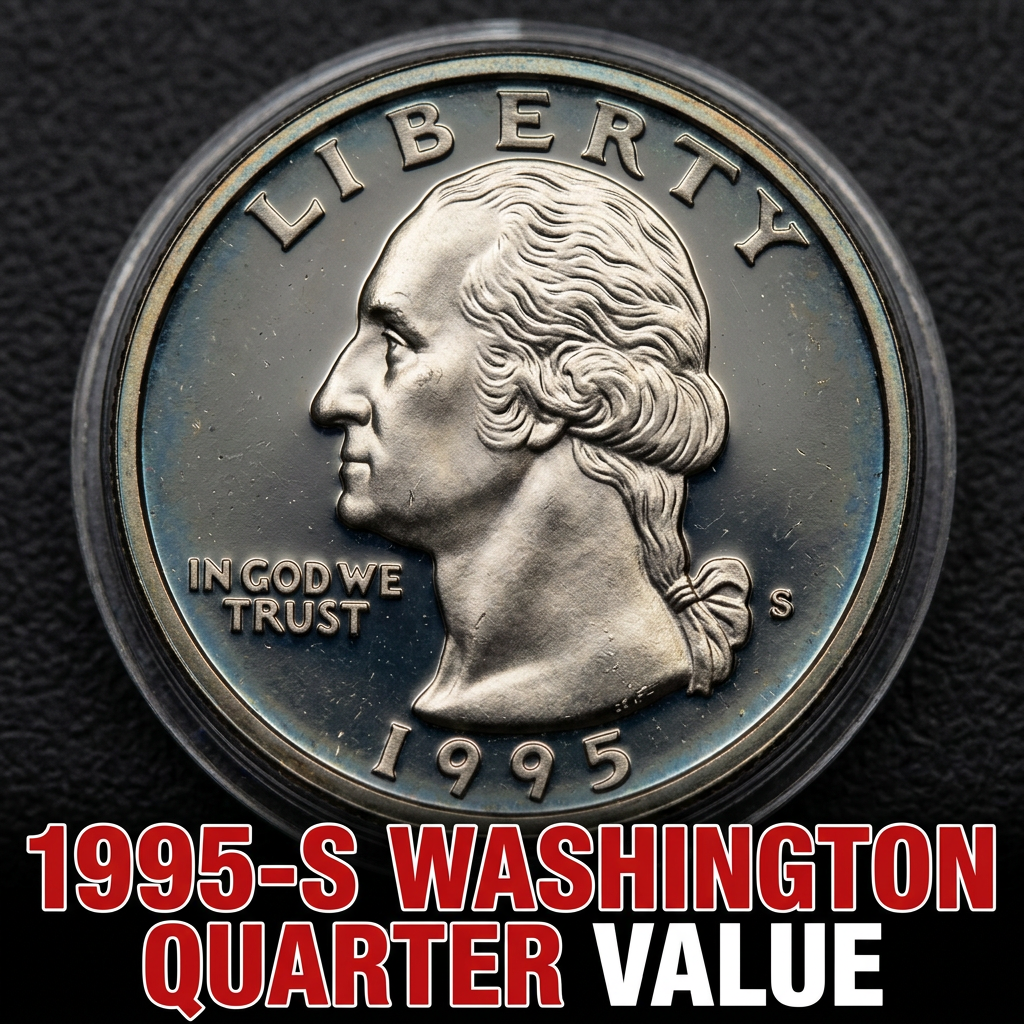
A: The “P” mint mark indicating the Philadelphia Mint is located on the obverse (heads side) of the coin, just to the right of Washington’s portrait near the bottom of the bust.