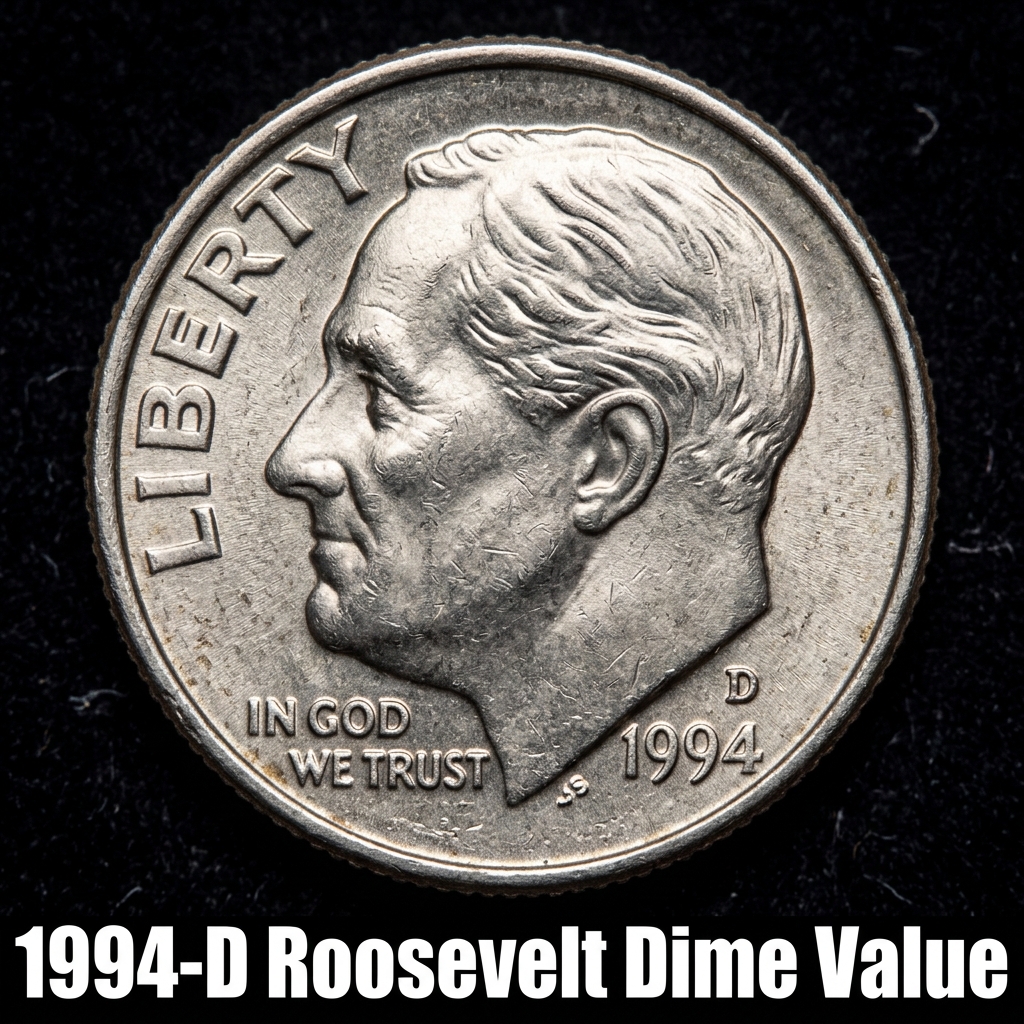

The 1994-D Roosevelt Dime is worth anywhere from face value (10 cents) in circulated condition to over $20 or more in top mint state grades — and a few rare error coins have sold for hundreds. If you found one in your pocket change or a jar of old coins, this guide will help you figure out exactly what you’ve got.
If you’re not sure how to identify your coin or check its condition, a free coin identifier app can be a great starting point before you spend time researching further. Tools like this make it easy for everyday people to get quick answers without needing to be an expert.
—
What Is the 1994-D Roosevelt Dime
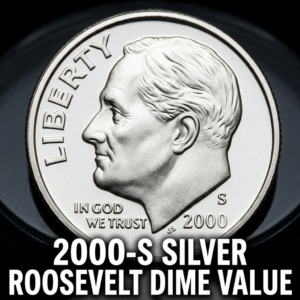
The 1994-D Roosevelt Dime was struck at the Denver Mint, as indicated by the small “D” mintmark on the obverse (front) of the coin, just to the left of Roosevelt’s portrait. These coins were produced as regular circulation pieces, meaning they were made to be spent — not saved.
In 1994, the Denver Mint produced hundreds of millions of Roosevelt dimes. That large mintage is the main reason most 1994-D dimes are not considered rare in typical circulated grades. If yours has been in a wallet or change jar for years, it’s likely worth just face value or slightly above.
That said, coins in exceptional, uncirculated condition tell a very different story. Collectors prize coins that show no signs of wear, with full luster and sharp strike details. Those are the examples that command real money.
—
1994-D Roosevelt Dime Value by Grade
Here’s a simple breakdown of what a 1994-D dime might be worth depending on its condition:
| Grade / Condition | Description | Estimated Value |
|---|---|---|
| Circulated (Good–Fine) | Heavy wear, details still visible | $0.10 (face value) |
| Extremely Fine (EF-45) | Light wear on high points | $0.25 – $0.75 |
| Mint State (MS-63) | Uncirculated, some bag marks | $1 – $3 |
| Mint State (MS-65) | Gem uncirculated, strong luster | $5 – $12 |
| Mint State (MS-67+) | Superb gem, near perfect | $20 – $100+ |
For the most up-to-date auction records and certified coin sales data, you can check current 1994 Roosevelt Dime mint state price tracking to see what collectors are actually paying right now.
—
How to Tell If Your 1994-D Dime Is Uncirculated
Most people look at a coin and just see a dime. But collectors look much closer. An uncirculated coin — one that was never used in everyday commerce — will have an unbroken, original shiny surface with no flat or dull spots on the high points of the design.
On a Roosevelt Dime, the high points are Roosevelt’s cheekbone and jawline, and the torch flame on the reverse. If those areas look slightly flat or dulled compared to the rest of the coin, it’s been circulated.
Hold the coin at a gentle angle under a single light source and slowly rotate it. Original mint luster shows as a cartwheel-like shimmer rolling across the surface. No shimmer? It’s likely been in circulation. If you see that glow and the surfaces look pristine, you might have a coin worth grading.
CoinKnow is a smart tool that helps you assess coin conditions quickly, even if you’re not an experienced collector. It can walk you through what to look for on specific coin types like Roosevelt dimes.
—
Are There Any Valuable 1994-D Dime Errors
Error coins are where things get exciting. Even common coins from 1994 can be worth significant money if something went wrong during the minting process. Known error types to look for include:
Off-Center Strikes — If Roosevelt’s portrait or the reverse design appears shifted to one side, leaving a crescent of blank metal, that’s an off-center error. Depending on severity, these can sell for $20 to $100 or more.
Double Die Obverse or Reverse — Look closely at the lettering and Roosevelt’s facial features under magnification. If you see a doubling or shadow effect, it could be a doubled die variety, which collectors actively seek out.
Clipped Planchet — A coin with a curved or straight missing piece at the edge was struck on an improperly cut blank. These are visually dramatic and fun to collect.
For a more detailed breakdown of what the 1994-D Roosevelt Dime is worth across all grades and varieties, this comprehensive 1994 dime value guide covers everything from circulated examples to certified gems and known errors.
—
Should You Hold On to Your 1994-D Dime
Honestly, for most people who find a 1994-D dime in average circulated condition, it’s worth 10 cents. That’s the honest answer, and there’s nothing wrong with that. The vast majority of these coins were made to be used, and they were.
But if your coin looks like it just came out of a mint bag — brilliant, shiny, and sharp — it might be worth a few dollars to the right collector. And if you suspect an error, that’s when things get interesting.
Getting a second opinion from CoinKnow before selling or tossing a coin can make a real difference. The app helps you understand what you’re holding based on photos and coin data, so you don’t accidentally spend a $50 error coin at a vending machine.
The bottom line: always give your old coins a second look. You might be surprised at what’s hiding in plain sight.
—
FAQ
Q: How much is a 1994-D Roosevelt Dime worth in circulated condition?
A: In typical circulated condition with normal wear, a 1994-D dime is worth its face value of 10 cents. It was minted in very large quantities and is not scarce in lower grades.
Q: What makes a 1994-D dime more valuable?
A: The two biggest factors are condition and errors. A perfectly preserved, uncirculated example grading MS-67 or higher can sell for $20 to over $100. Error coins — such as off-center strikes or doubled dies — can also fetch premium prices regardless of grade.
Q: How can I tell if my 1994-D dime is uncirculated?
A: Look for original mint luster — a rolling, cartwheel-like shine across the surface when you tilt the coin under light. Check Roosevelt’s cheekbone and the torch on the reverse for any signs of flatness or wear. If everything looks sharp and brilliant, you likely have an uncirculated example worth examining more closely. CoinKnow can help you compare your coin to graded examples for a more confident assessment.