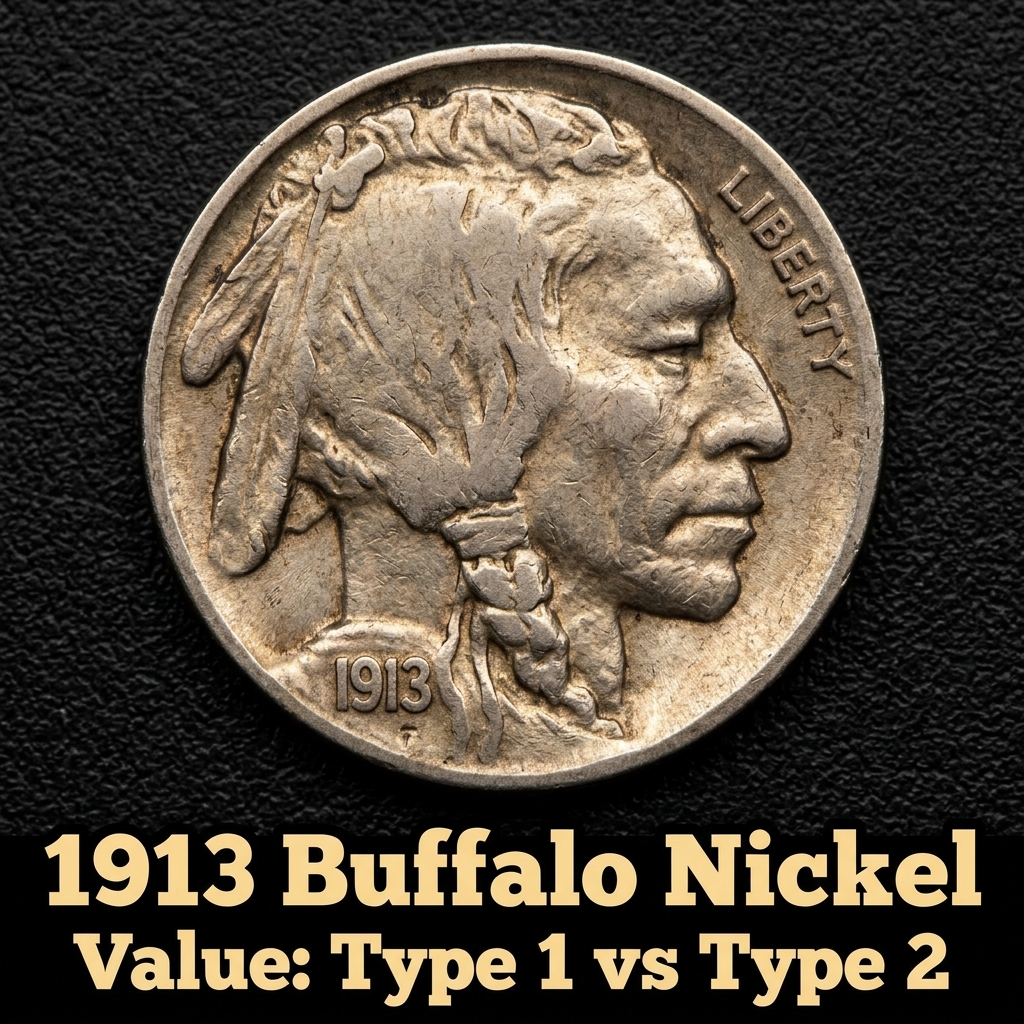

The 1913 Buffalo Nickel is worth anywhere from $15 in heavily worn condition to over $1,500 or more in mint state — and the exact type you have makes a big difference. Whether you stumbled across one in an old jar or inherited it from a relative, this guide will walk you through everything you need to know to figure out what your coin is really worth.
Type 1 vs Type 2: Why It Matters So Much
The 1913 Buffalo Nickel was issued in two distinct varieties, and telling them apart is the first step to understanding your coin’s value. Both types were designed by James Earle Fraser and feature the iconic Native American portrait on the obverse and an American bison on the reverse — but the difference is on the back.
On the Type 1, the bison stands on a raised mound, and the words “FIVE CENTS” appear on the mound itself. On the Type 2, the mound was redesigned into a flat line, and “FIVE CENTS” appears below a thin line under the bison’s feet. The change was made mid-year because the raised design caused the denomination to wear away too quickly.
If you’re not sure which type you have, try using a free coin identifier app to scan your coin and get an instant read on the variety and grade — it takes less than a minute and can save you a lot of guesswork.
1913 Buffalo Nickel Value by Grade and Type
Grade plays a huge role in determining what your coin is worth. A heavily worn coin might show only the basic outlines of the design, while an uncirculated example can still show original luster and sharp details. Here’s a general look at how values break down:
| Grade | 1913 Type 1 Value | 1913 Type 2 Value |
|---|---|---|
| Good (G-4) | $15 – $20 | $15 – $22 |
| Very Good (VG-8) | $22 – $30 | $25 – $35 |
| Fine (F-12) | $35 – $50 | $40 – $55 |
| Very Fine (VF-20) | $55 – $80 | $60 – $90 |
| Extremely Fine (EF-40) | $90 – $130 | $100 – $145 |
| Mint State (MS-63) | $250 – $450 | $300 – $500 |
| Mint State (MS-65) | $800 – $1,500+ | $900 – $1,800+ |
For a more detailed breakdown of certified auction prices, you can check out 1913 Buffalo Nickel Type 1 MS price data by grade — it’s a great resource if you want to see what graded examples are actually selling for.
How to Tell What Grade Your Coin Is
You don’t need to be a professional numismatist to get a rough idea of your coin’s grade. Start by looking at the high points of the design — the bison’s shoulder and hip, and the cheekbone and hair braid on the portrait side. These areas wear down first.
If the bison’s horn is completely flat and the portrait shows very little detail, you’re probably looking at a Good or Very Good coin. If you can still see some hair strands on the Native American’s head and the horn has some shape to it, you’re likely in Fine to Very Fine territory.
An uncirculated coin will show no wear at all, and often has a soft sheen or original mint luster. These are the coins that command the highest prices. CoinKnow can help you assess your coin’s grade visually by using AI-powered image recognition — it’s quick, free, and surprisingly accurate for everyday coin owners.
Mint Marks and Their Effect on Value
The 1913 Buffalo Nickel was produced at three mints: Philadelphia (no mint mark), Denver (D), and San Francisco (S). The mint mark is found on the reverse, just below the words “FIVE CENTS.”
Philadelphia coins don’t carry a mint mark and generally have the highest mintage numbers, making them more common. Denver and San Francisco issues tend to carry a slight premium in circulated grades, and in high mint state grades that premium can be significant.
The 1913-S Type 2 is considered one of the tougher issues from that year, with a lower mintage and fewer survivors in top grades. If you have an S-mint Type 2, it’s worth getting a second opinion from a dealer or submitting it to a professional grading service.
For a complete picture of what your 1913 Buffalo Nickel is worth based on mint mark and condition, that resource breaks things down clearly and is easy to follow even if you’re new to coin collecting.
Should You Get It Graded or Sell It As-Is?
If your 1913 Buffalo Nickel looks like it’s in extremely fine condition or better — sharp details, no heavy wear, maybe even some original luster — it might be worth the cost of professional grading through PCGS or NGC. A certified coin almost always sells for more than a raw one, because buyers trust the grade.
For circulated coins in the Good to Very Fine range, grading fees usually aren’t worth it. In those cases, it’s better to show the coin to a local dealer or list it on a reputable marketplace.
CoinKnow is a great starting point either way — scan your coin with the app, see an estimated value range, and then decide whether to pursue professional grading or sell directly. It’s one of the easiest tools available for everyday people who find old coins and want real answers fast.
FAQ
Q: How do I tell if my 1913 Buffalo Nickel is Type 1 or Type 2?
A: Flip the coin to the reverse and look under the bison. If “FIVE CENTS” sits on a raised mound of dirt, it’s Type 1. If the design shows a flat line with “FIVE CENTS” below it, it’s Type 2. The difference is easy to spot once you know what to look for.
Q: Is the 1913 Buffalo Nickel rare?
A: Not in the broad sense — millions were minted. However, high-grade uncirculated examples are genuinely scarce, and certain mint mark and type combinations are harder to find. A coin in MS-65 or better is considered rare in any practical sense.
Q: What’s the most valuable 1913 Buffalo Nickel?
A: The most valuable pieces are those certified in gem uncirculated grades (MS-65 and above), especially from the Denver or San Francisco mints. Top-quality examples have sold at auction for well over $1,500, and exceptional specimens can push much higher.