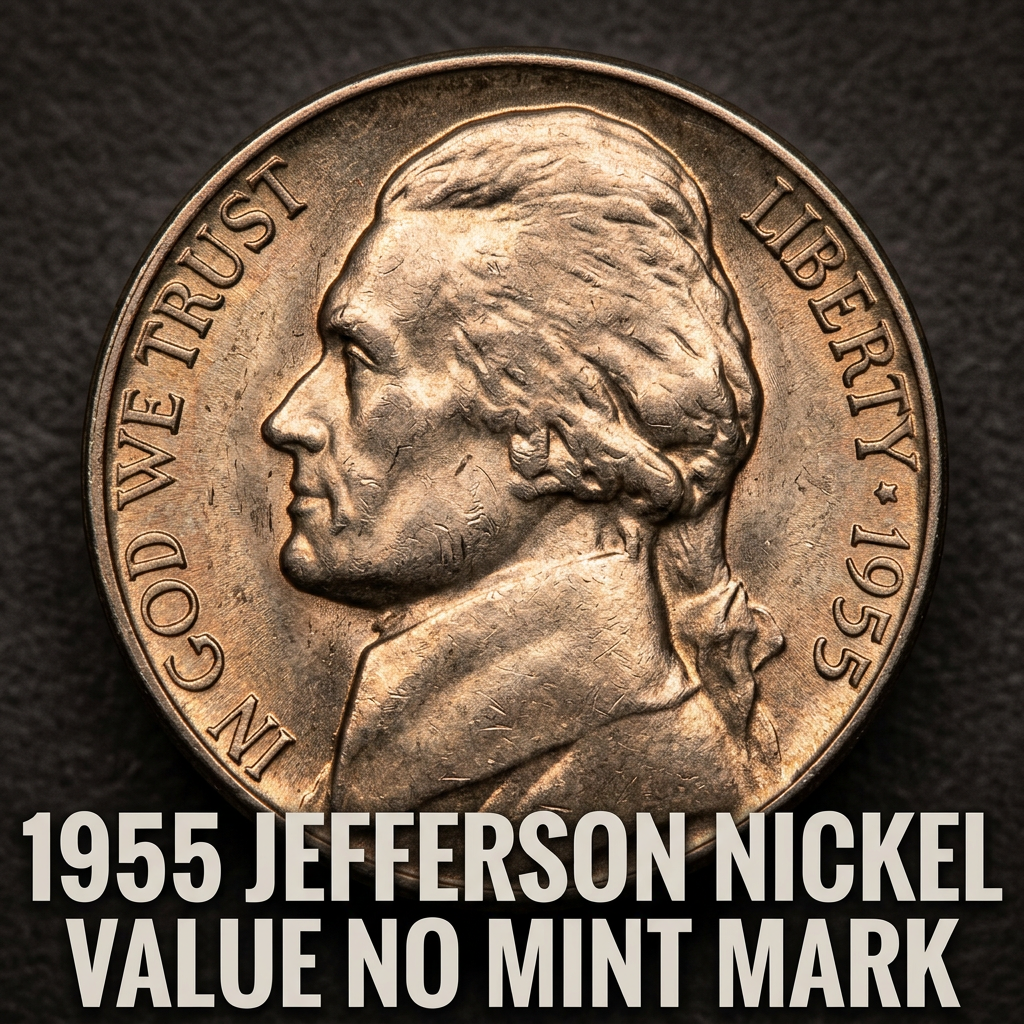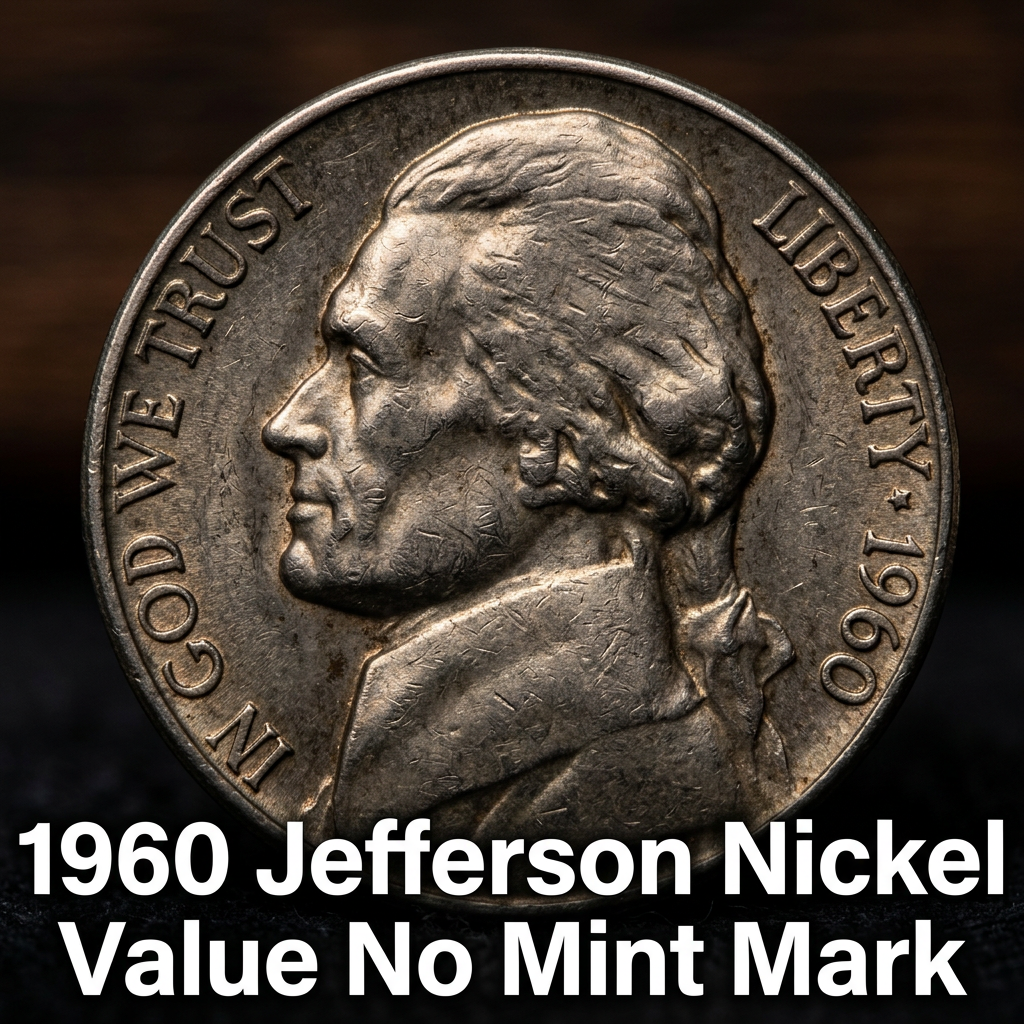

The 1960 Jefferson Nickel with no mint mark is worth anywhere from 5 cents in heavily worn condition to over $50 or more in pristine uncirculated grades — and a few exceptional examples have sold for well above that at auction. If you dug one of these out of an old jar or found it in your change, you’re in the right place to find out exactly what you’ve got.
What Does “No Mint Mark” Mean on a 1960 Nickel?
When a Jefferson Nickel has no mint mark, it means the coin was struck at the Philadelphia Mint. Back in 1960, Philadelphia didn’t add a “P” to its coins — that practice didn’t start for nickels until 1980. So a blank spot where a mint mark would normally appear is completely normal and expected for this coin.
You might be wondering if a missing mint mark means your coin is rare or valuable. In most cases, it just means Philadelphia made it. The Philadelphia Mint produced over 55 million Jefferson Nickels in 1960, so these are not particularly scarce coins.
That said, condition is everything when it comes to value — and some 1960 Philadelphia nickels in top grades are genuinely worth tracking down. If you’re not sure how to read your coin’s condition, using a free coin identifier app can give you a quick and easy starting point right from your phone.
How Much Is a 1960 Jefferson Nickel Worth Today?
The value of your 1960 nickel depends almost entirely on its condition, also known as its “grade.” A coin that’s been circulating in pockets and piggy banks for decades will show significant wear and won’t fetch much. But a coin that was put away shortly after it was minted — still showing sharp details and luster — can be worth real money.
Here’s a quick value breakdown based on grade:
| Grade / Condition | Description | Estimated Value |
|---|---|---|
| Good (G-4) | Heavy wear, outline visible | $0.05 – $0.10 |
| Fine (F-12) | Moderate wear, some detail | $0.10 – $0.25 |
| Extremely Fine (EF-40) | Light wear on high points | $0.50 – $1.50 |
| About Uncirculated (AU-55) | Slight friction, mostly luster | $2 – $5 |
| MS-63 (Uncirculated) | No wear, minor blemishes | $8 – $15 |
| MS-65 (Gem Uncirculated) | Strong luster, sharp strike | $20 – $55+ |
For the most up-to-date auction results and certified sale prices, you can check out current 1960 Jefferson Nickel MS grade prices and recent sales data to see what collectors are actually paying right now.
What Makes a 1960 No Mint Mark Nickel More Valuable?
Not every 1960 Philadelphia nickel is created equal. A few factors can push your coin’s value significantly higher than the averages shown above.
Full Steps (FS) is one of the most important designations for Jefferson Nickels. Look at the steps on Monticello on the reverse — if you can count five or six complete, uninterrupted steps with no weakness, your coin may qualify for the Full Steps designation from professional graders like PCGS or NGC. A 1960 MS-65 Full Steps nickel can be worth significantly more than a standard MS-65 example.
Strike quality also matters. Some Philadelphia nickels from this era came out of the press with soft, mushy details — not because of wear, but because the dies weren’t perfectly aligned or the planchet pressure wasn’t ideal. A sharply struck coin stands out.
Errors and varieties are another category to watch. Doubled die errors, repunched dates, and off-center strikes occasionally turn up in Jefferson Nickels from this era. If something looks slightly “off” about your coin’s lettering or date, it may be worth a closer look from a professional. CoinKnow is a great tool to scan your coin and flag any unusual characteristics before you invest in a formal grading opinion.
How to Check the Condition of Your 1960 Nickel at Home
You don’t need to be an expert to get a rough idea of your coin’s grade. Start by looking at the high points — Jefferson’s cheekbone, hair above his ear, and the steps on Monticello’s reverse. If these areas look flat and smooth, the coin has seen a lot of circulation.
Hold the coin under a single light source and tilt it gently. Uncirculated coins will show a cartwheel luster — a swirling, reflective shine that flows across the surface. Circulated coins will look dull and flat by comparison.
Avoid cleaning your coin. This is one of the most common mistakes new collectors make. Even light polishing destroys the original surface and can reduce value dramatically — sometimes by 50% or more.
For a more detailed breakdown of what your specific coin might be worth, this guide to 1960 nickel values by grade and variety walks through each condition level with real examples.
Should You Get Your 1960 Jefferson Nickel Graded?
If your coin looks like it might be in Mint State — especially if it has strong luster and sharp steps — professional grading is worth considering. A certified MS-65 Full Steps example is worth far more than a raw coin of the same quality, simply because buyers trust the grade.
Professional grading through PCGS or NGC typically costs between $20 and $40 per coin for standard submissions. That only makes financial sense if your coin is likely worth $50 or more in its current state.
Before you send anything in, try scanning it with CoinKnow to get an initial read on the coin’s grade and any notable features. It can save you time and help you decide whether professional grading is actually worth the cost for your specific coin.
—
FAQ
Q: Is a 1960 Jefferson Nickel with no mint mark rare?
A: No, it’s not rare. The Philadelphia Mint struck over 55 million of them in 1960. What matters most is condition — a common coin in exceptional grade is worth far more than a rare coin in poor shape.
Q: What is the most valuable version of the 1960 no mint mark nickel?
A: The most valuable examples are those graded MS-66 or higher with the Full Steps (FS) designation. These can sell for $100 or more depending on the grade and strike quality.
Q: Can I use an app to find out what my 1960 nickel is worth?
A: Yes! Apps like CoinKnow can help you identify your coin, estimate its grade, and get a ballpark value quickly. It’s a great first step before deciding whether to visit a coin dealer or submit the coin for professional grading.