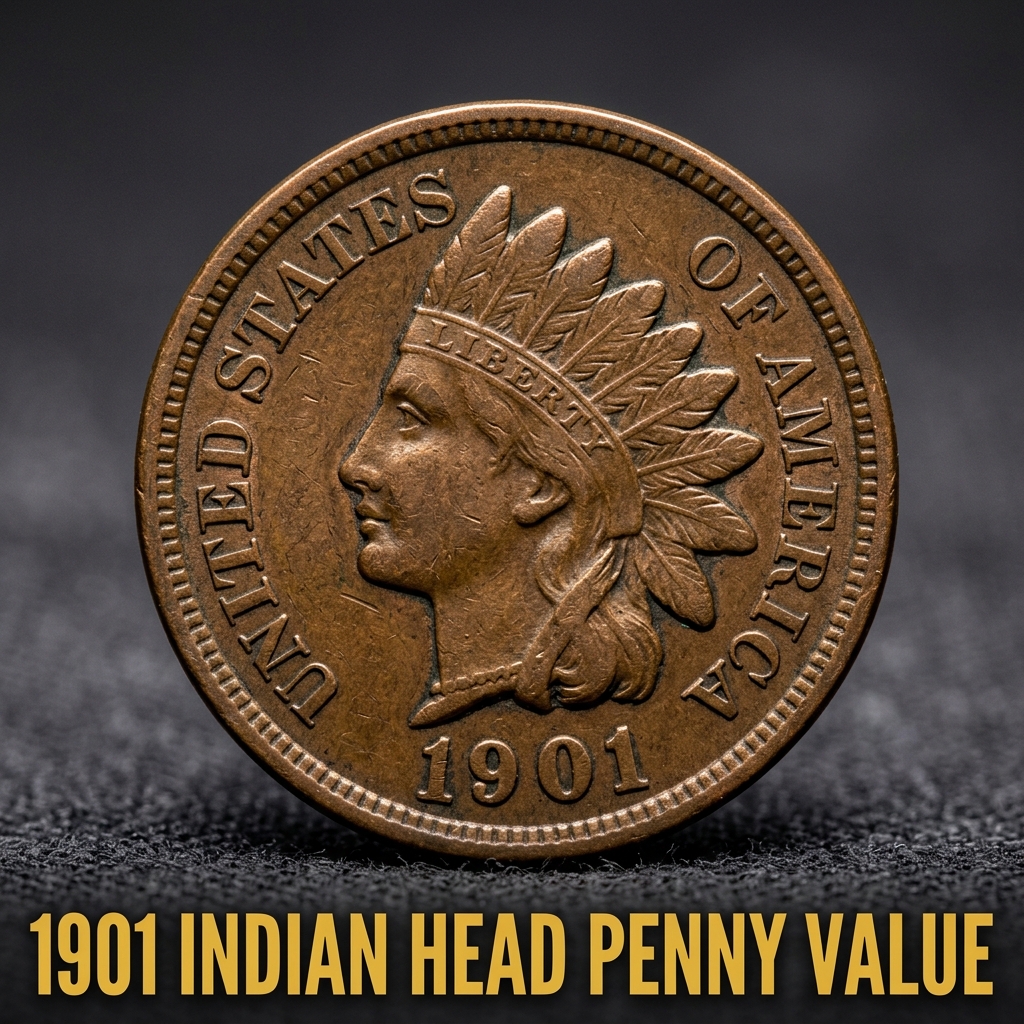

The 1901 Indian Head Penny is worth anywhere from $2 in heavily worn condition to over $100 or more in mint state, with some high-grade examples fetching even higher prices at auction. If you found one of these beautiful old cents in a jar, drawer, or coin collection, you’re in the right place — let’s break down exactly what you’re holding.
What Is the 1901 Indian Head Penny?
The 1901 Indian Head Penny was struck at the Philadelphia Mint, and no mint mark appears on the coin — that’s completely normal for this series. It features Lady Liberty wearing a Native American headdress on the obverse, which is where the coin gets its iconic name. The reverse shows a wreath surrounding the words “ONE CENT.”
These pennies were made of 95% copper and 5% tin and zinc, giving them that warm reddish-brown tone you’ve probably noticed. Over 79 million were minted in 1901 alone, making it a relatively common date — but condition is everything when it comes to value.
If you’re not sure what you’re looking at, try using a free coin identifier app to get a quick read on your coin before you do anything else. It takes just seconds and can save you from underselling something genuinely valuable.
How Much Is the 1901 Indian Head Penny Worth?
Value depends almost entirely on the coin’s grade, or condition. A heavily circulated coin with flat details and a dark, worn surface sits at the lower end. A coin that still shows sharp feather details in the headdress and original copper luster can be worth significantly more.
Here’s a quick value reference table:
| Grade / Condition | Description | Estimated Value |
|---|---|---|
| Good (G-4) | Heavy wear, outline visible | $2 – $3 |
| Very Good (VG-8) | Moderate wear, some detail | $3 – $5 |
| Fine (F-12) | Even wear, clear lettering | $5 – $8 |
| Very Fine (VF-20) | Light wear on high points | $10 – $18 |
| Extremely Fine (EF-40) | Slight wear, sharp details | $25 – $40 |
| About Uncirculated (AU-55) | Trace wear, most luster intact | $45 – $65 |
| Mint State Red (MS-65 RD) | No wear, original red luster | $150 – $300+ |
For the most up-to-date pricing across grades, you can check out detailed 1901 Indian Head Penny price data in mint state red grades — it’s a great resource if you want to see where the market is right now.
What Makes Some 1901 Pennies Worth More?
Color designation plays a huge role in high-grade examples. Grading services like PCGS and NGC assign coins one of three color labels: Red (RD), Red-Brown (RB), or Brown (BN). A fully red coin that has never toned or oxidized will always command a premium over a brown one in the same grade.
Strike quality also matters. Some 1901 pennies came out of the press with weak details on the feathers or the ribbon. A coin with a sharp, well-centered strike is simply more desirable to collectors.
Finally, originality counts. Cleaned coins — those that have been polished or chemically treated — are worth far less than naturally toned examples. If your coin has an unnaturally bright or streaky surface, it may have been cleaned at some point, which hurts the value considerably.
CoinKnow is a popular app among hobbyists that helps you evaluate these factors quickly. It walks you through color, strike, and surface quality so you’re not guessing when it’s time to assess your coin.
How to Grade Your 1901 Indian Head Penny at Home
Start by examining the coin under good lighting — natural daylight or a single lamp works best. Look at the feathers in the headdress. In a coin graded Fine, you should see most feather tips but they won’t be razor sharp. In Very Fine, the ribbon above the headdress stays clearly defined.
Turn the coin to check for luster. Hold it at an angle and tilt it slowly. If you see a cartwheel-like shimmer rotating across the surface, that’s original mint luster — a very good sign.
Avoid touching the coin’s face with your fingers. Oils from your skin can damage the surface and reduce its value over time. Handle it by the edges only, or use cotton gloves.
For a more detailed breakdown of what your specific coin might be worth today, this comprehensive guide to 1901 penny value by grade and condition is a reliable place to dig deeper.
Should You Get It Professionally Graded?
If your 1901 Indian Head Penny looks like it might be in Extremely Fine or better condition, professional grading can be worth the cost. Services like PCGS or NGC charge anywhere from $20 to $50 per coin, but a certified high-grade coin can sell for multiples of what a raw, ungraded coin brings.
For coins in lower grades — Good through Fine — the grading fee probably isn’t worth it. In that range, you’re looking at $2 to $8, and the submission cost would eat into any profit.
CoinKnow can help you pre-screen your coin and decide whether it’s worth submitting. It’s free to use and gives you a reasonable estimate before you spend money on professional services. Many everyday collectors use it as a first step before making any decisions.
—
Frequently Asked Questions
Q: Is a 1901 Indian Head Penny rare?
A: Not particularly. With over 79 million minted, the 1901 date is one of the more common in the Indian Head series. However, high-grade examples with original red color are genuinely scarce and can be worth hundreds of dollars.
Q: How do I know if my 1901 penny has been cleaned?
A: Look for an unnaturally bright, flat surface or fine hairline scratches under magnification. A cleaned coin often looks “too shiny” in a way that doesn’t match its age. Original coins usually have a warm, even patina rather than a harsh gleam.
Q: Where is the best place to sell a 1901 Indian Head Penny?
A: eBay is a good option for lower-grade coins because you can reach a wide audience. For higher-grade or certified coins, consider Heritage Auctions or a local coin dealer. Always check recent sold listings before pricing your coin, and use resources like CoinKnow to make sure you’re not leaving money on the table.