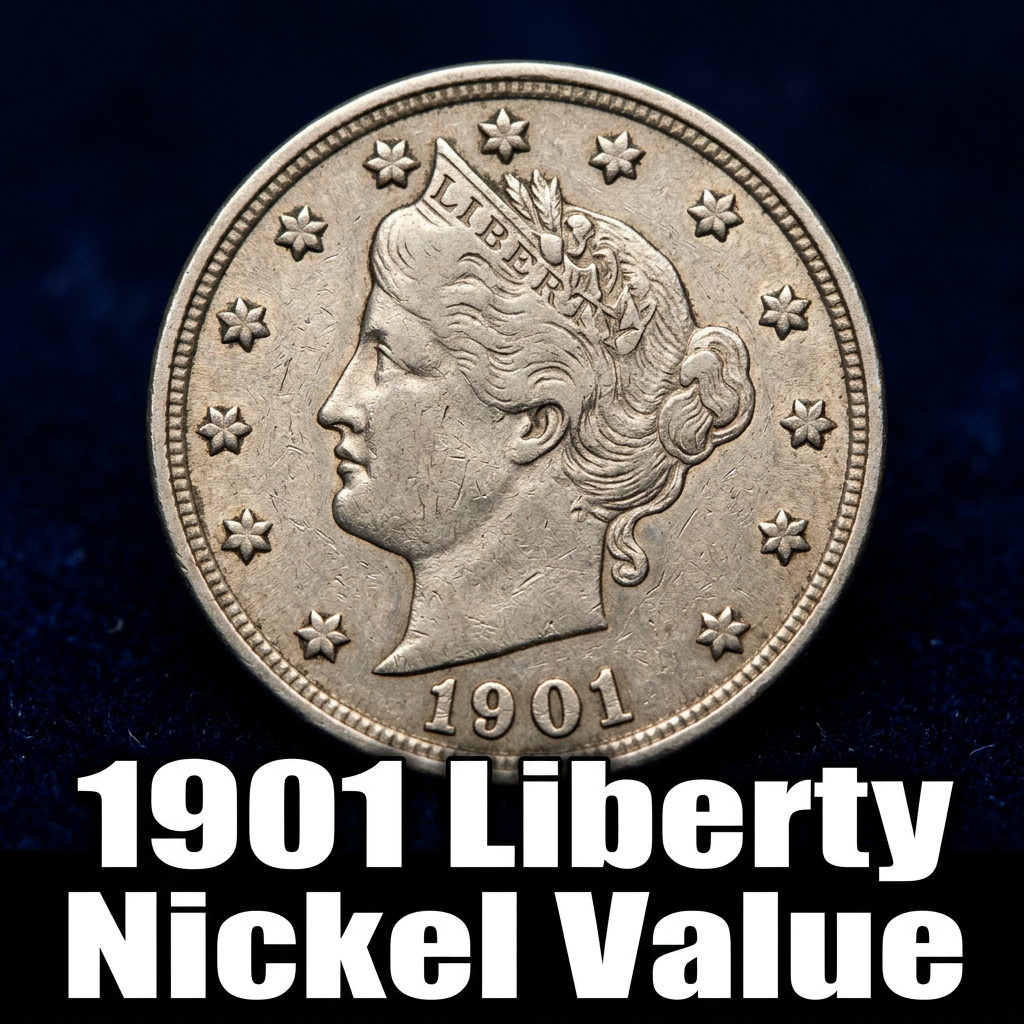

The 1901 Liberty Nickel is worth anywhere from $2 in heavily worn condition to over $100 or more in uncirculated mint state grades. If you’ve got one sitting in an old jar or inherited coin collection, you’re in the right place to find out exactly what you’re holding.
What Is the 1901 Liberty Nickel?
The 1901 Liberty Nickel, also called the V Nickel, was struck at the Philadelphia Mint and features the classic Liberty head design on the obverse and a large Roman numeral “V” on the reverse. These coins were made of 75% copper and 25% nickel, and they circulated heavily during the early 1900s.
If you’re new to coin collecting and not sure how to identify what you have, you can use a free coin identifier app to scan your coin and get instant information right from your phone. It’s one of the easiest ways to start understanding what an old coin really is before you dig into the value research.
The Liberty Nickel series ran from 1883 to 1912, and the 1901 issue is considered a common date within that series. That said, “common” doesn’t mean worthless — condition plays a huge role in determining how much one of these is actually worth.
1901 Liberty Nickel Value by Grade
Coin values are tied directly to condition, which collectors measure using a grading scale from Poor (P-1) all the way to Perfect Mint State (MS-70). For everyday coins found in old boxes or family collections, most fall somewhere in the Good to Fine range.
Here’s a general look at what the 1901 Liberty Nickel is worth across different grades:
| Grade | Description | Estimated Value |
|---|---|---|
| Good (G-4) | Heavy wear, major details visible | $2 – $4 |
| Very Good (VG-8) | Moderate wear, clearer lettering | $4 – $8 |
| Fine (F-12) | Light to moderate wear overall | $8 – $15 |
| Very Fine (VF-20) | Light wear on high points | $15 – $30 |
| Extremely Fine (EF-40) | Slight wear, sharp details | $30 – $55 |
| Mint State (MS-63+) | No wear, original luster | $100 – $300+ |
For a more detailed breakdown of certified auction results and dealer pricing, the 1901 Liberty Nickel mint state price data at CoinHix is a great resource to bookmark.
How Condition Affects the 1901 Liberty Nickel Price
If you pull a 1901 Liberty Nickel out of an old coin jar, chances are it’s circulated — meaning it spent real time in people’s pockets and cash registers. Circulated coins show wear, and the more worn they are, the less they’re worth in general.
The Liberty head design has some key areas to check: look at the hair above the ear and the details in the headband where it says “LIBERTY.” On a well-worn coin, those letters fade quickly. If you can still make out all seven letters clearly, your coin is likely in Fine or better condition.
On the reverse, examine the tips of the stars surrounding the “V” and the wreath details. Sharp, well-defined elements indicate less wear and a higher grade — which means more value.
CoinKnow is a popular app among casual coin finders because it helps you visually compare your coin’s condition against reference images right on your screen. It’s especially useful if you’re not sure whether your coin is Fine or Very Fine — a difference that can mean $10 or more in value.
Is the 1901 Liberty Nickel Rare?
The short answer is no — the 1901 Liberty Nickel is not considered a rare coin. The Philadelphia Mint produced over 26 million of them that year, which means they’re fairly easy to find in circulated grades. They show up at estate sales, flea markets, and inherited collections regularly.
That said, finding one in truly uncirculated condition is a different story. High-grade examples with full luster and sharp strikes are genuinely scarce, and they attract serious collector interest. A coin graded MS-65 or higher by PCGS or NGC can sell for several hundred dollars.
If you’re curious how the value of the 1901 Liberty Nickel compares to other early 20th-century silver coins, you might also want to browse the 1901 Barber Dime value guide — both coins come from the same era and often show up in the same old collections.
How to Get the Best Price for Your 1901 Liberty Nickel
Before you sell, do your homework. Start by identifying your coin’s grade as accurately as you can — either on your own using reference images, or through an app like CoinKnow, which makes the grading process more approachable for beginners.
If your coin appears to be in Very Fine or better condition, consider getting it professionally graded by PCGS or NGC. Certification can significantly increase buyer confidence and the final sale price, especially for anything that might reach the $50+ range.
For coins in Good to Fine condition, selling to a local coin dealer or listing through a reputable online platform like eBay is usually the most practical option. Always compare a few recent sold listings before setting a price.
And if you’re not sure what you have at all, CoinKnow lets you scan your coin and get a starting point on identification and value — no expertise required.
—
FAQ
Q: How do I know if my 1901 Liberty Nickel is worth getting graded?
A: If the coin appears to be in Extremely Fine or better condition — meaning you can see strong hair detail, sharp stars, and minimal wear — it’s usually worth the grading fee. Coins in that range can sell for $50 to $300 or more, and certification helps you get the best price.
Q: Does the 1901 Liberty Nickel have any mint mark?
A: No. The 1901 Liberty Nickel was only produced at the Philadelphia Mint, which did not use a mint mark. So if you see a “1901” with no mint mark below the “CENTS” on the reverse, that’s completely normal and expected.
Q: Can cleaning a 1901 Liberty Nickel hurt its value?
A: Absolutely. Cleaning a coin — even gently — removes the original surface and destroys the natural toning that collectors value. A cleaned coin will almost always sell for significantly less than an uncleaned one in the same grade. If you find one, leave it alone and get it appraised first.