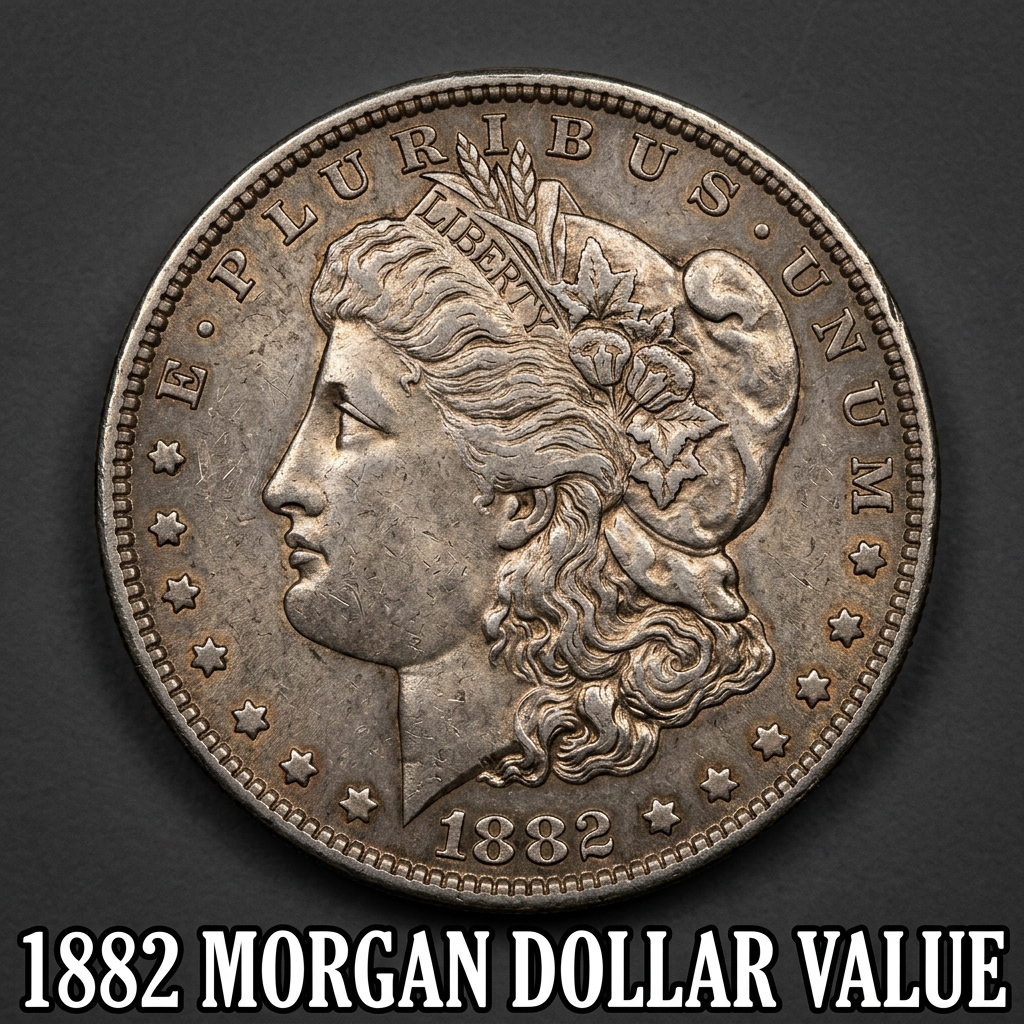

The 1882 Morgan Dollar is worth anywhere from $30 in heavily circulated condition to well over $100 in lightly worn grades — and certified mint state examples can fetch $200, $500, or even thousands depending on the strike, luster, and mint mark. If you’ve stumbled across one of these old silver dollars in a jar, drawer, or inherited collection, you’re likely sitting on something genuinely valuable.
What Makes the 1882 Morgan Dollar Special
The Morgan Dollar is one of the most beloved coins in American history, and the 1882 issue is no exception. Designed by George T. Morgan and struck at multiple U.S. Mint facilities, these coins contain 90% silver — which alone gives them real melt value even in worn condition.
More than 40 million Morgan Dollars were produced across three mints in 1882: Philadelphia (no mint mark), New Orleans (O), and San Francisco (S). Each mint produced coins with slightly different characteristics in terms of strike quality and surviving populations, which directly affects today’s market value.
If you’re not sure what mint mark your coin has or want to identify it quickly, a free coin identifier app can help you scan the coin and get instant results without needing any numismatic background. Tools like CoinKnow make this process incredibly simple, even for complete beginners.
1882 Morgan Dollar Value by Mint Mark and Grade
The mint mark on your coin — found on the reverse, just above the “DO” in DOLLAR — plays a huge role in determining value. Here’s a general breakdown of what collectors and dealers are paying:
| Mint Mark | Good (G-4) | Fine (F-12) | XF-40 | MS-63 | MS-65 |
|---|---|---|---|---|---|
| 1882 (Philadelphia) | $32 | $38 | $55 | $175 | $700+ |
| 1882-O (New Orleans) | $32 | $38 | $55 | $180 | $850+ |
| 1882-S (San Francisco) | $33 | $40 | $60 | $185 | $600+ |
For the most current auction results and dealer prices, you can check live 1882 Morgan Dollar MS price data which is updated regularly based on real market activity.
How Condition Affects Your 1882 Morgan Dollar’s Worth
Coin collectors use a 70-point grading scale to describe condition, and the difference between a coin graded Good-4 and one graded Mint State-65 can be the difference between $35 and $1,000 or more.
For most people who find Morgan Dollars around the house, their coins are in “circulated” grades — meaning they were actually used as money at some point. These coins show wear on the high points: Lady Liberty’s hair, cheek, and eagle’s breast feathers are usually the first areas to show signs of use.
Even in circulated condition, the 1882 Morgan Dollar is worth well above its face value of one dollar, largely because it’s made of 0.7734 troy ounces of pure silver. With silver trading around $28–$30 per ounce in recent years, the melt value alone sits near $22–$23, forming a solid floor for the coin’s value.
Uncirculated coins — ones that never went into circulation — are a different story entirely. They show original luster, sharp details, and sometimes attract serious collector premiums.
Rare Varieties and Errors That Could Make Your Coin More Valuable
One thing most people don’t realize is that some 1882 Morgan Dollars have die varieties or minor errors that push their value significantly higher. The most notable is the 1882-O/S — an overdate where the San Francisco mint mark was punched over an earlier “S” mark at the New Orleans facility.
This variety is scarce and highly sought after by specialists. A circulated example might sell for $75–$150, while top-grade specimens have fetched several hundred dollars at auction.
There are also “VAM” (Van Allen-Mallis) varieties — subtle die differences catalogued by researchers — that some collectors pay premiums to acquire. To explore the full range of 1882 silver dollar value information including varieties and errors, detailed reference guides can point you toward what to look for on your specific coin.
If you want to check your coin quickly at home, CoinKnow is a great tool that can help you identify varieties, estimate grades, and understand what the market is currently paying — all from your smartphone.
Should You Clean or Grade Your 1882 Morgan Dollar?
Please don’t clean your coin. This is one of the most common mistakes people make when they find an old Morgan Dollar. Even light polishing removes original surface metal and destroys the coin’s desirability to collectors — often cutting its value by 50% or more.
If you believe your coin is uncirculated or high grade, consider submitting it to a professional grading service like PCGS or NGC. A graded, certified coin in a holder sells for significantly more than a “raw” coin of the same grade because buyers trust the authentication.
For everyday coins in Good to Fine condition, certification usually isn’t worth the cost. But for anything that looks bright, lustrous, or unusually sharp, it’s absolutely worth looking into. Apps like CoinKnow can even give you a preliminary grade estimate before you decide whether professional submission makes sense.
Frequently Asked Questions
Q: How do I tell which mint made my 1882 Morgan Dollar?
A: Flip the coin to the reverse (eagle side) and look just above the “DO” in DOLLAR. If there’s no letter, it was made in Philadelphia. An “O” means New Orleans, and an “S” means San Francisco.
Q: Is a worn 1882 Morgan Dollar still worth selling?
A: Absolutely. Even a heavily circulated 1882 Morgan Dollar contains real silver and is worth $30 or more to most coin dealers. Silver buyers and coin shops regularly purchase worn Morgan Dollars at or near silver melt value.
Q: What’s the most valuable 1882 Morgan Dollar ever sold?
A: A 1882-S in MS-67 condition sold at auction for over $14,000. Ultra-high-grade coins with exceptional eye appeal and no contact marks are genuinely rare and command extraordinary premiums among advanced collectors.