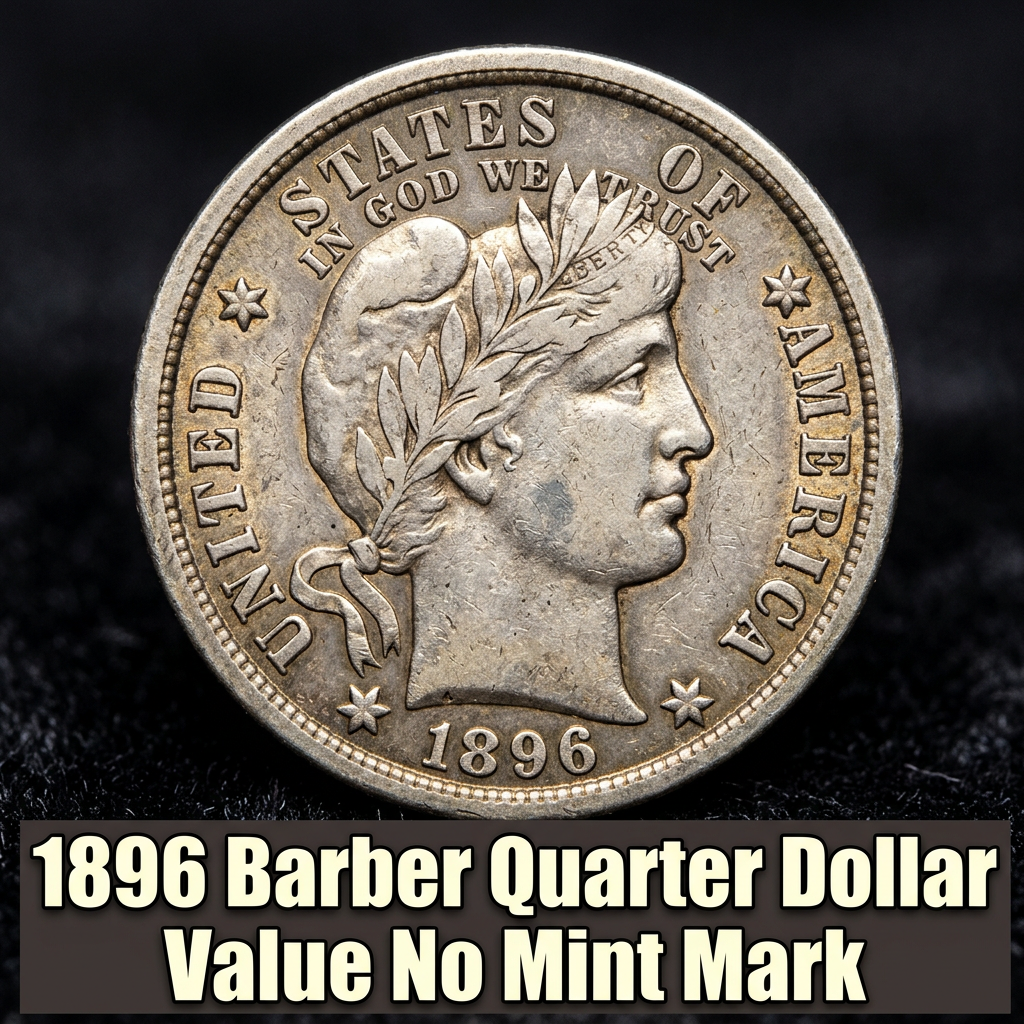

The 1896 Barber Quarter Dollar (no mint mark) is worth anywhere from $8 in heavily worn condition to well over $500 in high mint state grades — and rare examples graded MS-65 or better can sell for thousands at auction. If you recently found one of these old silver coins, you’re in the right place to find out what it’s really worth.
What Is the 1896 Barber Quarter Dollar?
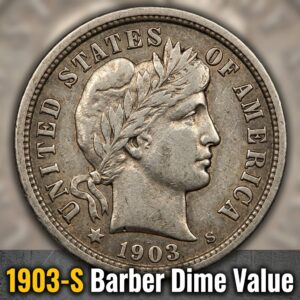
The 1896 Barber Quarter was designed by U.S. Mint Chief Engraver Charles E. Barber, which is how the series got its name. The obverse features Lady Liberty wearing a Phrygian cap and a laurel wreath, surrounded by the inscriptions “IN GOD WE TRUST” and “LIBERTY.” The reverse displays a heraldic eagle with a shield on its chest.
The no mint mark version means the coin was struck at the Philadelphia Mint, which was standard practice at the time — Philadelphia coins didn’t carry a mint mark. In 1896, the Philadelphia Mint produced 3,874,762 Barber Quarters, making it a moderately available date in circulated grades but genuinely scarce in top mint state condition.
These coins are made of 90% silver and 10% copper, giving them real metal value in addition to collectible value. If you’re not sure what coin you have, try using a free coin identifier app to confirm the details before you sell or trade.
How Much Is the 1896 Barber Quarter Worth by Grade?
The value of your 1896 Barber Quarter No Mint Mark depends heavily on its condition, or “grade.” Coin collectors use a scale from 1 to 70, where higher numbers mean less wear and more value.
A coin in Good (G-4) condition — where the design is visible but heavily worn — is worth around $8 to $12. Once you move into Fine (F-12) territory, values jump to roughly $30 to $45. In Extremely Fine (EF-40) condition, expect values around $90 to $120.
Mint state examples (MS-60 and above) are where things get exciting. These coins were never circulated and show no wear at all. For a deeper look at how silver dollar and quarter values compare across years, check out this helpful guide on 1896 silver coin values and what makes them special.
| Grade | Description | Estimated Value |
|---|---|---|
| G-4 (Good) | Heavy wear, outline visible | $8 – $12 |
| VG-8 (Very Good) | Moderate wear, some detail | $18 – $25 |
| F-12 (Fine) | Light wear on high points | $30 – $45 |
| VF-20 (Very Fine) | Light wear, clear design | $55 – $75 |
| EF-40 (Extremely Fine) | Slight wear, sharp details | $90 – $120 |
| MS-60 (Mint State) | No wear, some blemishes | $200 – $280 |
| MS-63 (Choice Mint State) | No wear, minor marks | $350 – $500 |
| MS-65 (Gem Mint State) | Exceptional luster and strike | $1,000+ |
Key Factors That Affect the 1896 Barber Quarter No Mint Mark Value
Beyond grade, a few specific factors can push your coin’s value up or down. Eye appeal matters a lot — a coin with original luster, clean fields, and a sharp strike will always command a premium over one that looks dull or cleaned.
Cleaning is one of the biggest value killers in coin collecting. Many old coins were polished by well-meaning owners, but this actually removes the natural surface and reduces value significantly. A cleaned MS-63 coin can drop to the price of a VF coin overnight.
Toning is different. Original, natural toning that developed over decades can actually add visual interest and sometimes increase value if it’s attractive and even. CoinKnow is a great tool for getting a quick read on your coin’s overall appeal — it uses image recognition to help you assess condition and potential value right from your phone.
Silver Melt Value of the 1896 Barber Quarter
Even the most worn 1896 Barber Quarter No Mint Mark has a floor value based on its silver content. Each Barber Quarter contains approximately 0.1808 troy ounces of pure silver.
With silver trading around $28–$30 per troy ounce (prices fluctuate daily), the base melt value of your coin is roughly $5.00 to $5.50. This means even a coin in rough shape is worth a few dollars just for the metal.
Of course, the collectible value almost always exceeds the melt value for any coin in decent condition. That’s why it’s worth taking the time to properly assess your coin before selling it as scrap. Use CoinKnow to get a fast estimate and see if your coin has collector appeal beyond its silver weight.
Where to Sell Your 1896 Barber Quarter
If you’ve determined your coin has real value, you have several solid options for selling. Online platforms like eBay and Heritage Auctions reach thousands of collectors who actively search for Barber Quarter dates. Coin dealers at local shops or coin shows are another great option — they can give you an in-hand assessment and make an immediate offer.
For high-grade or potentially valuable coins, consider submitting to a professional grading service like PCGS or NGC before selling. A certified grade adds credibility and often significantly increases the final sale price.
Before listing or selling, run your coin through CoinKnow to get a realistic value estimate so you know your starting point in any negotiation.
—
Frequently Asked Questions
Q: How do I know if my 1896 Barber Quarter is from Philadelphia?
A: If there is no mint mark on the reverse of the coin (look just below the eagle’s tail feathers), it was made at the Philadelphia Mint. Philadelphia did not use a mint mark during this era, so a blank space there confirms it’s a no-mint-mark Philadelphia coin.
Q: Is the 1896 Barber Quarter No Mint Mark considered rare?
A: It’s not considered a key date, but it’s not common either. With a mintage of just under 4 million, circulated examples are available, but finding one in true mint state — especially MS-64 or better — is genuinely difficult and commands strong prices from serious collectors.
Q: Should I clean my 1896 Barber Quarter before selling it?
A: Absolutely not. Cleaning a coin almost always reduces its value in the eyes of collectors. Even removing dirt or toning with a cloth can leave hairline scratches that professional graders will notice immediately. Leave the coin exactly as you found it and let a professional evaluate it in its natural state.