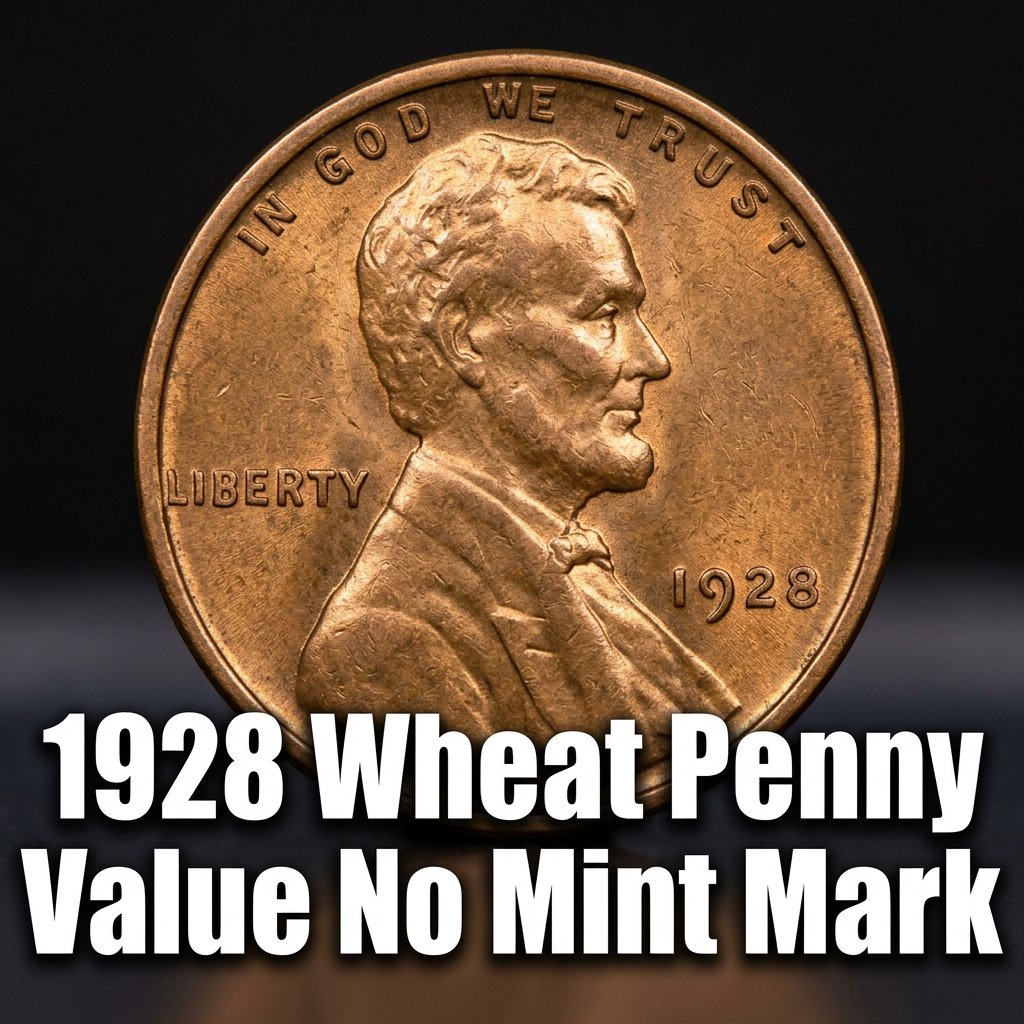

The 1928 Wheat Penny with no mint mark is worth anywhere from $0.15 in heavily worn condition to over $50 or more in mint state grades — and top-condition examples can fetch even higher prices at auction. If you just found one of these old Lincoln cents in a jar, a drawer, or an inherited coin collection, you’re in the right place to find out exactly what you have.
The 1928 Philadelphia Wheat Penny is one of the more common dates in the Lincoln Wheat cent series, but “common” doesn’t always mean “worthless.” Condition is everything when it comes to coin values, and even a well-worn example is worth more than face value. If you want to get a quick idea of what your coin might be worth before diving into the details, a free coin identifier app can help you assess the grade and approximate value right from your phone. Tools like CoinKnow make it easy to scan your coin and get instant results, which is a great starting point for everyday collectors.
What Is the 1928 Wheat Penny With No Mint Mark?
The no mint mark on a 1928 penny means it was struck at the Philadelphia Mint, which was the main production facility for U.S. coinage at the time. Philadelphia didn’t use a mint mark on coins during this era, so if you flip your penny over and see no letter beneath the “ONE CENT” text, you’ve got a Philadelphia coin.
In 1928, the Philadelphia Mint produced over 134 million Lincoln Wheat pennies, making this a widely circulated coin. The design, created by Victor David Brenner, features Abraham Lincoln on the obverse and two stalks of wheat flanking the words “ONE CENT” on the reverse — that’s where the “Wheat Penny” nickname comes from.
These coins were made of 95% copper, which gives them that warm reddish-brown tone when they’ve aged naturally. The copper composition also means they can develop attractive toning over decades, which sometimes adds to a coin’s visual appeal for collectors.
1928 No Mint Mark Penny Value by Grade
The value of your 1928 Wheat Penny depends heavily on its condition. Coin grades range from Poor (P-1) all the way up to Mint State 70 (MS-70). Here’s a general value guide based on grade:
| Grade | Description | Estimated Value |
|---|---|---|
| Good (G-4) | Heavily worn, design visible | $0.15 – $0.25 |
| Fine (F-12) | Moderate wear, lettering clear | $0.50 – $1.00 |
| Extremely Fine (EF-40) | Light wear on high points | $3 – $6 |
| About Uncirculated (AU-55) | Slight wear, most luster intact | $8 – $15 |
| Mint State Red (MS-65 RD) | Uncirculated, full red luster | $50 – $100+ |
For the most up-to-date market data on high-grade examples, you can check out the latest 1928 Wheat Penny MS Red price records to see what certified coins have actually sold for at major auction houses.
What Makes a 1928 Penny More Valuable?
While the Philadelphia issue is common, certain factors can push the value significantly higher. The color designation matters a lot in uncirculated grades. Coins graded MS Red (RD) — meaning they’ve retained 95% or more of their original mint red color — command the highest premiums. Brown (BN) and Red-Brown (RB) uncirculated coins are worth less by comparison.
Strike quality also plays a role. A sharply struck coin with full, crisp details on Lincoln’s hair and the wheat stalks will always be more desirable than a weakly struck example. Look closely at the details above Lincoln’s ear — that area is often the first to show wear or weak striking.
Error coins from 1928 can also be quite valuable. Doubled die varieties, off-center strikes, and repunched dates are all possibilities that can multiply a coin’s value many times over. If something looks “off” about your coin, it might be worth having it examined by a professional.
How to Find Out If Your 1928 Penny Is Worth Big Money
If you’re not sure what grade your coin is in, don’t guess — getting it wrong could mean leaving money on the table. The best approach is to have your coin professionally graded by a third-party grading service like PCGS or NGC. Certified coins in slabs always sell for more because buyers can trust the grade.
In the meantime, apps like CoinKnow are a fantastic way to get a ballpark value before you invest in professional grading. You can snap a photo of both sides of your coin and the app will analyze the condition and give you an estimated value range based on current market data.
You can also explore a detailed breakdown of the 1928 penny’s value across all grades and mint marks to compare your coin against known price benchmarks. Knowledge is power when you’re dealing with old coins.
Should You Clean Your 1928 Wheat Penny?
Please don’t. This is one of the most common mistakes people make with old coins, and it can instantly destroy value. Cleaning a coin removes the natural patina and toning that collectors prize, and it leaves behind fine scratches under magnification that drop the grade significantly.
A naturally toned, original-surface coin — even if it looks dark or dirty — is almost always worth more than a cleaned one. Leave it as-is, store it in a coin flip or soft sleeve, and let a professional assess it before you do anything else.
CoinKnow also offers tips on proper coin storage and handling, so you don’t accidentally damage what could be a valuable piece of American history.
Frequently Asked Questions
Q: How do I know if my 1928 penny is from Philadelphia?
A: If there is no mint mark on the reverse of the coin — just below the “ONE CENT” text and above the wheat stalks — then it was made at the Philadelphia Mint. The Denver Mint used a “D” and the San Francisco Mint used an “S” during this period.
Q: Is a 1928 Wheat Penny with no mint mark rare?
A: Not particularly. With over 134 million produced, it’s one of the more available dates in the Wheat Penny series. However, high-grade examples with full red color (MS-65 RD and above) are genuinely scarce and can be worth $50 to $100 or more. Error varieties are also far less common and worth searching for.
Q: Can I sell my 1928 Wheat Penny easily?
A: Yes, wheat pennies sell well on platforms like eBay, at local coin shows, and through coin dealers. Circulated examples in lower grades sell quickly for small amounts, while certified mint-state coins attract serious collector interest. Getting your coin graded before selling a high-quality example is usually worth the investment.