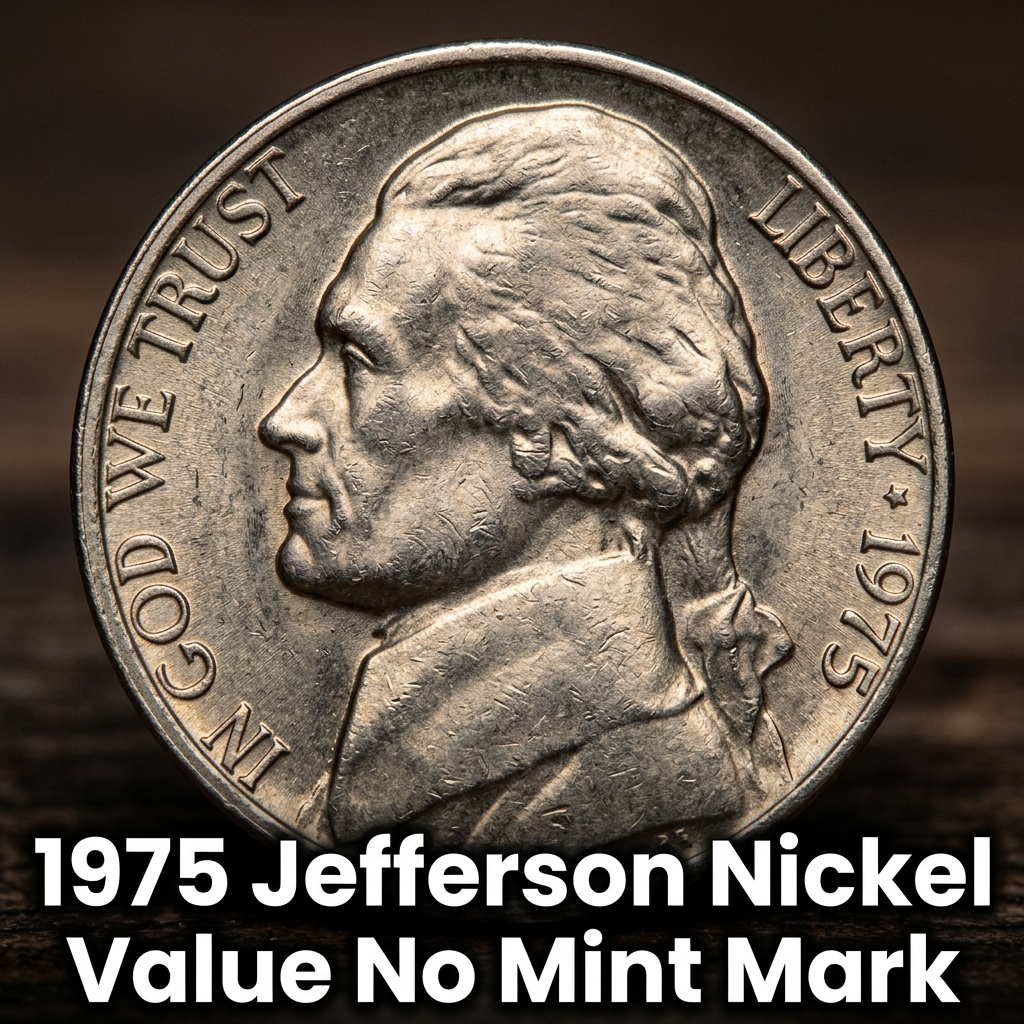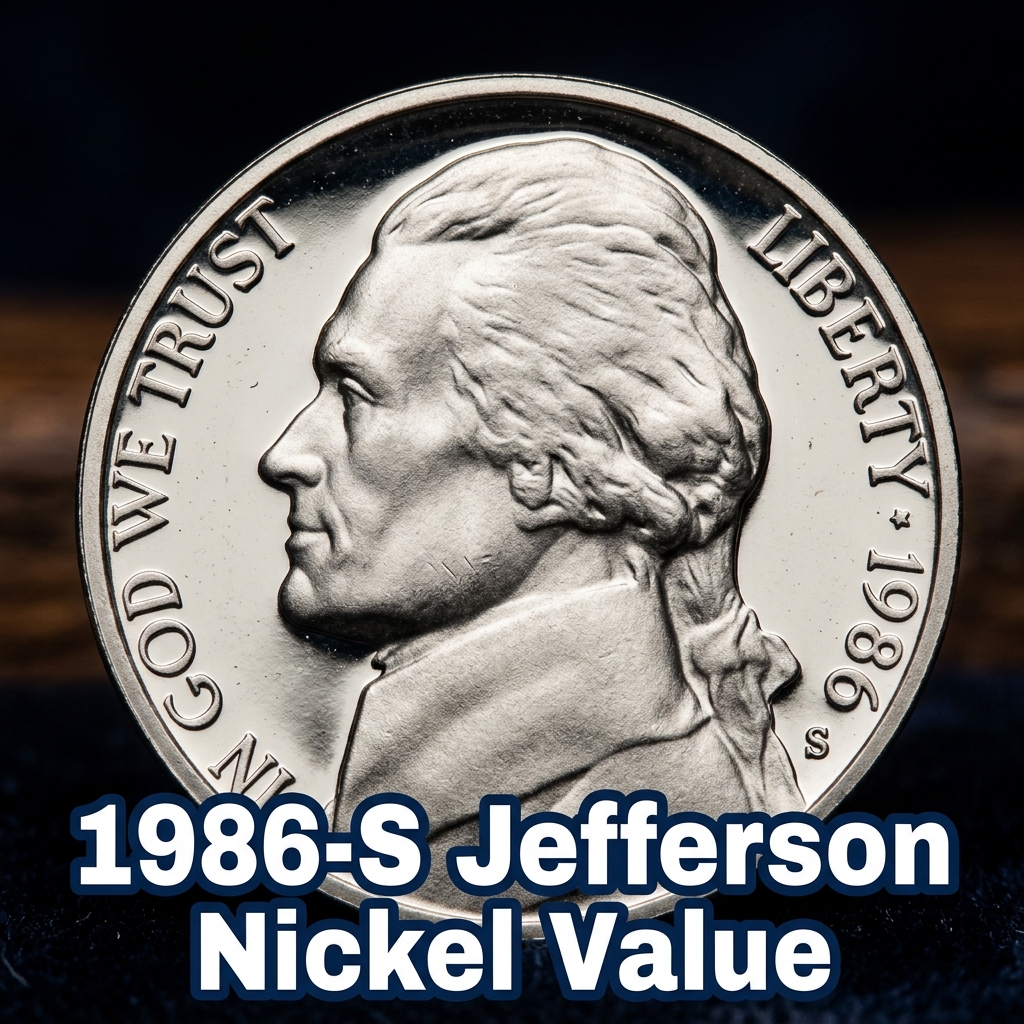

The 1986-S Jefferson Nickel is worth anywhere from $2 to $5 in typical proof condition, but well-preserved examples graded PR-70 can sell for $25 or more to the right collector. If you found one of these in an old coin set or a drawer, you’re in luck — it’s not just pocket change.
What Makes the 1986-S Jefferson Nickel Special
The “S” mintmark on this coin tells you right away that it was made at the San Francisco Mint. Unlike the regular circulation nickels struck in Philadelphia and Denver that year, the 1986-S was produced exclusively as a proof coin — meaning it was never meant to circulate in everyday commerce.
Proof coins are struck with specially polished dies and planchets, giving them that mirror-like finish and sharp, frosted detail you can see on the portrait of Thomas Jefferson and Monticello on the reverse. The U.S. Mint sold these as part of annual proof sets, which were popular gifts and collectibles throughout the 1980s.
Because they weren’t made for circulation, most 1986-S nickels are still in excellent condition today. That said, not all of them are equal — and condition still matters a great deal to collectors and value.
If you’re not sure whether your coin is a proof or a regular business strike, a free coin identifier app can help you figure it out quickly using just your smartphone camera.
1986-S Jefferson Nickel Value by Grade
Proof coins are graded on a scale from PR-60 to PR-70, with PR-70 being a perfect, flawless example. Most 1986-S nickels you’ll come across fall somewhere in the PR-65 to PR-68 range, which is still very respectable.
Here’s a general breakdown of what you might expect to get for a 1986-S Jefferson Nickel based on its grade:
| Grade | Description | Estimated Value |
|---|---|---|
| PR-60 to PR-64 | Proof, minor flaws or cloudiness | $1 – $3 |
| PR-65 | Gem Proof, attractive and clean | $3 – $5 |
| PR-67 | Superb Gem, near perfect | $6 – $12 |
| PR-68 | Exceptional quality | $12 – $20 |
| PR-69 to PR-70 | Near perfect to perfect | $20 – $50+ |
Keep in mind these are general estimates. Actual sale prices can vary depending on the seller, the platform, and whether the coin has been certified by a grading service like PCGS or NGC. For the most up-to-date 1986 Jefferson Nickel price data across different grades and mint marks, it’s worth checking a dedicated coin pricing resource before buying or selling.
How Many Were Made and Does That Affect Value
The San Francisco Mint produced approximately 3.01 million proof nickels in 1986. That’s a significant mintage for a proof coin, which is one reason why the 1986-S Jefferson Nickel isn’t considered rare in most grades.
However, coins graded PR-69 or PR-70 by a major grading service are significantly harder to find. A coin that looks perfect to the naked eye might still get knocked down a point or two under a professional grader’s loupe. That’s what makes the top-pop examples command such a premium.
If you have a 1986-S nickel still in its original proof set packaging, that’s a good sign it hasn’t been mishandled. Coins that were opened, touched, or stored loosely can develop hairlines and surface issues that reduce their grade — and their value.
CoinKnow is a great tool to use when you’re trying to evaluate a proof coin like this. It lets you scan your coin, get an estimated grade range, and compare it to recent sales data — all without needing to be a professional numismatist.
Is the 1986-S Jefferson Nickel Worth Selling
Honestly, if you just have a single 1986-S nickel from a proof set in average condition, it’s not going to make you rich. Most PR-65 examples sell in the $3–$5 range, which is still above face value but won’t change your life.
Where it gets more interesting is if you have a full 1986 proof set in original packaging, or if your nickel has been graded PR-68 or higher by PCGS or NGC. Graded coins in top condition attract serious collectors and can sell for multiples of what raw (ungraded) coins bring.
It’s also worth noting that some collectors specifically chase cameo (CAM) and deep cameo (DCAM) designations — these describe coins where the frosted devices contrast beautifully against the mirror-like fields. A 1986-S Jefferson Nickel graded PR-68 DCAM can sell for noticeably more than a standard PR-68.
For a complete look at what the 1986 nickel is worth across all mint marks and conditions, a dedicated coin value guide can save you a lot of guesswork.
CoinKnow also makes it easy to track your collection’s value over time, so you’ll always know when the market shifts in your favor.
Tips for Handling and Storing Your 1986-S Proof Nickel
If you want to preserve — or even improve — the value of your 1986-S Jefferson Nickel, proper storage is essential. Proof coins are especially susceptible to damage because their high-polish surfaces show every fingerprint, scratch, and speck of dust.
Always handle proof coins by the edges, never the face. Store them in airtight capsules or flips designed for coin storage. Avoid PVC-based holders, which can cause a green haze to develop on the coin’s surface over time.
If you plan to sell or have it graded, submitting it to PCGS or NGC is the most reliable way to establish its grade and authenticity — and it can meaningfully increase what a buyer is willing to pay.
Using CoinKnow before submitting for professional grading can help you get a rough sense of the grade range, so you’re not spending money on a submission that won’t pay off.
FAQ
Q: How do I know if my 1986-S nickel is a proof coin?
A: Proof coins have a sharp, mirror-like finish on the fields and frosted raised details. They also have an “S” mintmark. If your coin looks shiny and crisp — and it came from a boxed set — it’s almost certainly a proof.
Q: Can I find 1986-S Jefferson Nickels in circulation?
A: Technically, proof coins are legal tender, but they were never officially released into circulation. If you find one in your change, it means someone spent it at some point — though that’s rare and would likely mean the coin has some wear.
Q: Is it worth getting my 1986-S nickel professionally graded?
A: If your coin appears to be in excellent condition — sharp cameo contrast, no visible hairlines, pristine surfaces — it may be worth submitting to PCGS or NGC. Graded examples in PR-67 and above consistently sell for more than raw coins, especially in today’s online marketplace.