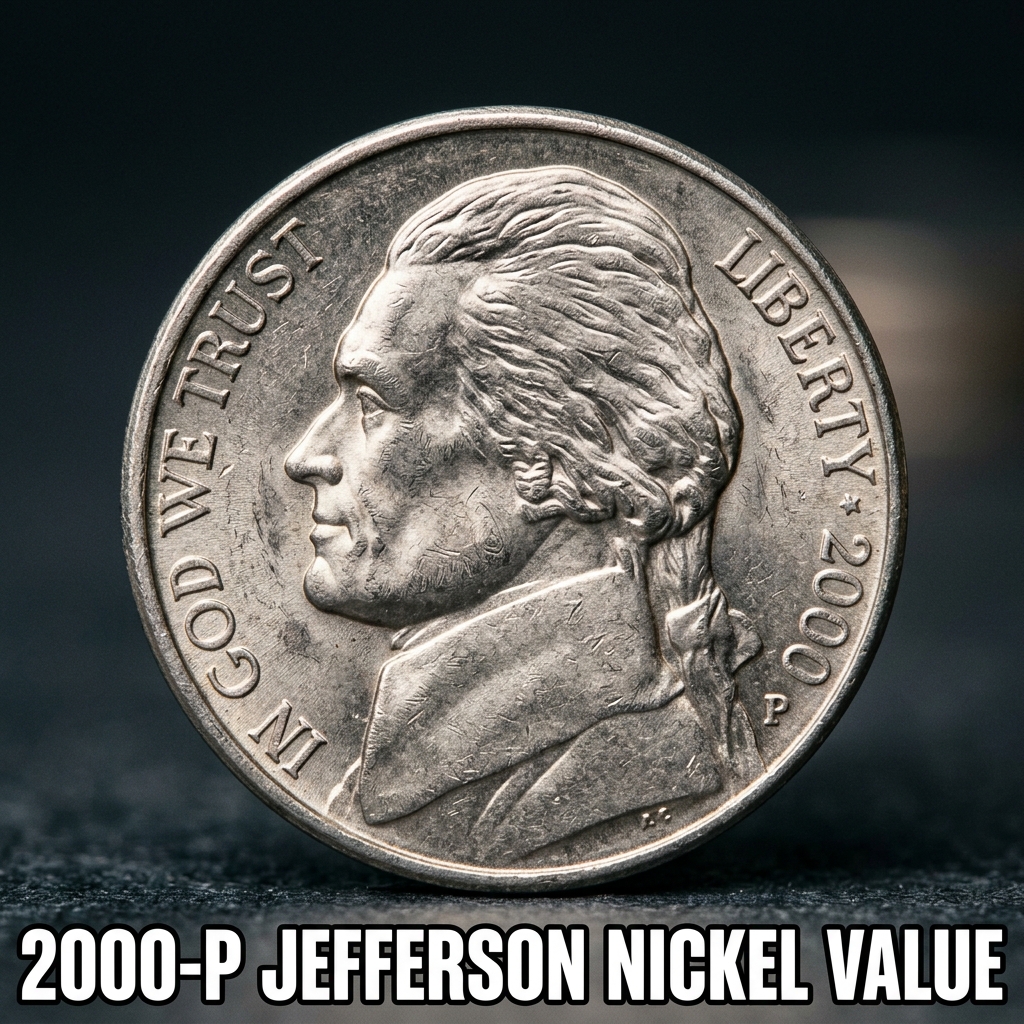

The 2000-P Jefferson Nickel is worth anywhere from face value (5 cents) in circulated condition to around $15 or more in pristine, uncirculated mint state. If you just found one in a drawer or change jar, you’re in the right place — this guide will tell you exactly what you’re holding.
What Is the 2000-P Jefferson Nickel?
The “P” in 2000-P stands for the Philadelphia Mint, one of the main U.S. mints that produced nickels that year. In 2000, the Philadelphia Mint struck over 846 million Jefferson Nickels — making this a very common coin in terms of raw numbers.
But here’s the thing: just because a coin was made in large quantities doesn’t mean every single one is worthless. Condition is everything in coin collecting, and a well-preserved 2000-P nickel can still fetch a nice premium over face value.
If you’re not sure how to evaluate your coin, a free coin identifier app can help you get a quick read on what you’ve got before you visit a dealer or list it for sale.
How Much Is a 2000-P Jefferson Nickel Worth by Grade?
The value of your 2000-P Jefferson Nickel depends heavily on its grade — a standardized scale from 1 to 70 that coin experts use to describe a coin’s condition. A coin pulled straight from circulation will sit in the lower ranges, while an uncirculated coin with full, sharp steps on Monticello’s steps (known as “Full Steps”) can be worth considerably more.
Here’s a breakdown of typical values based on grade:
| Grade | Condition | Estimated Value |
|---|---|---|
| G (Good, G-4) | Heavily worn, design visible | Face value ($0.05) |
| VF (Very Fine, VF-20) | Moderate wear on high points | $0.10 – $0.25 |
| MS-63 | Uncirculated, minor blemishes | $0.50 – $1.50 |
| MS-65 | Gem uncirculated | $2.00 – $5.00 |
| MS-66 Full Steps | Premium uncirculated, sharp steps | $8.00 – $15.00+ |
| MS-67 Full Steps | Superb gem, near perfect | $50.00+ |
For a more detailed look at certified sale prices and auction records, you can check out the 2000-P Jefferson Nickel MS grade price data to see what these coins are actually selling for.
What Makes a 2000-P Nickel More Valuable
Most 2000-P Jefferson Nickels you find in pocket change are worth exactly five cents. But there are a few factors that can push the value higher.
Full Steps (FS) — This is the big one. If the steps on the reverse side of the coin (on Monticello’s facade) show five or six complete, unbroken horizontal lines, it qualifies as a Full Steps coin. These are rare even in uncirculated batches, and collectors pay a significant premium for them.
Professional grading — A coin graded and slabbed by PCGS or NGC carries more credibility and typically sells for more. An MS-66 FS coin in a PCGS holder is worth far more than a raw coin claimed to be the same grade.
Strike quality and luster — Coins with strong, even strikes and original mint luster are more desirable. Any cleaning, polishing, or damage will hurt value considerably.
CoinKnow is a great tool for learning how these grading factors work. The app walks you through what to look for on common coins like this one, helping everyday collectors make smarter decisions.
2000-P Nickel Errors and Varieties to Look For
Error coins can dramatically increase a coin’s value — even on a year as common as 2000. Here are a few errors worth watching for on the 2000-P Jefferson Nickel:
Double die obverse (DDO) — Look for doubling in the lettering or Jefferson’s portrait on the front of the coin. Even minor doubling can make a coin more collectible.
Off-center strikes — If the design is noticeably shifted off-center, that’s a minting error. Coins that are 10–20% off-center can be worth $20–$50 or more, depending on how dramatic the shift is.
Die cracks and cuds — Small raised lines or blobs caused by a cracked die are also collectible errors.
If you’re not sure whether your coin has an error, CoinKnow can help you compare your coin to known varieties and error types using your phone’s camera. It’s one of the easiest ways to avoid missing something valuable hiding in your change.
You can also explore a full breakdown of 2000 nickel value details including error varieties to see if your coin matches any known collectible types.
Should You Get Your 2000-P Nickel Graded?
If your coin looks uncirculated with sharp details and no marks, it might be worth submitting to PCGS or NGC for professional grading — especially if the Full Steps are visible. Grading fees typically start around $20–$30, so it only makes sense if your coin could realistically grade MS-65 FS or better.
For most 2000-P nickels found in circulation, grading isn’t worth the cost. But if you pull one from an original mint set or find one that looks exceptional, it’s worth a second look.
FAQ
Q: Is a 2000-P Jefferson Nickel rare?
A: Not in general — over 846 million were minted. However, examples in high grades with Full Steps are relatively scarce and can command strong premiums among collectors.
Q: What does the “P” mint mark mean on a 2000 nickel?
A: The “P” stands for Philadelphia Mint. The 2000 nickel was also produced at the Denver Mint (marked “D”). Both are common, but values can differ slightly by grade.
Q: How can I tell if my 2000-P nickel has Full Steps?
A: Flip the coin over and look at the steps below Monticello’s entrance. If you can count five or six complete, unbroken horizontal steps, it likely qualifies as Full Steps. Using CoinKnow to scan your coin is an easy way to get a quick visual check and comparison.