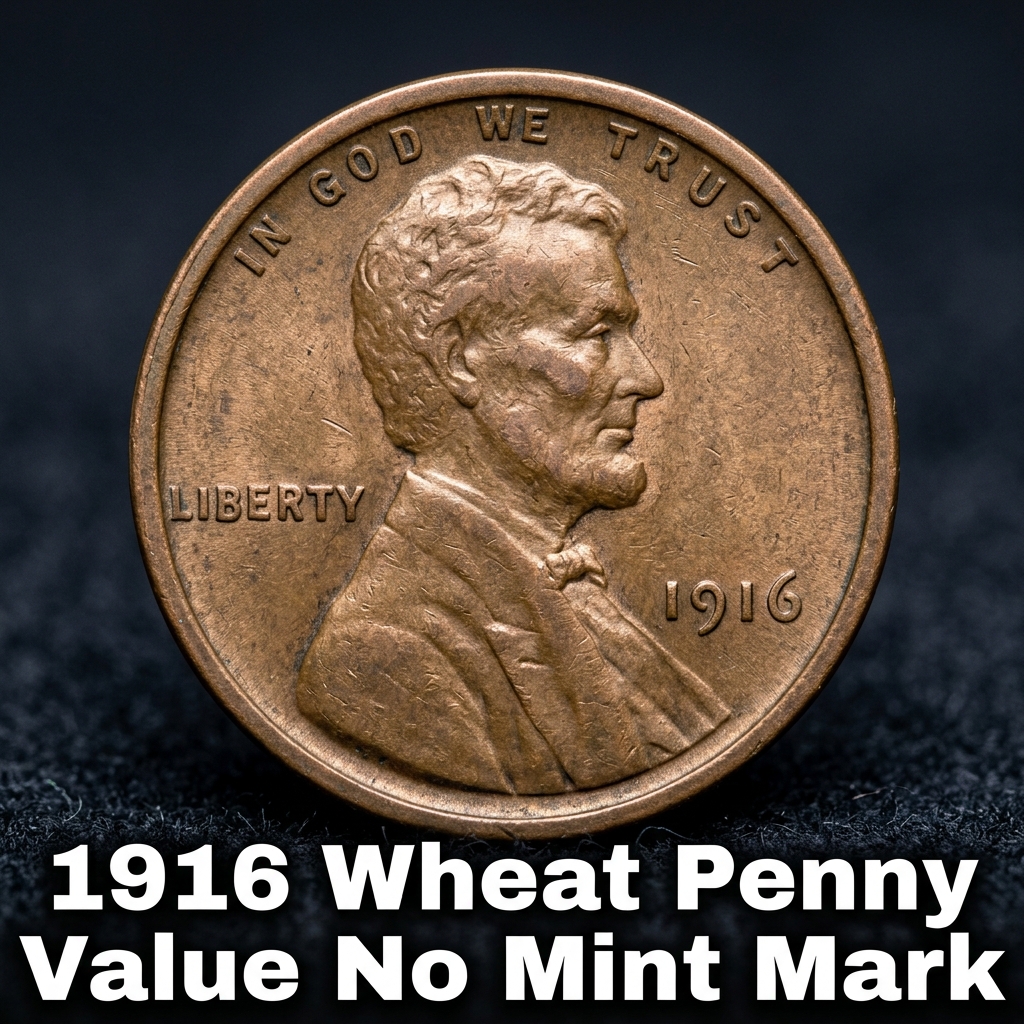

The 1916 Wheat Penny with no mint mark is worth anywhere from $0.50 in heavily worn condition to over $60 or more in uncirculated grades — and if you’ve got one sitting in an old jar or coin box, it might be more valuable than you think. Let’s break down exactly what this coin is worth and what to look for.
—
What Is the 1916 Wheat Penny No Mint Mark?
If you’ve stumbled across an old Lincoln cent dated 1916 with no mint mark on it, you’re holding a coin struck at the Philadelphia Mint. Back in 1916, the Philadelphia Mint produced over 131 million of these pennies, making it the most common variety of the year compared to the Denver and San Francisco issues.
The “no mint mark” simply means the coin was made in Philadelphia — back then, the Philly Mint didn’t stamp a mint mark on its coins, which is still true for many issues even today.
To get a quick read on whether your coin is worth anything, you can use a free coin identifier app right on your phone. Just snap a photo and let the app do the heavy lifting before you head to a coin dealer.
The coin features Victor David Brenner’s iconic portrait of Abraham Lincoln on the obverse — the same design that’s still used on pennies today — and two wheat stalks framing the words “ONE CENT” on the reverse, which is where the “Wheat Penny” nickname comes from.
—
1916 Wheat Penny Value by Grade
The condition of your coin is everything when it comes to value. Collectors use a grading scale from 1 to 70, and even a small difference in condition can mean a big jump in price.
Here’s a general breakdown of what the 1916 Wheat Penny with no mint mark is worth across different grades:
| Grade | Condition Description | Estimated Value |
|---|---|---|
| Good (G-4) | Heavily worn, flat details | $0.50 – $1 |
| Very Good (VG-8) | Some detail visible, worn rim | $1 – $2 |
| Fine (F-12) | Moderate wear, clear lettering | $2 – $4 |
| Very Fine (VF-20) | Light to moderate wear | $5 – $8 |
| Extremely Fine (EF-40) | Slight wear on high points only | $10 – $18 |
| About Uncirculated (AU-58) | Barely worn, most luster remains | $20 – $35 |
| Mint State (MS-63) | Uncirculated, some marks | $40 – $60 |
| Gem Mint State (MS-65+) | Near perfect, full red luster | $100 – $300+ |
For the most up-to-date auction results and certified coin prices, you can check out current 1916 Wheat Penny MS-RD price data to see what these coins are actually selling for right now.
—
What Makes a 1916 Wheat Penny Worth More?
Not all 1916 Wheat Pennies are equal. A few factors can push the value significantly higher than the averages listed above.
Color designation is a big one. Uncirculated copper coins are graded by color: Red (RD), Red-Brown (RB), or Brown (BN). A full Red example — meaning it still has its original bright copper color — can sell for two to three times more than a Brown example in the same grade.
Strike quality matters too. Some 1916 Philadelphia cents came off the dies with sharp, well-defined details, while others are a bit soft or weak. A sharply struck coin with crisp wheat lines and a bold Lincoln portrait will attract more serious collector interest.
Eye appeal is something dealers and collectors pay attention to even if it isn’t always reflected in the grade number. A coin that’s free of spots, cleaning marks, or corrosion will always command a premium.
—
How to Check If Your 1916 Penny Has Been Cleaned
One of the most common mistakes people make with old coins is cleaning them. It seems like a natural thing to do — you find a dirty old penny, you want to see it shine — but cleaning actually destroys the coin’s surface and dramatically lowers its value.
A cleaned coin will often look unnaturally bright or have fine hairline scratches when viewed under light. The color might look too uniform, or it might have a washed-out, dull appearance rather than the warm glow of original luster.
If you’re unsure whether your coin has been cleaned or altered, CoinKnow can help you understand what to look for. The app walks you through key visual details that distinguish a naturally toned coin from a cleaned one — no numismatic degree required.
For a detailed breakdown of 1916 penny values across all conditions and varieties, this comprehensive 1916 penny value guide covers everything from circulated grades to the rarest red uncirculated examples.
—
Should You Get Your 1916 Wheat Penny Graded?
If your coin looks like it’s in Very Fine condition or better, it might be worth submitting to a professional grading service like PCGS or NGC. Getting a coin professionally graded puts it in a tamper-evident holder with an official grade, which makes it easier to sell and typically increases buyer confidence.
However, for most circulated examples worth under $10 or $15, the cost of grading (usually $30–$50 per coin) doesn’t make financial sense. In that case, you’re better off selling raw or holding onto it as part of a collection.
If you want a quick second opinion before spending money on grading, CoinKnow lets you photograph your coin and get an instant assessment, which can help you decide whether professional grading is even worth the investment.
And if you’re just getting started with coins in general, downloading CoinKnow is a smart first step — it helps everyday people understand what they have without needing years of experience or a library of reference books.
—
FAQ
Q: Is a 1916 Wheat Penny with no mint mark rare?
A: Not particularly. Over 131 million were minted in Philadelphia, making it one of the more common Wheat Penny dates. That said, high-grade examples with full red color are genuinely scarce and worth good money.
Q: How do I know if my 1916 penny is in good condition?
A: Look at the high points — Lincoln’s cheekbone, the wheat stalks, and the lettering. If those areas show sharp detail and there’s no heavy wear, you likely have a Fine to Very Fine coin or better. A magnifying glass helps a lot.
Q: Can I sell my 1916 Wheat Penny online?
A: Yes. eBay is the most popular platform for selling individual coins to collectors. Just make sure to photograph it in good lighting and be honest about the condition. Searching completed sales for “1916 Wheat Penny” will give you a realistic sense of current market prices.