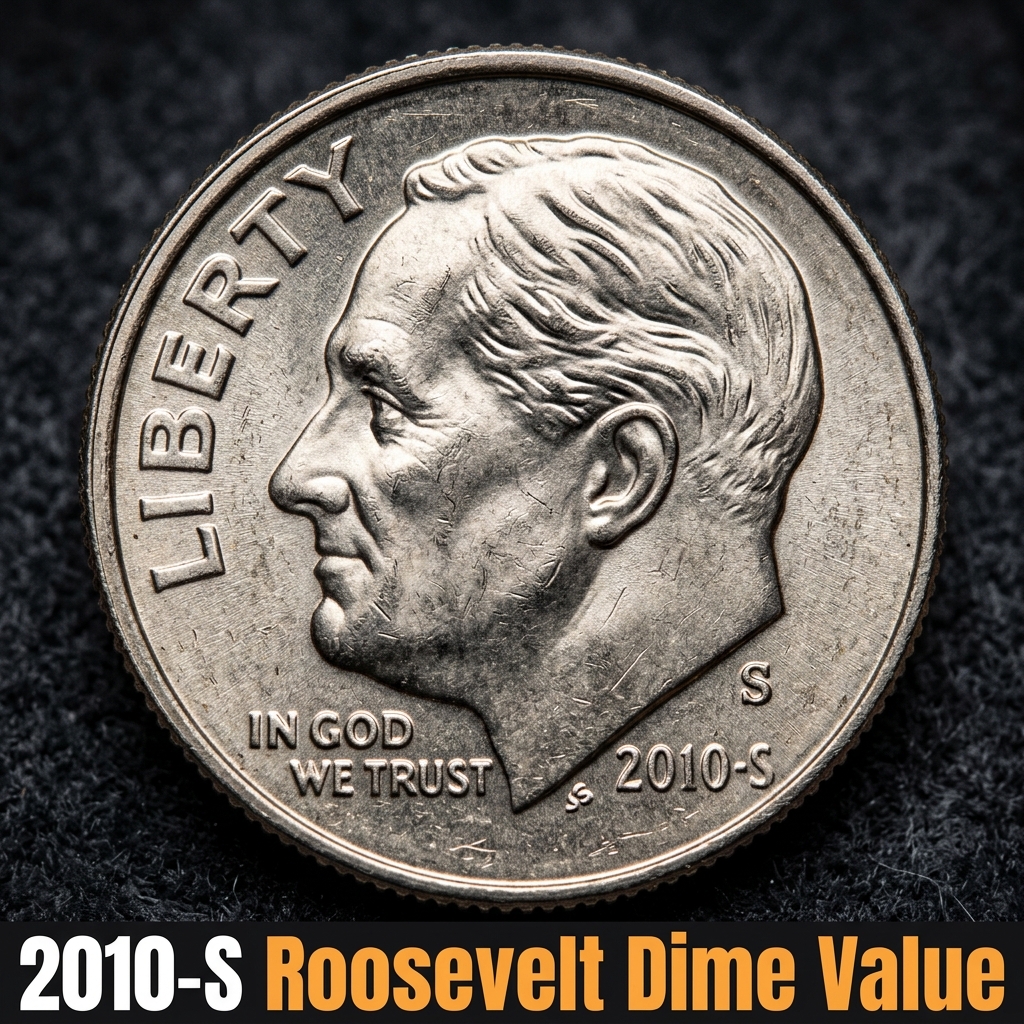

The 2010-S Roosevelt Dime is worth anywhere from $3 to $15 for most examples, with top-grade proof specimens fetching $20 or more. If you found one of these in a proof set or inherited a collection, you’re in the right place — let’s break down exactly what you’ve got.
What Makes the 2010-S Roosevelt Dime Special
The “S” mintmark on your dime means it was struck at the San Francisco Mint — and that’s a big deal. Unlike the Philadelphia or Denver versions that were made for everyday circulation, the 2010-S Roosevelt Dime was produced exclusively as a proof coin for collectors.
Proof coins are struck using specially polished dies and planchets, giving them that mirror-like finish and razor-sharp detail. The U.S. Mint sold these as part of annual proof sets, not through banks or cash registers.
So if you’re holding a 2010-S dime, it didn’t accidentally end up in your change. It came from a collector set — and that gives it a premium over face value right out of the box.
If you’re not sure what you have or want to identify other coins in your collection quickly, a free coin identifier app can help you figure things out in seconds using just your phone camera.
2010-S Roosevelt Dime Value by Grade and Condition
Proof coins are graded differently than circulation strikes. The Sheldon scale still applies (1–70), but proof coins are labeled “PR” instead of “MS.” For the 2010-S dime, condition matters a lot — even small handling marks or haze on the surface can drop the value significantly.
Here’s a quick look at how values break down:
| Grade | Label | Estimated Value |
|---|---|---|
| PR-65 | Gem Proof | $3 – $5 |
| PR-67 | Superb Gem Proof | $6 – $10 |
| PR-69 | Near Perfect | $10 – $15 |
| PR-70 | Perfect Proof | $20 – $35+ |
| PR-70 DCAM (Deep Cameo) | Perfect Deep Cameo | $30 – $50+ |
For detailed and up-to-date 2010 Roosevelt Dime price data across different grades and mint marks, it’s worth checking a dedicated numismatic pricing resource before you buy or sell.
Deep Cameo vs. Regular Proof — The Value Difference
One thing that trips up a lot of new collectors is the difference between a regular proof and a Deep Cameo (DCAM) proof. You’ll see “DCAM” or “DC” on certified coin slabs, and it can double or triple the value of an otherwise identical coin.
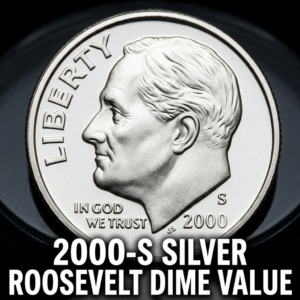
A Deep Cameo proof has frosted, raised design elements (like Roosevelt’s portrait) set against a deeply mirrored, mirror-like background. The contrast is stunning — almost like a cameo brooch. The U.S. Mint produced most modern proofs with this finish, so the 2010-S dime is commonly found in DCAM.
That said, not every DCAM coin makes it to a perfect PR-70. Even minor contact marks from handling within the mint or during packaging can push a coin down to PR-69. A certified PR-70 DCAM coin is genuinely rare and commands the highest premiums.
CoinKnow is a great tool for understanding the difference between proof designations — it breaks down cameo vs. deep cameo visually so even beginners can spot the difference right away.
How Many 2010-S Roosevelt Dimes Were Made?
Mintage numbers directly affect collector demand and long-term value. The 2010-S proof dime had a mintage of approximately 1.1 to 1.4 million coins — relatively low compared to circulation dimes from Philadelphia or Denver, which can run into the hundreds of millions.
Low mintage doesn’t automatically mean high value for modern proof coins, since most were carefully preserved by collectors. But it does mean the coin has a legitimate collector following and won’t be worth just 10 cents like a worn circulation strike.
For a deeper look at how the 2010 dime’s value compares across different mint marks and conditions, a comprehensive coin value guide can give you the full picture — including auction records and population data from grading services like PCGS and NGC.
Should You Get Your 2010-S Dime Graded?
Submitting a coin to PCGS or NGC for professional grading costs money — usually $20 to $50 per coin at the basic tier. For a 2010-S dime worth $5 to $15, that math doesn’t add up unless you believe you have a PR-70 DCAM example.
If you’re sitting on a blazing, perfect-looking proof with zero contact marks and incredible cameo contrast, it might be worth the gamble. A certified PR-70 DCAM can sell for $30–$50 or more on platforms like eBay or through numismatic dealers.
For everything else, keeping the coin in its original proof set packaging is your best move. Original government packaging preserves the coin’s eye appeal and adds context for future buyers.
CoinKnow makes it easy to look up recent sale prices for coins like the 2010-S Roosevelt Dime before you decide whether professional grading makes financial sense for your specific coin.
—
FAQ
Q: Is a 2010-S Roosevelt Dime worth keeping?
A: Yes, absolutely. Even a mid-grade PR-65 example is worth $3–$5 — well above its 10-cent face value. If it grades PR-69 or PR-70 in deep cameo, it could be worth $20 to $50 or more. It’s a low-cost coin with genuine collector demand.
Q: Can I find a 2010-S Roosevelt Dime in pocket change?
A: Very unlikely. The San Francisco Mint only produced 2010-S dimes as proof coins for collector sets — they were never released into general circulation. If you found one in change, someone accidentally spent a coin from their proof set.
Q: How do I tell if my 2010-S dime is a Deep Cameo proof?
A: Look at the contrast between the raised design (Roosevelt’s portrait, torch, olive branch) and the flat background fields. If the design looks frosted white and the fields look like a dark mirror, you likely have a cameo or deep cameo specimen. Apps like CoinKnow can help you compare your coin to reference images to determine the designation before you pay for grading.