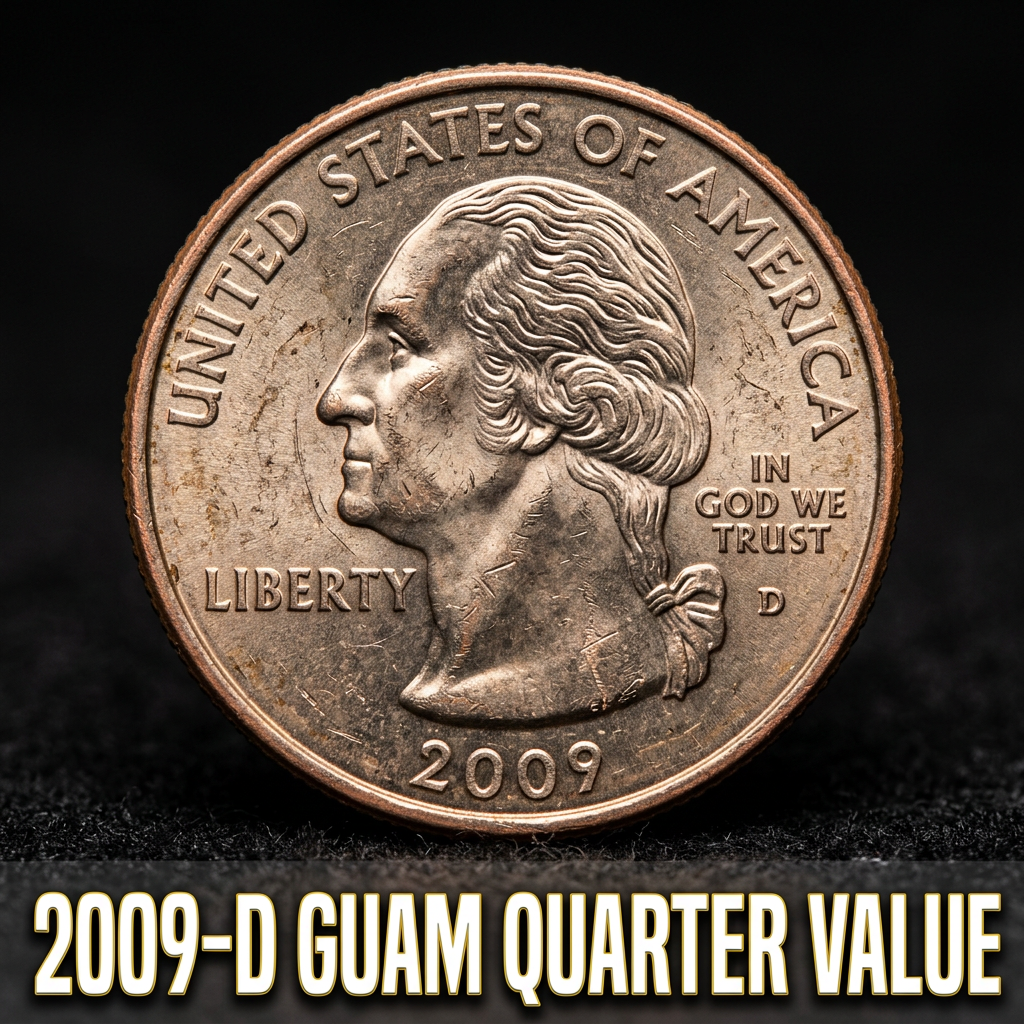

The 2009-D Guam Quarter is worth anywhere from 25 cents in circulated condition to $5 or more in uncirculated mint state — and certain error coins can fetch hundreds of dollars. If you found one of these in your change jar or an old collection, you’re in the right place to find out exactly what it’s worth.
If you’re not sure what coin you’re holding, a free coin identifier app can help you confirm the date, mint mark, and condition in seconds before you start researching its value.
What Is the 2009-D Guam Quarter?
The 2009-D Guam Quarter is part of the U.S. Territories Quarter Program, a special series released by the U.S. Mint in 2009. That year, instead of featuring states, the program honored six U.S. territories — including Guam, Puerto Rico, the U.S. Virgin Islands, and others.
The “D” in 2009-D tells you this coin was minted at the Denver Mint. The reverse side of the coin shows a traditional Chamorro sailing vessel called a flying proa, along with the outline of the island and the inscription “Guam — Tano I’ Man Chamorro,” which means “Land of the Chamorro.”
These quarters were made for general circulation, but many were also collected by coin enthusiasts from the start. As a result, well-preserved examples are more common than you might expect — but high-grade specimens still carry real collector value.
How Much Is the 2009-D Guam Quarter Worth Today?
For most people who find a 2009-D Guam Quarter in circulation, it’s worth face value — 25 cents. Coins that show heavy wear, scratches, or fading don’t command a premium among collectors.
However, uncirculated examples tell a different story. A coin that was never spent and shows its original mint luster can sell for $1 to $5 in MS-63 to MS-65 grades. Top-grade specimens at MS-67 or higher can reach $20 to $50 or more at auction.
Check out this detailed breakdown of 2009 quarter values by mint mark and grade if you want to compare your coin to recent sales data.
| Condition / Grade | Estimated Value |
|---|---|
| Circulated (worn) | Face value ($0.25) |
| Uncirculated (MS-63) | $1 – $3 |
| Uncirculated (MS-65) | $3 – $8 |
| Gem Uncirculated (MS-67) | $20 – $50+ |
| Error Coins | $50 – $300+ |
Error Coins That Can Be Worth Real Money
Here’s where things get exciting. Some 2009-D Guam Quarters were struck with minting errors, and those can be worth significantly more than a standard coin.
Common errors to look for include double die obverse (where the lettering or design appears doubled), off-center strikes (where the design is noticeably shifted), and die cap errors. These mistakes happen during the minting process and make each error coin a one-of-a-kind piece.
If your coin looks “off” in any way — misaligned design, doubled text, or unusual thickness — don’t spend it. Have it examined by a professional or use CoinKnow to get a quick preliminary assessment right from your phone.
How to Tell If Your 2009-D Guam Quarter Is Uncirculated
Grading your own coin doesn’t require years of experience. Start by looking at the high points of the design — the edges of the flying proa, the lettering, and Washington’s cheek on the obverse. Circulated coins show flat, dull spots in those areas from everyday wear.
Uncirculated coins, on the other hand, will have a bright, slightly shimmery surface called “mint luster.” It almost looks like light is moving across the coin as you tilt it. Fingerprints and scratches can lower the grade even on otherwise uncirculated coins, so always handle coins by the edges.
CoinKnow makes this process much easier. Just snap a photo of your coin and the app uses image recognition to estimate the grade and value range — no magnifying glass required. It’s a great first step before spending money on professional grading services.
Should You Get Your 2009-D Guam Quarter Graded?
If your coin looks genuinely uncirculated and you believe it might grade MS-66 or higher, professional grading through PCGS or NGC could be worth the investment. A certified MS-67 coin carries far more trust among buyers and typically sells for noticeably more than a raw (ungraded) coin.
That said, grading fees typically start around $20 to $30 per coin — so it only makes financial sense for coins you believe will appraise at MS-65 or above.
Not sure if your coin is worth grading? Run it through CoinKnow first. The app gives you a ballpark value estimate and grade range so you can make a smarter decision before committing to the cost of professional certification.
—
FAQ
Q: How many 2009-D Guam Quarters were made?
A: The Denver Mint produced approximately 42,600,000 2009-D Guam Quarters. While that sounds like a lot, high-grade uncirculated examples are still relatively scarce because most entered general circulation.
Q: Is the 2009-D Guam Quarter rare?
A: In circulated condition, no — it’s a common coin. But in top grades like MS-67 or higher, it becomes genuinely scarce and collectible. Error varieties are rare regardless of grade and can be worth significant money.
Q: Where is the best place to sell a 2009-D Guam Quarter?
A: eBay is a popular option for raw coins, while certified coins do well through Heritage Auctions or PCGS CoinFacts. Always check recent sold listings to set realistic price expectations before listing your coin.