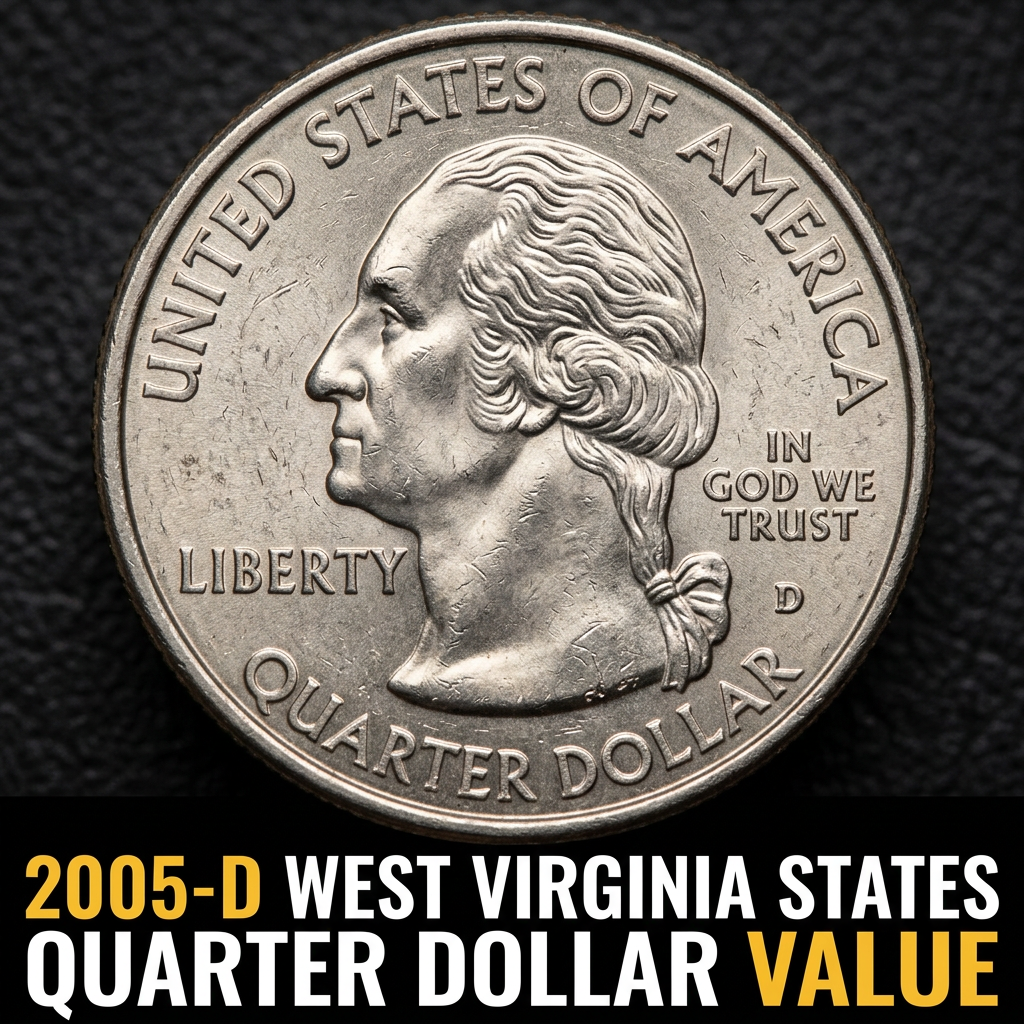

The 2005-D West Virginia State Quarter is worth between $0.25 and $35 depending on its condition, with exceptional uncirculated examples occasionally fetching even more among dedicated collectors. If you stumbled across one of these coins in your change jar or an old collection, you’re in the right place to find out exactly what you’ve got.
What Is the 2005-D West Virginia State Quarter?
The 2005-D West Virginia State Quarter is part of the United States Mint’s popular 50 State Quarters Program, which ran from 1999 to 2008. Each year, five new state designs were released, and West Virginia was one of the five honored in 2005. The reverse of the coin features the iconic New River Gorge Bridge — a stunning steel arch bridge that was the longest of its kind in the world when it was built. The “D” mintmark tells you this coin was struck at the Denver Mint.
These quarters were produced in enormous quantities, which means the vast majority found in everyday circulation are worth only their face value of 25 cents. But condition is everything in the coin world, and that’s where things get interesting.
If you’re not sure whether what you have is a standard issue or something more special, using a free coin identifier app can help you get a quick read on your coin before diving deeper into grading and valuation.
How Much Is the 2005-D West Virginia Quarter Worth Today
For most people, the 2005-D West Virginia State Quarter they find in circulation is worth exactly face value — 25 cents. That’s because billions of these coins were minted and most are heavily worn from years of use. However, coins that were never spent and are preserved in original mint condition tell a completely different story.
Uncirculated examples graded by professional services like PCGS or NGC can be worth anywhere from a few dollars to over $30. The highest mint state grades — MS67 and above — are where real collector premiums kick in.
Here’s a quick look at approximate values based on grade:
| Grade / Condition | Estimated Value |
|---|---|
| Circulated (Good to Fine) | Face value ($0.25) |
| Extremely Fine (EF-40) | $0.50 – $1.00 |
| Mint State MS-63 | $1.50 – $5.00 |
| Mint State MS-65 | $5.00 – $12.00 |
| Mint State MS-67 | $20.00 – $35.00+ |
For a broader look at how similar 2005 State Quarters are trending on the market, you can check out current price data for 2005 State Quarters in mint state grades, which gives useful context when comparing your West Virginia example.
What Makes a 2005-D West Virginia Quarter More Valuable
Most collectors focus on a few key factors when evaluating these coins: luster, strike quality, and the absence of bag marks or contact marks. Because State Quarters were primarily made for circulation, finding one with full original mint luster and no surface distractions is genuinely rare.
Strike quality matters too. A fully struck coin will show sharp detail in the bridge cables on the reverse and crisp lettering throughout. Softly struck coins — even if technically uncirculated — grade lower and fetch less money.
Another factor some collectors watch for is die varieties or minor errors. While no major widely publicized errors are known for the 2005-D West Virginia quarter, small die cracks, doubling, or off-center strikes can add a premium. Always examine your coin closely under good lighting and magnification.
CoinKnow is a great tool for collectors at every level who want to quickly assess their coins’ details and compare them against known varieties. Many users find it especially helpful for State Quarters because the design library is comprehensive.
How to Tell If Your West Virginia Quarter Is Worth Keeping
Step one is checking the mintmark. Flip the coin to the obverse (heads side) and look just to the right of Washington’s neck — you’ll see a small “D” for Denver or “P” for Philadelphia. The “D” mintmark is what you want for this particular coin.
Next, assess condition honestly. If the coin shows heavy wear — flat high points, dull surfaces, scratches — it’s likely a circulated example worth face value. If the coin has a bright, shiny appearance with no wear visible on the high points, you may have an uncirculated piece worth holding onto.
For a more complete breakdown of what 2005 quarters are worth across different grades and mint marks, there are dedicated resources that walk you through grading criteria in plain language — helpful if you’re new to coin collecting.
You can also download CoinKnow to scan and identify your coin instantly, which saves a lot of guesswork if you’re new to evaluating old quarters.
Should You Get Your Coin Professionally Graded
For most circulated West Virginia State Quarters, professional grading isn’t worth the cost — submission fees to PCGS or NGC typically start around $20-30 per coin, which quickly exceeds the coin’s value. However, if you believe you have a coin in MS-66 or higher condition, grading could make sense.
A certified MS-67 example is far easier to sell to a serious collector than a raw (ungraded) coin, and it commands a meaningful premium. If you’re sitting on what looks like a pristine, gem-quality quarter, CoinKnow can help you get a preliminary sense of its condition before committing to a formal grading service.
—
Frequently Asked Questions
Q: How many 2005-D West Virginia State Quarters were minted?
A: The Denver Mint produced approximately 356,200,000 West Virginia State Quarters in 2005. That’s over 356 million coins, which is why most are worth only face value in circulated condition. High-grade survivors are relatively uncommon despite the large mintage.
Q: Is the 2005-D West Virginia quarter rare?
A: In circulated condition, no — it is not rare at all. However, examples grading MS-67 or higher are genuinely scarce and considered conditionally rare by collectors. Finding a pristine, original mint state example without bag marks or contact marks is harder than you might expect.
Q: What’s the difference between the 2005-D and 2005-P West Virginia quarter?
A: The main difference is the mint that produced them. The “D” mint mark means Denver, while “P” means Philadelphia. Both versions have similar values in most grades, though population reports from grading services sometimes show one mint is scarcer than the other in top condition, which can affect price at auction.