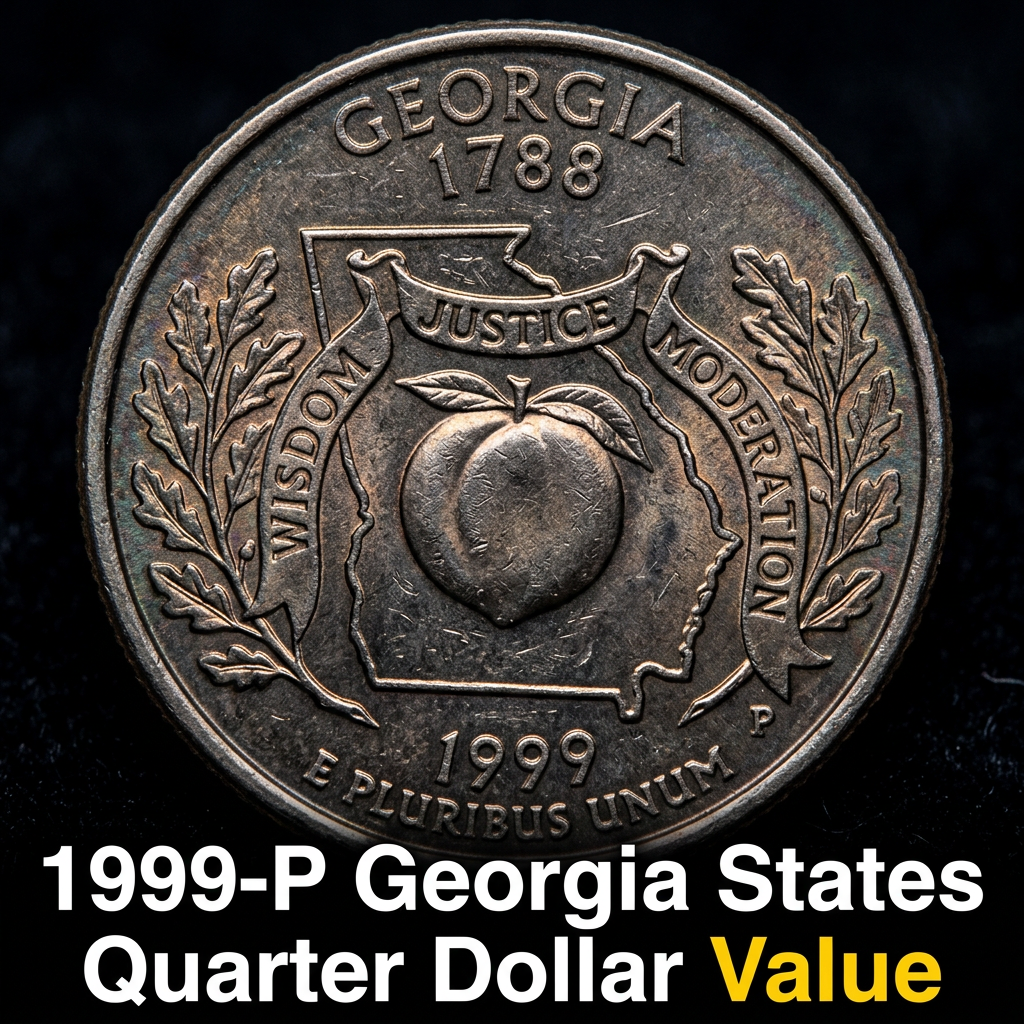

The 1999-P Georgia State Quarter is worth between $0.25 and $1 in circulated condition, but well-preserved examples graded MS-65 or higher can fetch anywhere from $5 to over $30 — and rare errors can be worth much more.
If you dug one of these out of a coin jar or found it in your change, you’re in the right place. This guide breaks down exactly what your 1999-P Georgia quarter is worth, what to look for, and whether you’re sitting on a hidden gem.
What Is the 1999-P Georgia State Quarter?
The 1999-P Georgia State Quarter was struck at the Philadelphia Mint as part of the U.S. Mint’s 50 State Quarters Program, which ran from 1999 to 2008. Georgia was the fourth state released in the series, hitting circulation in the summer of 1999.
The obverse features the classic George Washington portrait, while the reverse shows the iconic Georgia peach surrounded by a live oak branch and the state’s outline, with the motto “Wisdom, Justice, Moderation” inscribed along the bottom. It’s a beautiful design that many collectors still seek today.
The “P” mintmark stands for Philadelphia, and approximately 451,188,000 of these were produced — making them relatively common in circulated grades. But don’t let those big numbers fool you. High-grade uncirculated examples are harder to find than you might think, and errors can turn an ordinary quarter into a surprisingly valuable coin.
How Much Is the 1999-P Georgia Quarter Worth in Circulated Condition?
In everyday worn condition, the 1999-P Georgia quarter is worth face value — 25 cents. If you spent it at a register, nobody would blink an eye. But that doesn’t mean it’s worthless to collectors.
Lightly worn examples grading AU-50 to AU-58 (About Uncirculated) can bring anywhere from $0.50 to $2 from a dealer or at a coin show. These still show most of their original design details and a hint of mint luster on the high points.
The coin truly starts gaining value when it’s fully uncirculated. For a quick look at 1999-P State Quarter price data across multiple grade levels, you can compare market values and see how quickly the price jumps in higher mint state grades. Even a modest MS-63 example can be worth $3 to $5, which is a nice step up from face value.
Mint State Values and Certified Coin Prices
This is where things get interesting for collectors. Uncirculated 1999-P Georgia quarters that have been professionally graded by PCGS or NGC can command real premiums, especially at the top of the scale.
Here’s a general value table for this coin:
| Grade | Description | Estimated Value |
|---|---|---|
| VF-20 to EF-45 | Circulated, moderate to light wear | $0.25 – $0.75 |
| AU-50 to AU-58 | About Uncirculated, slight wear | $0.75 – $2.00 |
| MS-63 | Uncirculated, minor blemishes | $3 – $5 |
| MS-65 | Gem Uncirculated | $8 – $15 |
| MS-67 | Superb Gem Uncirculated | $25 – $50+ |
| Error Coins | Varies by type | $50 – $500+ |
For more detailed and updated 1999 Georgia State Quarter value information by grade and condition, it’s always smart to cross-reference current market data before buying or selling.
Error Coins That Can Be Worth Big Money
Most 1999-P Georgia quarters you’ll encounter are perfectly ordinary — but errors are a different story entirely. Collectors love mint errors, and a few types have shown up on this issue.
Double Die Obverse (DDO): A doubling effect on Washington’s portrait or lettering. Look closely with a magnifying glass at the date or the motto “IN GOD WE TRUST.” Confirmed DDO examples can be worth $25 to $100 or more depending on the strength of the doubling.
Off-Center Strikes: When the coin blank isn’t properly centered during striking, part of the design is missing. A 10–15% off-center strike might bring $30 to $75. A dramatic 40–50% off-center example with the date still visible? That could easily top $200.
Wrong Planchet Errors: Extremely rare, but 1999-era quarters have occasionally been struck on dime or foreign coin blanks. These are highly sought after and can sell for hundreds of dollars at auction.
If you think you’ve got something unusual, CoinKnow is a great tool to help you identify what you’re looking at. CoinKnow uses image recognition to scan your coin and flag potential errors — it’s fast, easy, and a lot of fun to use even if you’re just getting started in coin collecting.
How to Tell If Your 1999-P Georgia Quarter Is Worth More
So you’ve got a coin and you want to know if it’s a regular find or something special. Here’s what to do.
First, look at the condition. Does the coin have any scratches, cleaning marks, or discoloration? Cleaned coins lose significant value to collectors even if they look shiny. Original luster with no cleaning is key for top grades.
Second, check for the mintmark. Just above the year on the obverse, you’ll see either a “P” for Philadelphia or a “D” for Denver. The 1999-D Georgia quarter exists too, but for this article we’re focused on the Philadelphia issue.
Third, examine the details under magnification. A jeweler’s loupe or even a smartphone macro camera can reveal doubling, die cracks, or other anomalies that boost value. CoinKnow can help you snap a photo and get instant feedback, which is especially handy if you’re not sure what you’re looking at.
Finally, if you believe your coin is high-grade or has an error, consider submitting it to PCGS or NGC for professional grading. The cost is modest, and certification dramatically increases buyer confidence — and sale price.
FAQ
Q: Is the 1999-P Georgia State Quarter rare?
A: No, it’s not rare in circulated grades — over 451 million were made. However, high-grade examples (MS-67 and above) and mint errors are genuinely scarce and worth money to collectors.
Q: Where can I sell my 1999-P Georgia quarter?
A: You can sell on eBay, at a local coin show, or through a coin dealer. For common circulated examples, face value is realistic. For graded or error coins, online auctions tend to get the best prices. Apps like CoinKnow can also help you understand your coin’s value before you sell.
Q: Does a 1999-P Georgia quarter need to be graded to be valuable?
A: Not necessarily. Raw (ungraded) coins can still sell well if the coin clearly looks uncirculated or has an obvious error. But for coins you believe are MS-65 or higher, professional grading from PCGS or NGC adds credibility and typically increases the final sale price significantly.