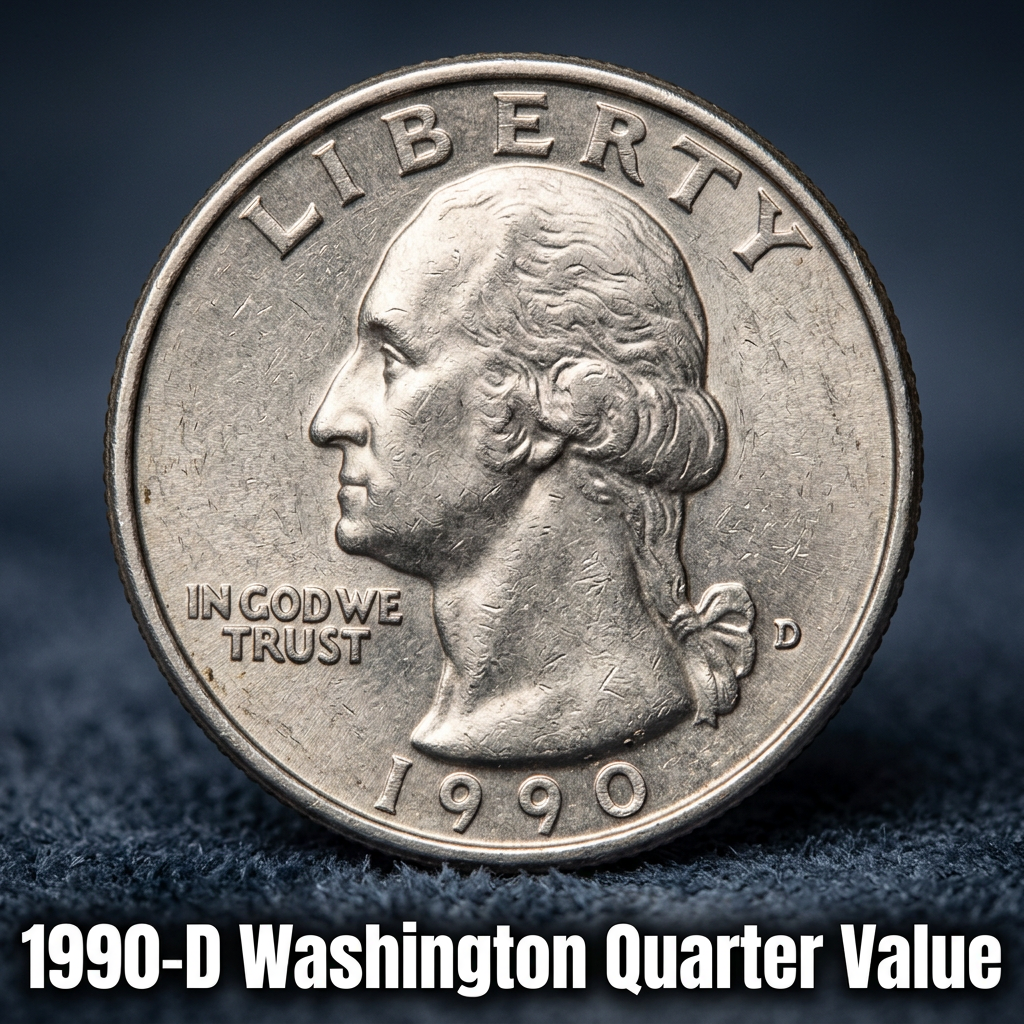

The 1990-D Washington Quarter is worth between $0.25 in heavily circulated condition and $10 or more in mint state, with top-grade examples occasionally selling for $25 and beyond. If you found one in your change or a coin jar, you’re in the right place — let’s break down exactly what you’ve got.
—
What Is the 1990-D Washington Quarter?
The 1990-D Washington Quarter was minted at the Denver Mint, which is what the “D” mint mark stands for. You’ll find that tiny letter on the obverse (heads side) of the coin, just to the right of Washington’s portrait.
Denver produced a massive number of these quarters in 1990 — over 927 million of them. That large mintage is the main reason most circulated examples are only worth face value. But don’t toss it aside just yet. Condition matters a lot in coin collecting, and even a common coin can surprise you when it’s in excellent shape.
If you’re not sure what you’re looking at, a free coin identifier app can help you quickly scan the coin and get a read on its grade and approximate value — no experience required.
—
1990-D Quarter Value by Condition
The value of your 1990-D Washington Quarter depends almost entirely on its grade — which is just a fancy way of saying how worn or well-preserved the coin looks.
Here’s a simple breakdown:
| Condition | Grade (Sheldon Scale) | Estimated Value |
|---|---|---|
| Heavily Worn | G-4 to F-12 | $0.25 (face value) |
| Lightly Circulated | EF-40 to AU-58 | $0.50 – $2 |
| Uncirculated | MS-60 to MS-64 | $2 – $8 |
| Gem Uncirculated | MS-65 and above | $10 – $25+ |
For a deeper look at current market prices for high-grade Washington Quarters from this era, auction records and dealer listings can give you a real-time picture of what buyers are paying.
—
How to Tell If Your 1990-D Quarter Is Worth More
Most 1990-D quarters you’ll find in pocket change are circulated — meaning they’ve been handled, spent, and passed around for decades. These coins typically show flat details on Washington’s hair and cheek, and the eagle on the reverse may look soft or dull. In this shape, the coin is really only worth 25 cents.
But if you happen to find a 1990-D quarter that looks bright, sharp, and almost like new — with clear lines in Washington’s hair, no scratches, and strong luster — you may have an uncirculated example. These weren’t pulled from circulation; they came straight from the mint rolls.
The jump in value from MS-64 to MS-65 can be significant. Professionally graded coins certified by PCGS or NGC at MS-65 have sold for $15 to $25, and the occasional MS-66 example can fetch even more. CoinKnow is a great tool to help you understand grading basics and see how coins in different conditions are described, so you can make a smarter assessment before spending money on professional grading.
—
Error Coins and Special Varieties to Look For
Here’s where things get exciting. While the 1990-D quarter doesn’t have a widely documented major variety like doubled dies or repunched mint marks the way some other years do, error coins do occasionally show up from this era.
Off-center strikes, die cracks, and clipped planchets are the errors most commonly found on coins from this period. An off-center 1990-D quarter that’s 15–20% off-center with the date still visible could be worth $20 to $50 or more to the right collector.
If you suspect you have an error coin, don’t clean it. Cleaning a coin — even with soap and water — can destroy its numismatic value instantly. Instead, seal it in a soft holder or flip and consult a professional. You can also use CoinKnow to photograph your coin and get a community opinion on whether what you’re seeing is a true mint error or just post-mint damage.
For a comprehensive overview of what the 1990 Washington Quarter is worth across all mint marks and conditions, it’s worth reviewing detailed value guides that cover both the P and D mint issues side by side.
—
Should You Hold On To It or Sell?
For most circulated 1990-D Washington Quarters, there’s no compelling financial reason to hold onto them unless you’re building a date set. The coin is common, and supply far exceeds collector demand at the lower grades.
That said, if you’ve got an uncirculated roll or a coin in gem condition, it might be worth getting a professional opinion before you spend it. Coins graded MS-65 and above do have a small but real collector following, and submitting to PCGS or NGC for grading can be worthwhile if you’re confident in the coin’s quality.
CoinKnow can be a smart first step before you invest in professional grading — it helps you understand what to look for and whether your coin is even in the ballpark for submission. No point spending $30 on grading a coin worth $1.
—
FAQ
Q: Is the 1990-D Washington Quarter rare?
A: No. The Denver Mint struck over 927 million of them in 1990, making it one of the more common Washington Quarter dates. Most are only worth face value in circulated condition.
Q: What does the “D” mean on my quarter?
A: The “D” is a mint mark indicating the coin was produced at the Denver Mint in Colorado. A quarter without a mint mark from 1990 was made at the Philadelphia Mint.
Q: Can I find a 1990-D quarter worth real money?
A: Yes — if the coin is in gem uncirculated condition (MS-65 or better), it can be worth $15 to $25 or more. Error coins with dramatic off-center strikes or other mint mistakes can also carry a premium depending on the severity of the error.