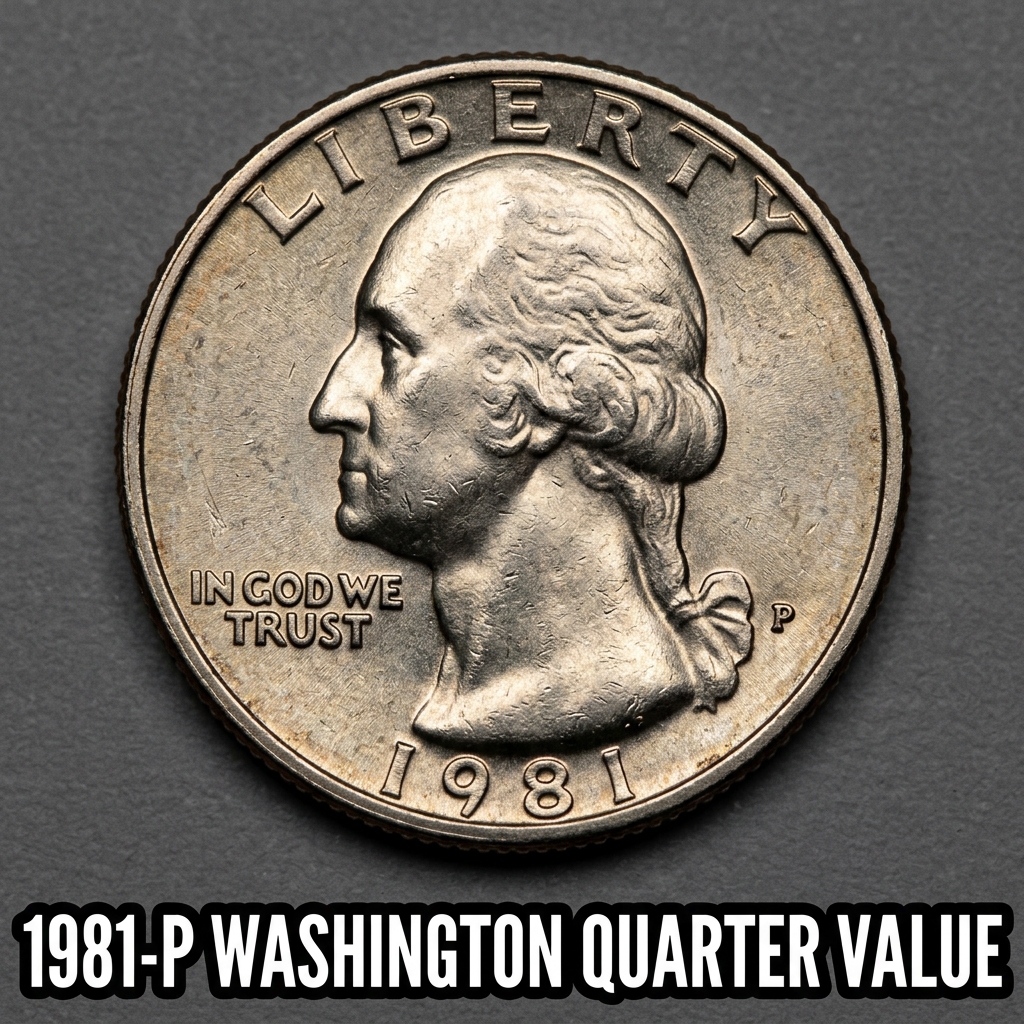

The 1981-P Washington Quarter is worth anywhere from 25 cents in heavily worn condition to over $15 or more in uncirculated mint state — and a handful of top-grade specimens have sold for hundreds of dollars at auction. If you just found one of these coins in a drawer, a jar, or a roll of change, you’re in the right place. Let’s break down exactly what this coin is worth and why.
Background on the 1981-P Washington Quarter
The Washington Quarter has been a staple of American pocket change since 1932. By 1981, the U.S. Mint in Philadelphia was striking hundreds of millions of quarters every year to meet the country’s demand for everyday commerce.
The “P” mintmark on the 1981-P Washington Quarter stands for Philadelphia, and it officially started appearing on these coins in 1980 — a relatively recent change at the time. In 1981, the Philadelphia Mint struck over 601 million of these quarters, making them incredibly common in circulated grades.
That high mintage is the main reason most circulated 1981-P quarters are only worth face value. But condition is everything in the coin world, and that’s where things get interesting.
If you’re not sure whether your coin has any special characteristics, a free coin identifier app can help you analyze the coin’s details quickly right from your phone. Tools like CoinKnow use image recognition to identify coins and give you an instant grade estimate — no magnifying glass required.
How Much Is the 1981-P Washington Quarter Worth?
Value depends almost entirely on the coin’s condition, also called its “grade.” Here’s a simple breakdown of what you can expect:
| Grade / Condition | Estimated Value |
|---|---|
| Good (G-4) – Heavy Wear | Face value ($0.25) |
| Fine (F-12) – Moderate Wear | $0.25 – $0.50 |
| Extremely Fine (EF-40) | $0.50 – $1.00 |
| About Uncirculated (AU-55) | $1.00 – $3.00 |
| Mint State (MS-63) | $5.00 – $10.00 |
| Gem Mint State (MS-65) | $12.00 – $20.00+ |
| Superb Gem (MS-67 and above) | $100.00 – $400.00+ |
For the most current auction results and certified coin prices, you can check out the detailed 1981-P Washington Quarter price data by grade — it’s updated regularly and gives you a real sense of what collectors are actually paying.
What Makes Some 1981-P Quarters More Valuable
Most 1981-P quarters you’ll encounter are well-worn from decades of use, and those are only worth face value. But coins that were saved directly from the mint rolls or bank bags — never touched, never spent — can be worth a surprising amount.
At the very top of the grading scale, MS-67 and MS-67+ coins are genuinely rare. Even though over 601 million were minted, surviving examples in pristine condition are hard to find. That scarcity among high-grade survivors is what drives those big auction prices.
Errors are another thing to look for. Doubling on the date or lettering, off-center strikes, or other mint mistakes can dramatically increase a coin’s value. Always look closely at your coin under good lighting before assuming it’s just a common quarter.
How to Check Your 1981-P Quarter’s Condition
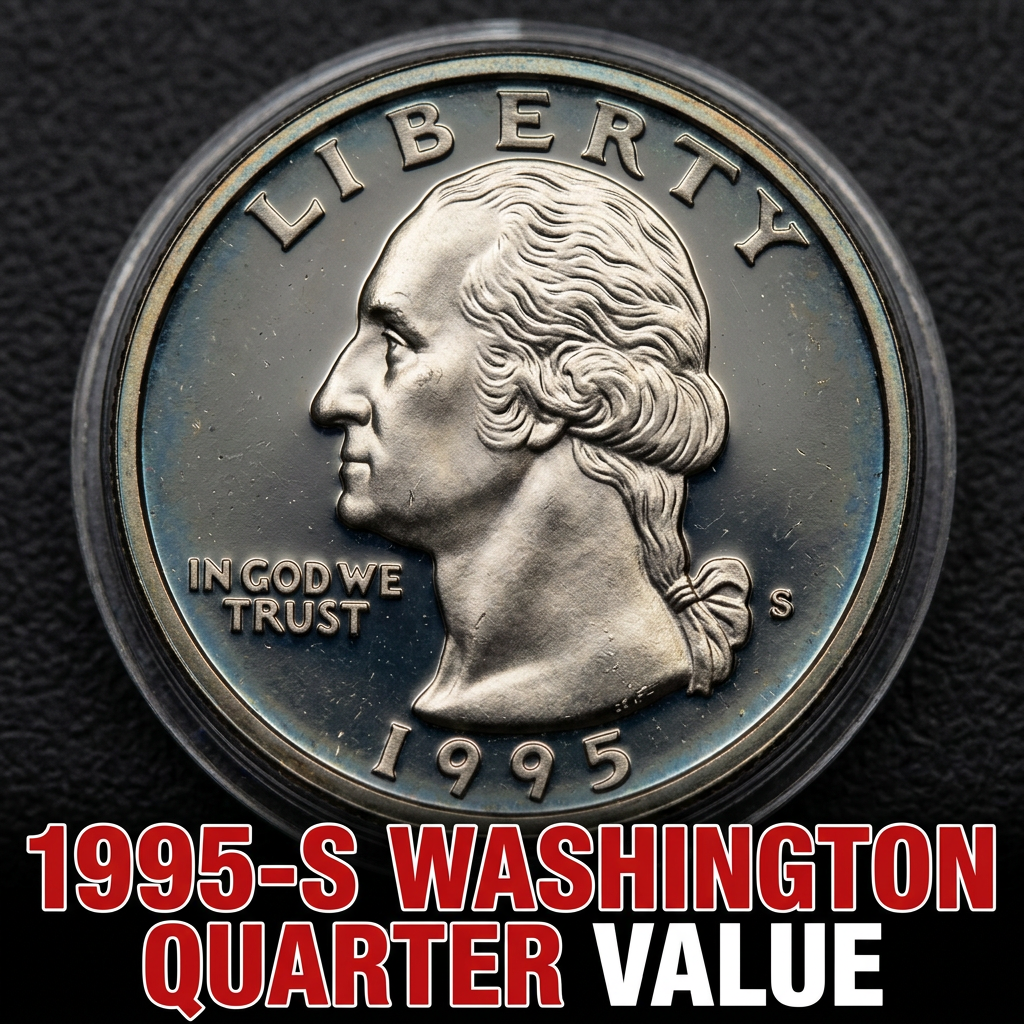
You don’t need to be an expert to do a basic condition check. Start by looking at Washington’s hair detail above the ear — on worn coins, those fine lines disappear completely. On an uncirculated coin, every strand is sharp and distinct.
Check the high points of the design for wear: Washington’s cheekbones, the top of the eagle’s wings on the reverse, and the lettering rims. Any flat, shiny spots usually indicate circulation wear.
For a more reliable estimate, the CoinKnow app lets you photograph your coin and get an AI-assisted grade in seconds. It’s one of the easiest ways to figure out if your coin is worth getting professionally graded by PCGS or NGC — something worth doing if you think you might have a high-grade example.
You can also find a comprehensive breakdown of 1981 quarter values across all grades and mint marks to compare your coin against known sale prices.
Is the 1981-P Washington Quarter Worth Keeping?
For most people, a worn 1981-P quarter is just a quarter. It’s common, it was made in huge numbers, and it spent decades circulating in American pockets and vending machines. That said, if your coin looks like it just came out of a mint roll — bright, sharp, with no wear — it could genuinely be worth $10 to $20 or more.
And if you happen to have a superb gem example or an error coin, you might be sitting on something significantly more valuable. It never hurts to take a closer look, especially when tools like CoinKnow make coin identification so accessible.
The bottom line: don’t spend it just yet. Give it a good look first.
FAQ
Q: Is the 1981-P Washington Quarter rare?
A: No, it’s one of the most common Washington Quarters ever made with over 601 million struck. However, coins in top mint state grades (MS-67 and above) are genuinely scarce and can be worth hundreds of dollars.
Q: What does the “P” mintmark mean on a 1981 quarter?
A: The “P” stands for the Philadelphia Mint. Starting in 1980, Philadelphia began adding its mintmark to quarters. Before that, Philadelphia-minted coins had no mintmark at all.
Q: Should I get my 1981-P quarter professionally graded?
A: Only if it appears to be in uncirculated or near-perfect condition. Professional grading by PCGS or NGC costs money, so it’s only worth it if the coin’s value in high grade justifies the expense — typically MS-65 or better.