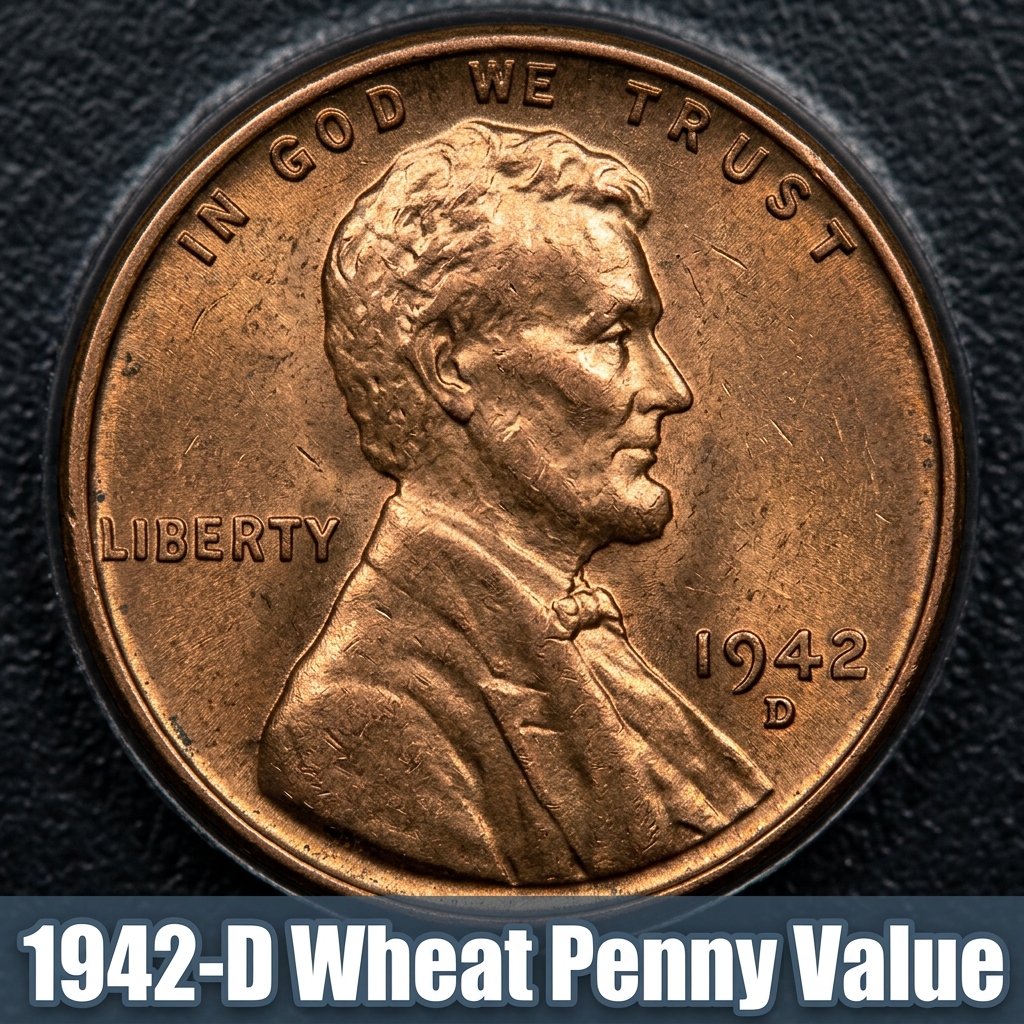

The 1942-D Wheat Penny is worth anywhere from $0.15 in heavily worn condition to over $10 in well-preserved circulated grades — and in top mint state, certified examples can fetch $50 or more. If you just found one of these old Lincoln cents in a jar, a drawer, or an old wallet, you’re in the right place to find out exactly what you’ve got.
What Is the 1942-D Wheat Penny?
The 1942-D Wheat Penny is a Lincoln cent struck at the Denver Mint during World War II. The “D” mintmark appears on the obverse (front) side of the coin, just below the date. This was a busy year for U.S. coin production — the country was ramping up for war, and the mint was striking coins in massive quantities to keep up with demand.
Over 206 million 1942-D Lincoln Wheat Pennies were produced, making it a relatively common date in the series. But don’t let those big numbers fool you — condition is everything when it comes to value. A coin that looks like it’s been through a gravel tumbler is worth pennies, while one that still has its original red copper shine can bring serious money from collectors.
If you’re not sure what you have, using a free coin identifier app is a great starting point to get a quick read on your coin’s grade and estimated value before you head to a dealer.
1942-D Wheat Penny Value by Grade
Coin values are driven almost entirely by condition, or what collectors call “grade.” A coin graded Good (G-4) looks flat and worn, while a coin graded Mint State (MS-63 or higher) looks like it just came off the press. Here’s a quick breakdown of what the 1942-D Wheat Penny is worth at different grades:
| Grade | Description | Estimated Value |
|---|---|---|
| Good (G-4) | Heavy wear, flat design | $0.15 – $0.25 |
| Fine (F-12) | Moderate wear, some detail visible | $0.35 – $0.75 |
| Extremely Fine (EF-40) | Light wear on high points | $1.50 – $3.00 |
| About Uncirculated (AU-55) | Slight wear, most luster intact | $4.00 – $8.00 |
| Mint State (MS-63 RD) | No wear, original red color | $15 – $35 |
| Mint State (MS-65 RD) | Gem quality, bright red | $50 – $100+ |
For the most up-to-date certified auction results, you can check out the latest 1942-D Wheat Penny price data in MS-RD condition to see what real buyers are paying right now.
What Makes a 1942-D Penny More Valuable
Color designation plays a huge role in Wheat Penny pricing. Grading services like PCGS and NGC assign three color labels to copper cents: Red (RD), Red-Brown (RB), and Brown (BN). A Red coin has retained most of its original copper luster and commands the highest premiums. A Brown coin has fully toned and will trade at the lower end of any grade range.
Strike quality also matters. Some Denver Mint coins from this era came through with weak strikes, especially on Lincoln’s cheek and the wheat stalks on the reverse. A sharply struck example with full details is worth more than a flat, mushy-looking coin of the same grade.
Eye appeal is a real factor collectors talk about. Even two coins with the same certified grade can look very different — and the one that looks better almost always sells for more. CoinKnow helps collectors and everyday people understand these subtle differences, so you don’t leave money on the table when you’re buying or selling.
How to Tell If Your 1942-D Penny Is Worth Grading
Professional grading costs money — typically $20 to $40 per coin for basic service — so it only makes sense to submit coins that are genuinely worth the investment. For a 1942-D Wheat Penny, grading generally pays off if the coin appears to be MS-63 or better with original red color.
Look at the coin under good lighting. Does it still have a bright copper shine? Are Lincoln’s facial features sharp and clear? Are the wheat stalks on the reverse detailed and well-defined? If you answered yes to all three, you might have something worth submitting.
If you’re still not sure, CoinKnow is a smart tool that walks you through what to look for and gives you an instant value estimate based on what you’re seeing. It’s especially useful if you’ve found a handful of old wheat pennies and want to quickly sort out which ones deserve a closer look.
You can also explore a detailed breakdown of 1942 penny values across all mint marks to compare your Denver coin against its Philadelphia and San Francisco counterparts.
Should You Clean Your 1942-D Wheat Penny?
Please don’t. This is one of the most common mistakes people make with old coins. Cleaning a coin — even gently wiping it with a cloth — leaves microscopic scratches that ruin the surface and instantly drop its grade and value.
Collectors and dealers can spot a cleaned coin immediately, and it will always sell for less than an original, unclean example of the same grade. A naturally toned 1942-D penny that looks “dirty” is still worth more than a shiny-but-cleaned one.
If your coin looks dark or grimy, just leave it alone. Store it in a soft flip or coin holder and let a professional assess it as-is. CoinKnow can help you understand what you’re looking at without risking damage to the coin’s surface.
FAQ
Q: How do I know if my 1942 penny is from the Denver Mint?
A: Look just below the date on the front of the coin. If you see a small “D” mintmark, it was struck at the Denver Mint. No mintmark means it came from Philadelphia, and an “S” means San Francisco.
Q: Is a 1942-D Wheat Penny worth anything if it’s really worn?
A: Even heavily circulated examples are worth a small premium over face value — usually $0.10 to $0.25. The real value jump comes when the coin is in Extremely Fine or Mint State condition, especially with original red color.
Q: Where’s the best place to sell a valuable 1942-D Wheat Penny?
A: For coins in circulated grades, a local coin dealer or coin show is convenient. For higher-grade or certified examples, online platforms like eBay or major auction houses tend to get better prices because they reach more serious collectors.