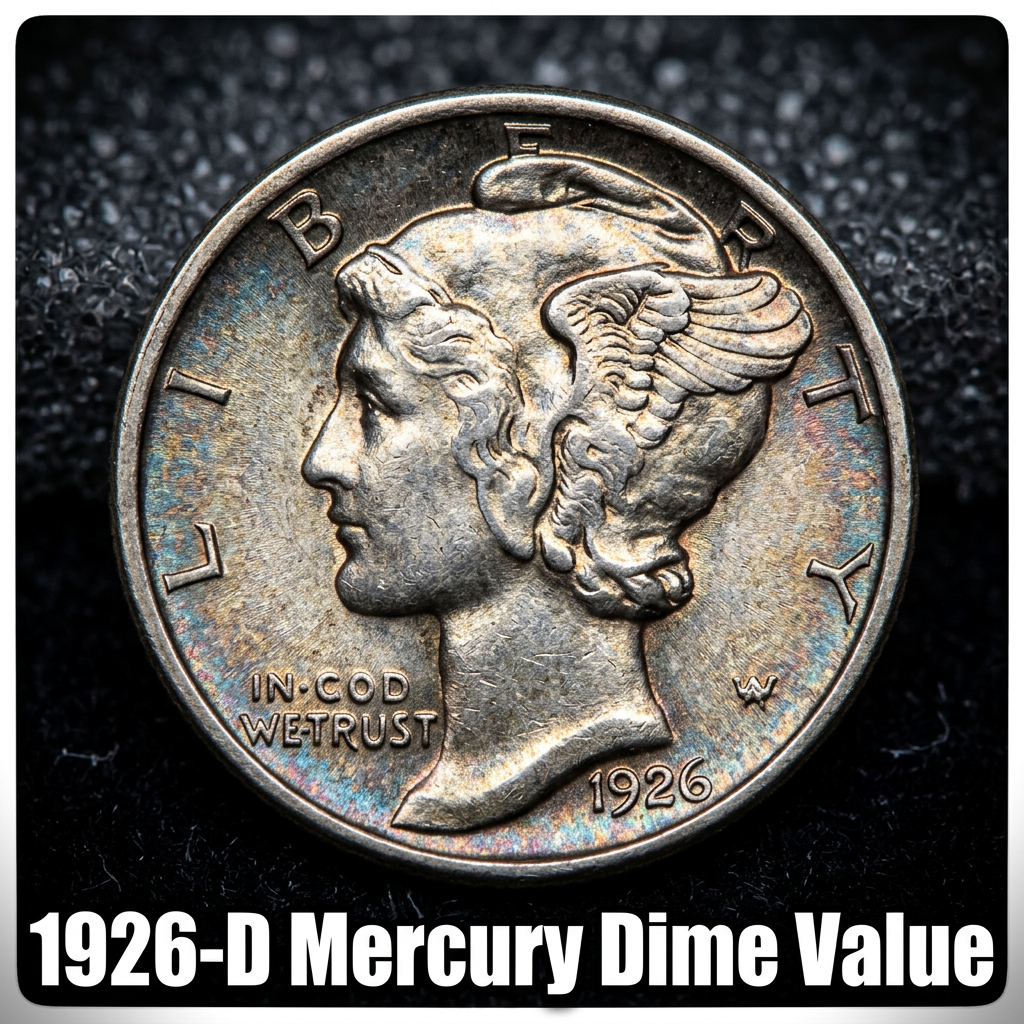

The 1926-D Mercury Dime is worth anywhere from around $4 in heavily worn condition to over $500 or more in high mint state grades, making it one of the more interesting pieces in the Mercury Dime series for collectors and casual finders alike. If you recently came across one of these small silver coins in a jar, drawer, or old collection, you’re in the right place to find out exactly what you’ve got.
What Is the 1926-D Mercury Dime?
The 1926-D Mercury Dime was struck at the Denver Mint in 1926, indicated by the small “D” mintmark on the reverse side of the coin. It’s part of the Winged Liberty Head Dime series, commonly called the Mercury Dime because the figure on the front resembles the Roman god Mercury. The coin was designed by Adolph Weinman and is made of 90% silver and 10% copper.
With a mintage of around 6,828,000 coins, the 1926-D is not the rarest coin in the series, but it’s far from common — especially in well-preserved condition. If you’re not sure what coin you have, you can use a free coin identifier app to quickly scan and identify it before diving deeper into its value.
The 1926-D is considered a semi-key date in the Mercury Dime series, meaning demand from collectors tends to keep prices higher than average across most grades.
1926-D Mercury Dime Value by Grade
The value of your 1926-D Mercury Dime depends heavily on its condition, which coin professionals call “grade.” A coin that has seen decades of pocket wear will look very different from one that spent its life in a collection untouched.
Here’s a general breakdown of what the 1926-D Mercury Dime is worth at different grades:
| Grade | Description | Estimated Value |
|---|---|---|
| Good (G-4) | Heavy wear, outlines visible | $4 – $6 |
| Fine (F-12) | Moderate wear, some detail | $8 – $12 |
| Very Fine (VF-20) | Light wear on high points | $18 – $30 |
| Extremely Fine (EF-40) | Slight wear, sharp design | $45 – $75 |
| About Uncirculated (AU-50) | Minimal wear, luster present | $90 – $150 |
| Mint State (MS-63) | No wear, some marks | $250 – $400 |
| Mint State (MS-65+) | Gem uncirculated | $500 and up |
For the most up-to-date pricing data, you can check the 1926-D Mercury Dime price trends across mint state grades to see how the market is moving.
What Makes the 1926-D Worth More Than Other Mercury Dimes?
Several factors push the 1926-D Mercury Dime above average in collector interest. First, Denver Mint coins from this era often show weaker strikes than Philadelphia coins, which makes finding a fully struck, high-grade example genuinely difficult.
Collectors especially value examples with Full Bands (FB) designation — meaning the horizontal bands across the fasces on the reverse are fully separated and clearly struck. A 1926-D in MS-65 FB can easily command double or triple the price of a non-FB coin in the same grade.
The silver content alone gives every 1926-D Mercury Dime a base melt value. With silver prices fluctuating around $25–$30 per troy ounce in recent years, even a worn example has real metal value underneath.
For a detailed look at the full 1926-D Mercury Dime value across all grades and varieties, a dedicated coin value resource can save you a lot of guesswork.
How to Check Your 1926-D Mercury Dime at Home
Before you sell or trade your coin, take a few simple steps at home. First, look for the “D” mintmark on the reverse, just to the right of the “E” in ONE. Without that D, you have a 1926 Philadelphia coin, which is more common.
Next, examine the overall surface. Scratches, cleaning marks, or harsh polishing can dramatically reduce value — even on an otherwise nice coin. Collectors and grading services penalize cleaned coins heavily.
CoinKnow is a handy app that lets you photograph your coin and get an instant estimate based on visual grade and current market data. It’s a great first step before reaching out to a dealer or sending your coin to a professional grading service like PCGS or NGC.
If you think your coin might be in mint state condition, professional grading is absolutely worth the small fee. A certified MS-65 FB example could be worth ten times a raw, ungraded coin of similar appearance.
Should You Sell, Hold, or Get It Graded?
If your 1926-D Mercury Dime is heavily worn and looks like it spent years in circulation, it’s still a genuine silver coin with collector appeal — just not likely a high-dollar find. Expect offers around melt value or slightly above from dealers.
If the coin looks sharp, lustrous, and nearly perfect to your eye, it’s worth getting a second opinion. CoinKnow can help you understand the grade range before you invest in a third-party submission. A good estimate upfront helps you decide whether professional grading makes financial sense.
Either way, don’t clean the coin. Ever. Use CoinKnow or consult a local coin dealer first, and let the professionals decide how to handle it from there.
—
Frequently Asked Questions
Q: How do I know if my dime is a 1926-D and not just a 1926?
A: Look at the reverse of the coin, to the right of the torch image near the bottom. If there’s a small letter “D,” it was made in Denver. No mintmark means it came from the Philadelphia Mint.
Q: Is the 1926-D Mercury Dime rare?
A: It’s considered a semi-key date in the series. It’s not the rarest Mercury Dime, but high-grade examples — especially with Full Bands — are genuinely scarce and attract strong collector demand.
Q: What is the silver melt value of a 1926-D Mercury Dime?
A: Mercury Dimes contain 0.07234 troy ounces of pure silver. At a silver spot price of $28, the melt value would be approximately $2.03. Even worn examples have this base value, and collector premiums add on top of that.