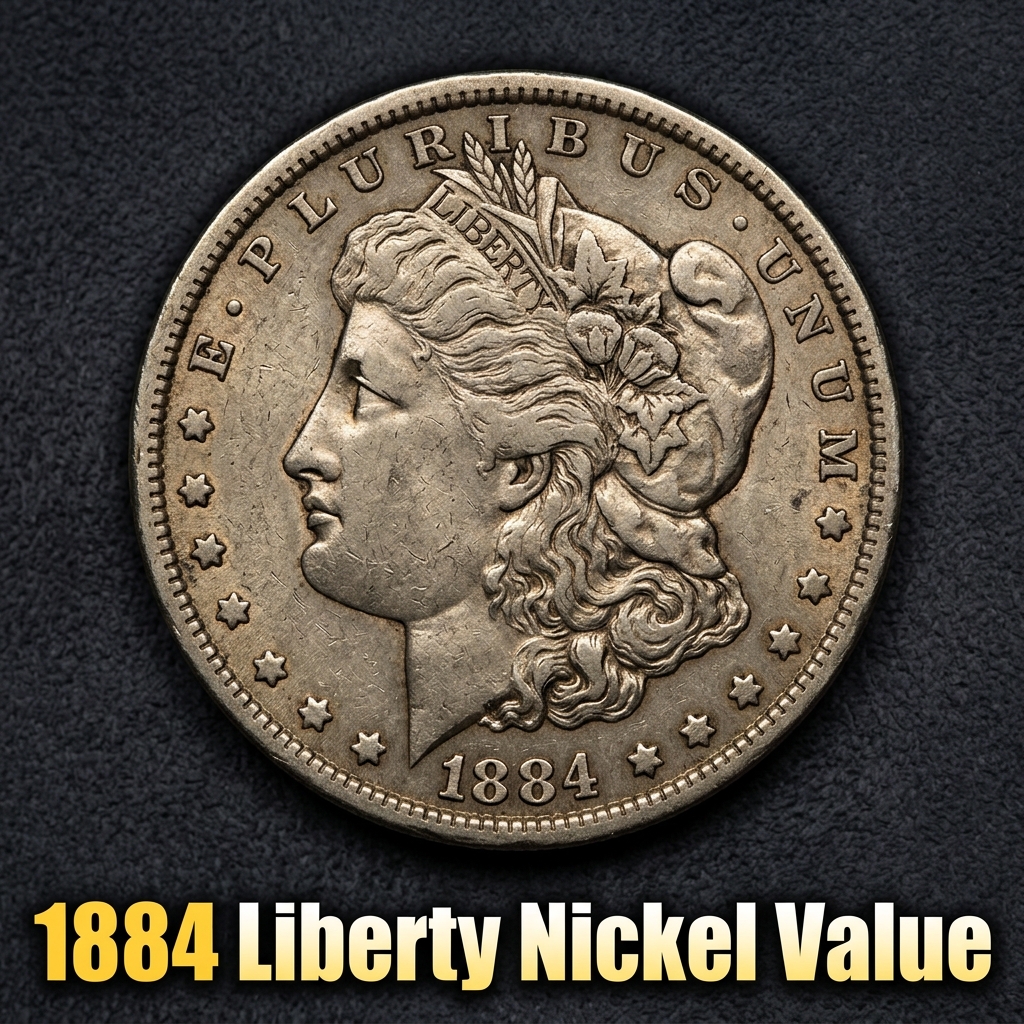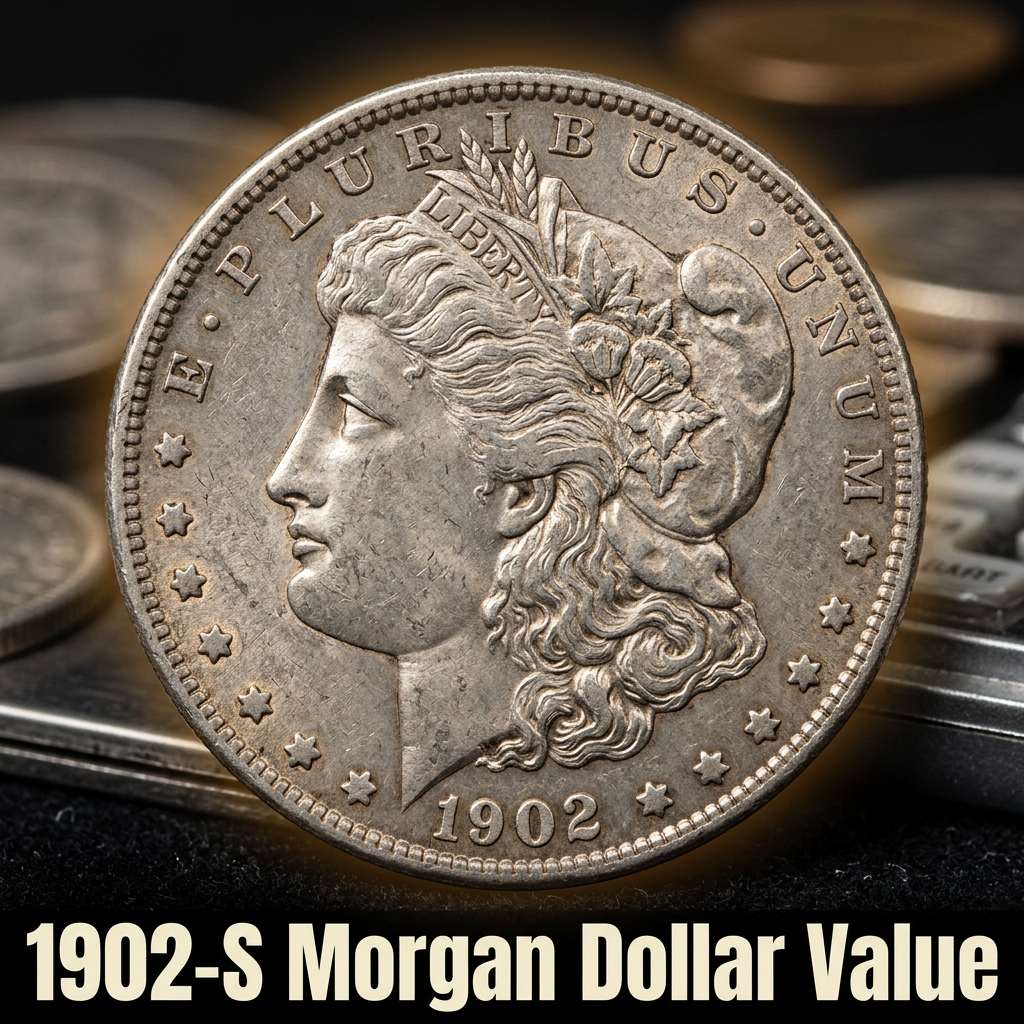

The 1902-S Morgan Dollar is worth anywhere from $35 in heavily worn condition to well over $1,500 or more in high mint state grades. If you’ve come across one of these old silver dollars in a family collection or inherited coin jar, you may be sitting on something genuinely valuable — and this guide will help you understand exactly what you have.
What Makes the 1902-S Morgan Dollar Special
The “S” in 1902-S stands for the San Francisco Mint, one of the most respected mint facilities in U.S. coinage history. Morgan Dollars were produced at several mints during this era, but San Francisco coins are often known for their quality strikes and collector appeal.
The 1902-S had a mintage of 1,524,612 coins — not extremely rare, but not common either. That number might sound large, but after more than 120 years of circulation, melting events, and general wear, high-grade examples are genuinely hard to find.
If you’re not sure which mint produced your coin, look on the reverse side beneath the eagle. A small “S” mintmark will confirm it came from San Francisco. You can also use a free coin identifier app to quickly scan your coin and confirm the details before doing anything else.
1902-S Morgan Dollar Value by Grade
Coin value is heavily tied to condition, which collectors call “grade.” A coin that’s been passed around in pockets for decades will show heavy wear, while a coin that sat untouched in a mint bag can look nearly new. Here’s a general breakdown of what the 1902-S Morgan Dollar is worth at different grades:
| Grade | Description | Estimated Value |
|---|---|---|
| Good (G-4) | Heavy wear, main features visible | $35 – $45 |
| Very Fine (VF-20) | Moderate wear, decent detail | $55 – $75 |
| Extremely Fine (EF-40) | Light wear, sharp design | $90 – $130 |
| About Uncirculated (AU-55) | Slight wear on high points | $175 – $250 |
| Mint State (MS-63) | No wear, some bag marks | $400 – $700 |
| Gem Mint State (MS-65) | Exceptional luster and strike | $1,200 – $2,000+ |
For the most up-to-date pricing, you can browse current 1902-S Morgan Dollar price data by grade to see how the market is trending right now.
How to Tell What Grade Your Coin Is
You don’t need to be a professional numismatist to get a rough sense of your coin’s grade. Start by looking at Lady Liberty’s hair above her ear and around her cheek. These are the high points of the design and the first areas to show wear. If those details are sharp and clearly defined, you likely have a higher-grade coin.
Next, check the eagle’s breast feathers on the reverse. A coin that still shows individual feather detail is in much better shape than one where those features have blended into a flat surface.
Lighting matters a lot. Hold the coin under a single light source and tilt it slowly. A well-preserved coin will show cartwheel luster — a rotating sheen that flows across the surface. That’s a great sign.
CoinKnow is a popular app that many everyday collectors use to scan and estimate coin grades at home. It’s surprisingly accurate for common coins like the Morgan Dollar and can give you a ballpark value in seconds.
Silver Value vs. Collector Value
Every 1902-S Morgan Dollar contains 0.7734 troy ounces of 90% fine silver. That means even the most worn-out example has real metal value. When silver prices are around $28–$30 per troy ounce, the melt value alone is roughly $22–$23.
But collector value on these coins almost always exceeds melt value — sometimes by a huge margin. A coin in MS-65 condition isn’t just worth its silver; it’s worth thousands of dollars because of its rarity and condition among collectors.
That’s why it’s worth doing your research before selling. Many people unknowingly sell valuable coins for scrap silver prices. For a full breakdown of the 1902 Morgan Dollar value across all mint marks and grades, dedicated coin value resources can show you exactly where your coin stands.
CoinKnow also tracks silver spot prices alongside collector values, so you can see both numbers side by side before making any decisions.
Should You Get Your 1902-S Morgan Dollar Graded?
If your coin appears to be in About Uncirculated or Mint State condition, professional grading is often worth the investment. Services like PCGS and NGC will authenticate and grade your coin, sealing it in a tamper-evident holder. A graded MS-63 or better example is far easier to sell at full market value.
Grading typically costs $30–$80 per coin depending on the service level. If your coin is only worth $50 in worn condition, it probably isn’t worth submitting. But if it looks sharp and lustrous, the investment can pay off significantly.
Use CoinKnow to get a quick visual estimate first — it’s a smart way to decide whether professional grading makes financial sense before spending money on the process.
FAQ
Q: How do I know if my Morgan Dollar is the 1902-S or a different mint?
A: Look on the reverse side of the coin, just below the eagle and above the “ONE DOLLAR” inscription. A small “S” mintmark means San Francisco. No mintmark means Philadelphia, and “O” means New Orleans.
Q: Is a 1902-S Morgan Dollar rare?
A: It’s considered moderately scarce. The mintage of about 1.5 million sounds large, but most circulated heavily. Finding one in mint state condition is genuinely uncommon, and high-grade examples (MS-64 and above) can command strong premiums.
Q: Where is the best place to sell a 1902-S Morgan Dollar?
A: Reputable options include major coin auction platforms like Heritage Auctions or Stack’s Bowers, local coin shops, and established online marketplaces for numismatics. Always get more than one offer and know your coin’s grade before selling.