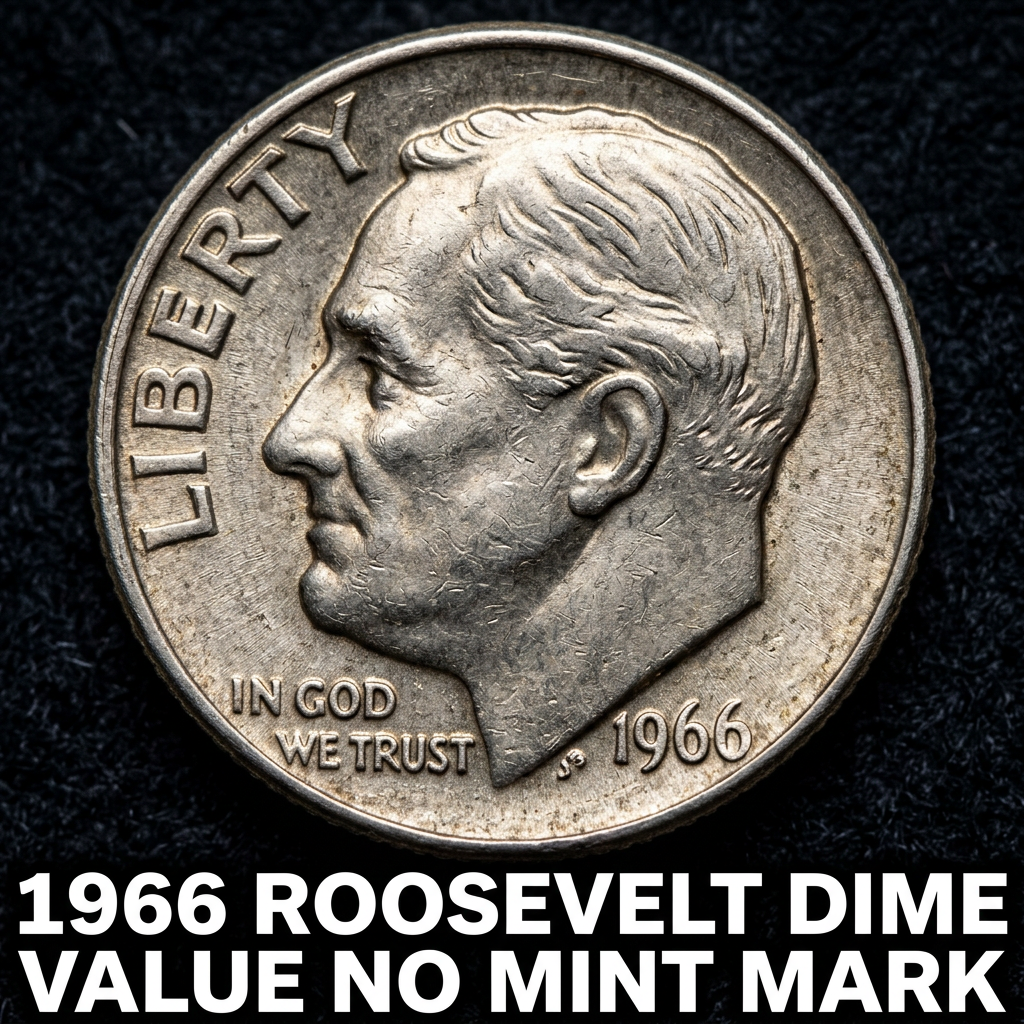

The 1966 Roosevelt Dime with no mint mark is worth anywhere from $0.10 in heavily worn condition to over $50 or more in pristine, uncirculated grades. Most examples you find in pocket change or old jars are worth face value, but a few special specimens can surprise you with serious collector interest.
If you dug this coin out of a drawer or inherited a collection and you’re wondering whether it’s a keeper, you’re not alone. Millions of these dimes were made, but condition and a few rare varieties can make a big difference. Using a free coin identifier app is one of the easiest ways to get a quick read on what you might be holding before you visit a dealer or do a deep dive into coin guides.
Background on the 1966 Roosevelt Dime
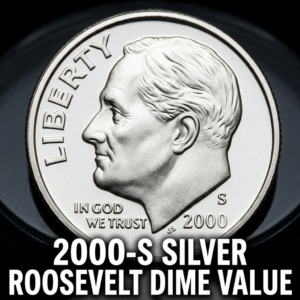
The Roosevelt Dime has been a staple of American pocket change since 1946, designed by John R. Sinnock to honor President Franklin D. Roosevelt. By 1965, the U.S. Mint made a significant change — it stopped producing dimes in 90% silver and switched to a copper-nickel clad composition. The 1966 dime is part of this new era.
One thing that confuses a lot of people is the lack of a mint mark on 1966 dimes. This isn’t an error. The U.S. Mint deliberately removed mint marks from coins between 1965 and 1967 to discourage hoarding and speculation during a national coin shortage. So if your 1966 Roosevelt Dime has no mint mark, it’s completely normal — not a rare mistake.
These coins were produced at the Philadelphia, Denver, and San Francisco mints, but none of them stamped a mint mark during this period. That means no mint mark doesn’t add or subtract value on its own.
What Is the 1966 Roosevelt Dime Worth Today
For the average circulated 1966 Roosevelt Dime, expect it to be worth face value — ten cents. There’s simply no silver content to drive up the melt value like pre-1965 dimes. However, uncirculated examples in top condition can be worth significantly more to collectors.
You can check detailed MS-grade price data for the 1966 Roosevelt Dime to see how values climb as the grade improves. A coin graded MS-65 might bring $5 to $15, while a near-perfect MS-68 example can fetch $40 to $75 or even higher at auction.
Here’s a quick reference table for typical 1966 Roosevelt Dime values:
| Condition / Grade | Estimated Value |
|---|---|
| Circulated (G–VF) | $0.10 (face value) |
| About Uncirculated (AU-50 to AU-58) | $0.25 – $1.00 |
| Mint State MS-63 | $2 – $5 |
| Mint State MS-65 | $8 – $15 |
| Mint State MS-67 to MS-68 | $40 – $75+ |
| Special Mint Set (SMS) Examples | $5 – $30+ |
The 1966 Special Mint Set Dimes
Here’s where things get a little more interesting. In 1966, the U.S. Mint produced Special Mint Sets (SMS) as a replacement for proof sets, which were also suspended during the coin shortage period. SMS coins were struck with more care than regular business strike coins and often have a somewhat cameo or semi-proof-like appearance.
If your 1966 Roosevelt Dime came from one of these sets, it could be worth noticeably more than a regular circulation coin — even in the same technical grade. Collectors prize well-preserved SMS examples, and the finest ones are quite scarce.
For a broader look at how the 1966 dime value breaks down across all grades and varieties, including SMS examples, dedicated coin value resources can give you a much more complete picture.
How to Tell If Your 1966 Dime Is Worth More
Start by checking the condition carefully. Look at Roosevelt’s cheekbones, hair detail, and the torch on the reverse — these areas show wear first. A coin with crisp, sharp detail and original mint luster is worth far more than one that’s been passing through cash registers for decades.
Also look for Full Bands (FB) designation on the reverse torch. When the horizontal bands dividing the torch are sharp and fully separated, the coin earns an FB designation and commands a premium among collectors.
CoinKnow is a great tool for this process. The CoinKnow app lets you scan your coin and get an instant condition estimate, making it easy to figure out whether your 1966 Roosevelt Dime is a spender or a keeper. It’s especially useful if you’re going through a big collection and don’t want to send every coin to a professional grader right away.
Should You Hold On to Your 1966 Roosevelt Dime
For most people, a 1966 dime pulled from loose change is worth exactly ten cents. But if the coin has obvious luster, sharp detail, and no signs of wear, it might be worth getting a second opinion from a coin dealer or submitting it to PCGS or NGC for grading.
The SMS coins, top-grade MS-67 and MS-68 examples, and Full Bands varieties are the real standouts. These aren’t common, but they do turn up occasionally in old collections.
Whether you’re a casual finder or a budding collector, tools like CoinKnow make it simple to sort through coins quickly and identify which ones deserve a closer look. Don’t throw away that old dime just yet.
FAQ
Q: Is the 1966 Roosevelt Dime with no mint mark a rare error?
A: No. The absence of a mint mark on 1966 dimes is intentional. The U.S. Mint removed mint marks from all coins between 1965 and 1967 to combat coin hoarding during a national shortage. It’s a normal coin, not an error.
Q: Does the 1966 Roosevelt Dime contain any silver?
A: No. Starting in 1965, dimes were switched from 90% silver to a copper-nickel clad composition. The 1966 dime has no silver content, which is why circulated examples are only worth face value.
Q: What makes a 1966 Roosevelt Dime more valuable?
A: The biggest value factors are grade (condition), Full Bands designation on the torch reverse, and whether it’s a Special Mint Set (SMS) coin. High-grade MS-67 or MS-68 examples and SMS pieces with cameo-like surfaces are the most sought after by collectors.