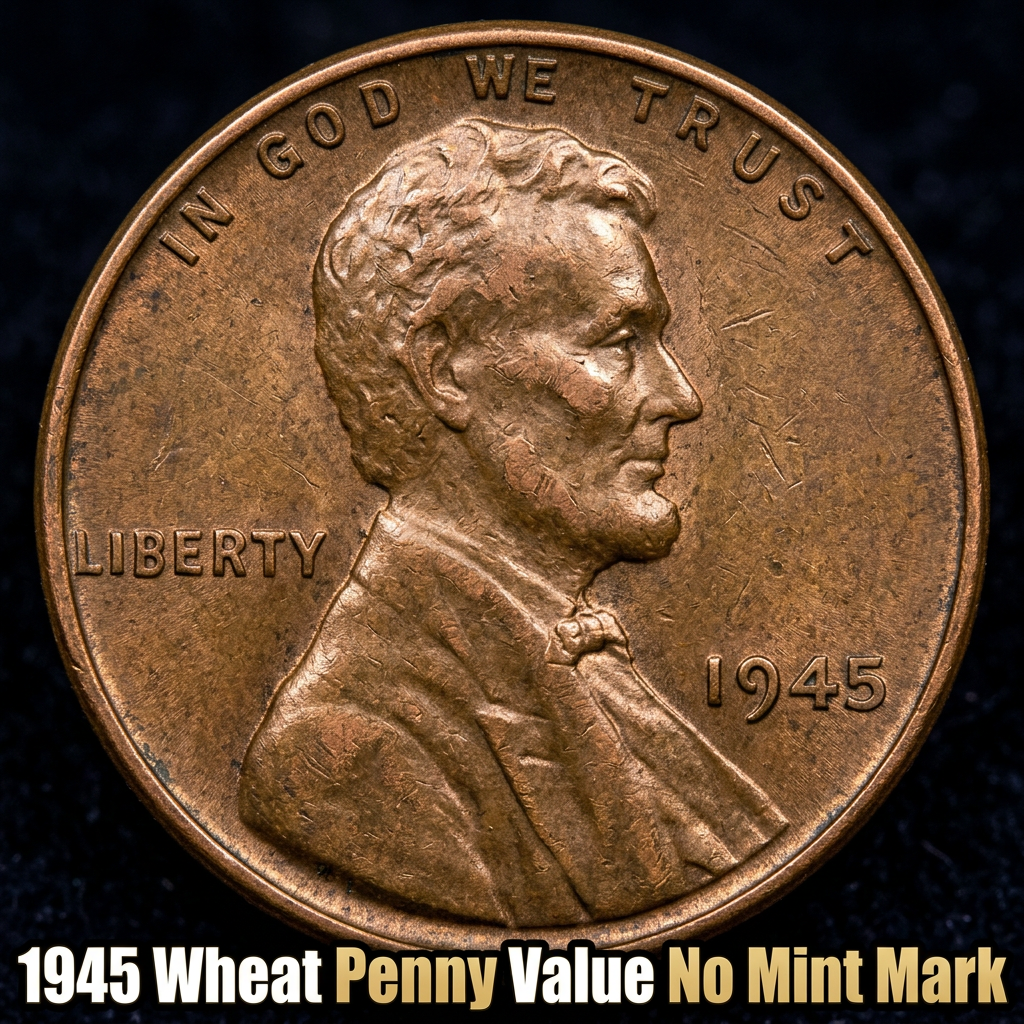

The 1945 Wheat Penny with no mint mark is worth anywhere from $0.10 in heavily worn condition to over $8 or more in uncirculated grades — and high-quality examples have sold for significantly more at auction. If you just found one in an old jar or a relative’s collection, you’re in the right place to find out what it’s really worth.
What the 1945 No Mint Mark Wheat Penny Is
The 1945 Lincoln Wheat Penny without a mint mark was struck at the Philadelphia Mint. Philadelphia was the largest and most productive mint in the country, and in 1945 it churned out over 1 billion of these coins — making it one of the most common Wheat Pennies in existence.
That said, “common” doesn’t mean “worthless.” Condition plays a huge role in determining value. A coin that spent decades in circulation will look very different from one that sat in a collection untouched since the day it was minted.
If you’re not sure where to start, using a free coin identifier app can help you quickly assess your coin’s grade and get a baseline estimate before you do any deeper research.
How Much Is the 1945 Wheat Penny Worth by Grade
Coin values are based on a grading scale that runs from Poor (P-1) all the way to Perfect Mint State (MS-70). For the 1945 Wheat Penny with no mint mark, here’s a general breakdown of what you can expect:
| Grade | Condition Description | Estimated Value |
|---|---|---|
| Good (G-4) | Heavy wear, flat details | $0.10 – $0.25 |
| Fine (F-12) | Moderate wear, major details visible | $0.25 – $0.50 |
| Extremely Fine (EF-40) | Light wear on high points | $1.00 – $2.00 |
| MS-63 (Uncirculated) | No wear, some bag marks | $4.00 – $6.00 |
| MS-65 (Gem Uncirculated) | Sharp strike, strong luster | $8.00 – $20.00+ |
| MS-67+ (Superb Gem) | Near perfect, exceptional eye appeal | $100.00+ |
For the most up-to-date auction results and certified coin prices, you can browse recent 1945 Wheat Penny MS-RD price data to see what collectors are actually paying right now.
The Role of Color in 1945 Penny Value
Something many beginners don’t realize is that copper coins are graded not just by wear, but also by color. This applies directly to the 1945 Wheat Penny. There are three color designations that can significantly affect price:
Red (RD) — The coin retains 95% or more of its original mint red luster. This is the most desirable and commands the highest prices.
Red-Brown (RB) — Between 5% and 95% red luster remains. Still attractive but worth less than full red examples.
Brown (BN) — The coin has toned to a brown color through oxidation. Most circulated coins fall here, and values are on the lower end.
A 1945 Lincoln Wheat Penny graded MS-65 Red can be worth two to three times more than the same grade in Brown. So when you’re assessing your coin, color matters just as much as wear.
CoinKnow is a smart tool that can help you identify your coin’s color grade and condition right from your phone — no magnifying glass or numismatic background required.
What Makes a 1945 Penny More Valuable
While the 1945 Philadelphia Wheat Penny is generally common, certain factors can push value significantly higher. Error coins are a big one. Look for doubled die varieties, off-center strikes, or repunched dates — these kinds of mint mistakes can make a coin worth many times its face value.
Strike quality also matters. Philadelphia Mint cents from 1945 were produced in enormous quantities, and quality control wasn’t always consistent. A coin with a sharp, well-centered strike and vibrant luster is far rarer than it sounds.
You can get a detailed breakdown of the full 1945 Wheat Penny value across all mint marks and grades to compare your coin against Philadelphia, Denver, and San Francisco issues side by side.
Should You Clean or Grade Your 1945 Wheat Penny
This is one of the most important tips for anyone new to coin collecting: do not clean your coin. Cleaning a coin — even gently — permanently damages its surface and can reduce its value by 50% or more. Collectors and dealers can easily spot a cleaned coin, and they’ll price it accordingly.
If you believe you have a high-grade example, consider sending it to a professional grading service like PCGS or NGC. Certified coins in holders (called “slabs”) typically sell for more because buyers trust the grade.
For a quick first look at your coin’s potential, CoinKnow lets you scan your coin using your phone camera and get an instant identification and estimated value — a great starting point before deciding whether professional grading is worth it.
—
Frequently Asked Questions
Q: How do I know if my 1945 penny has a mint mark?
A: Look at the obverse (front) of the coin, just below the date on the right side. If you see a small “D,” it was made in Denver. A small “S” means San Francisco. No letter at all means it came from Philadelphia — that’s your no mint mark coin.
Q: Is a 1945 Wheat Penny rare?
A: No, the 1945 no mint mark Wheat Penny is not rare by itself — over 1 billion were minted. However, high-grade examples, especially those graded MS-65 Red or above, are genuinely scarce and can be worth real money to collectors.
Q: Can I sell my 1945 Wheat Penny?
A: Absolutely. Worn examples can be sold in bulk wheat penny lots on eBay or at coin shows. If yours is uncirculated or has an error, it’s worth getting a professional opinion first. Apps like CoinKnow can help you decide whether your coin is worth selling individually or as part of a larger lot.