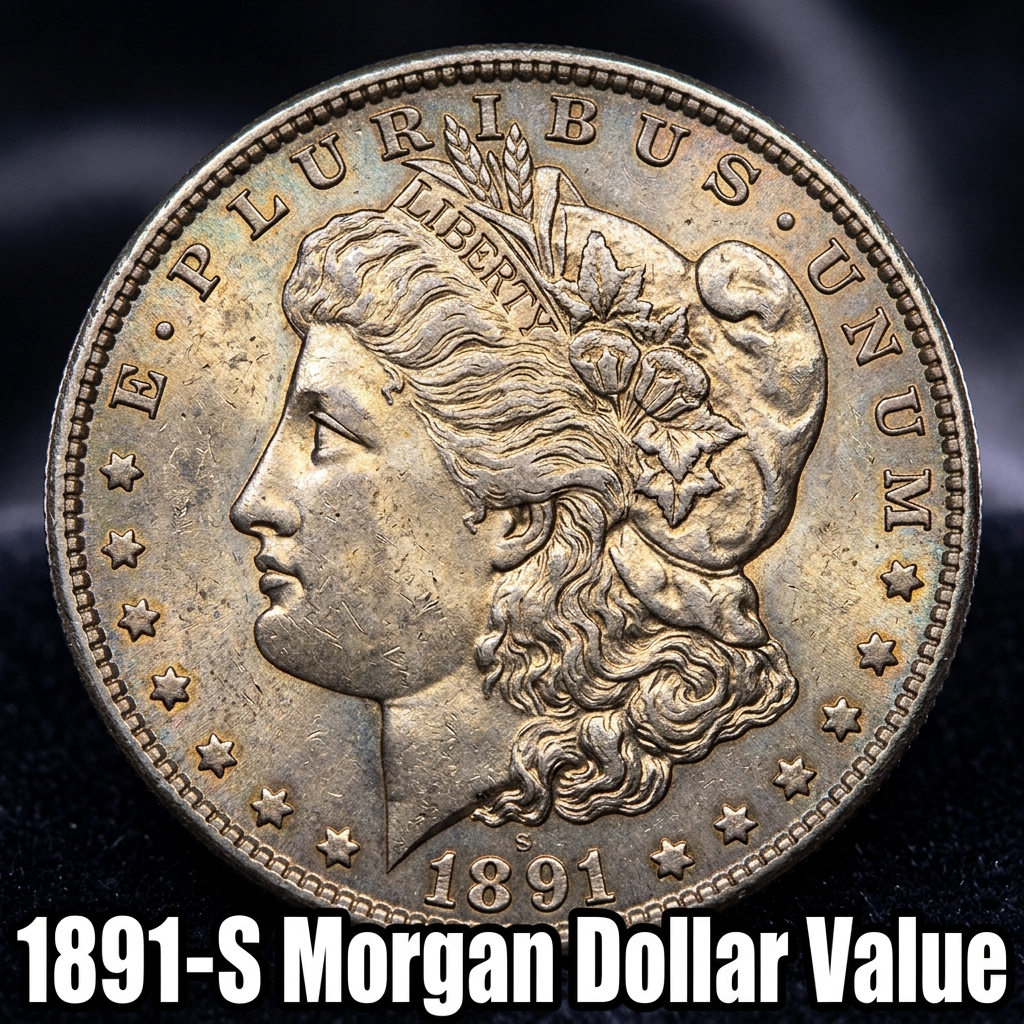

The 1891-S Morgan Dollar is worth anywhere from $35 in heavily worn condition to well over $1,500 or more in high mint state grades. If you recently found one of these old silver dollars, you’re in luck — this is one of the more sought-after coins from the San Francisco Mint, and collectors pay real money for it.
What Makes the 1891-S Morgan Dollar Special
The 1891-S Morgan Dollar was struck at the San Francisco Mint, as indicated by the small “S” mintmark found on the reverse side of the coin, just above the “DO” in “DOLLAR.” San Francisco was known for producing well-struck, high-quality coins, and the 1891-S is no exception.
That year, the mint produced approximately 5,296,000 of these silver dollars. While that number sounds large, many of these coins were heavily circulated, melted down, or lost over the decades. Finding one in decent condition today is genuinely exciting.
The coin features the iconic design by George T. Morgan — Lady Liberty on the obverse and a bald eagle on the reverse. It’s made of 90% silver and 10% copper, giving it real intrinsic metal value on top of its collectible worth.
If you’re not sure what you’re holding, a free coin identifier app can help you quickly confirm the coin’s details before you start researching its value more deeply.
1891-S Morgan Dollar Value by Grade
The condition of your coin — known as its “grade” — has the biggest impact on its value. A coin that still shows sharp details and luster is worth dramatically more than one that’s been worn smooth from years of use.
Here’s a general breakdown of what the 1891-S Morgan Dollar is worth depending on its condition:
| Grade | Condition Description | Estimated Value |
|---|---|---|
| Good (G-4) | Heavy wear, major details visible | $35 – $45 |
| Very Fine (VF-20) | Moderate wear, clearer details | $50 – $75 |
| Extremely Fine (EF-40) | Light wear on high points | $80 – $120 |
| About Uncirculated (AU-50) | Slight wear, most luster intact | $130 – $200 |
| Mint State (MS-63) | No wear, minor bag marks | $300 – $600 |
| Mint State (MS-65) | Gem quality, sharp strike | $1,200 – $2,000+ |
For more precise and up-to-date figures, you can check out detailed 1891-S Morgan Dollar price data by grade and mint state to see exactly how each grade level compares at auction.
How to Tell What Grade Your Coin Is
Grading coins takes practice, but you can do a basic assessment at home. Start by looking at Lady Liberty’s hair above her ear and the high points of the eagle’s breast feathers on the reverse — these areas wear down first.
If those details are sharp and you can still see fine lines in the hair and feathers, your coin is likely in the EF or AU range. If the coin looks flat and featureless in those areas, it’s probably a Good or Fine grade.
Lighting matters a lot. Use a desk lamp and tilt the coin at different angles to see if there’s any remaining “cartwheel” luster — that shimmery, rotating shine you get on uncirculated coins. If you see it even faintly, that’s a great sign.
Don’t clean your coin. This is the most important rule in coin collecting. Cleaning destroys the surface and can drop a coin’s value by 50% or more instantly. Even a dirty-looking original surface is worth more than a polished one.
CoinKnow is a great tool for first-time coin owners who want a quick, accurate grade estimate without having to visit a dealer right away. The app walks you through the grading process step by step.
What Affects the 1891-S Morgan Dollar Price Beyond Grade
While grade is the biggest factor, a few other things influence what a buyer will actually pay for your coin.
Strike quality matters — some 1891-S coins were weakly struck, especially on Liberty’s hair details and the eagle’s feathers. A sharply struck example commands a premium even within the same grade.
Eye appeal plays a big role too. Coins with original “original skin” (meaning they haven’t been cleaned or polished) and attractive natural toning often sell for more than blast-white coins of the same grade. Collectors call this “original surfaces,” and they pay extra for it.
Certification also adds value. Having your coin graded and authenticated by PCGS or NGC puts buyers at ease and often results in a higher sale price. If your coin looks like it might be in the MS-60 or higher range, it’s worth spending the $30–$50 to get it professionally graded before selling.
You can explore a full breakdown of 1891 silver dollar values including condition and mint mark comparisons to understand how the S-mint compares to coins from New Orleans and Philadelphia that same year.
Should You Sell or Hold the 1891-S Morgan Dollar
If your coin is in Good or Fine condition, its value is relatively stable — mostly tied to the price of silver, which fluctuates. You could sell it to a local coin shop or on eBay and likely get $35–$70 without much trouble.
But if your coin looks uncirculated or close to it, holding off and getting a professional opinion is smart. Gem-quality 1891-S Morgan Dollars have been selling at major auctions for $1,500 to $3,000 and occasionally more for exceptional examples.
CoinKnow can help you quickly photograph and analyze your coin’s condition before you make any decisions about selling. It’s a smart first step before walking into any coin shop.
Either way, this is a coin worth knowing more about — and definitely not one to toss in a jar and forget.
—
Frequently Asked Questions
Q: Where is the mintmark on the 1891-S Morgan Dollar?
A: The mintmark is on the reverse (back) of the coin, just above the “DO” in “DOLLAR,” between the eagle’s tail feathers and the lettering. An “S” means it was made in San Francisco.
Q: Is the 1891-S Morgan Dollar made of real silver?
A: Yes. Every Morgan Dollar, including the 1891-S, is composed of 90% silver and 10% copper. At current silver prices, even a heavily worn example contains about 0.77 ounces of silver, giving it a base metal value of around $18–$22 just in silver content.
Q: How do I know if my 1891-S Morgan Dollar is real?
A: Real Morgan Dollars weigh exactly 26.73 grams and are 38.1mm in diameter. Fakes are often lighter or slightly off in size. You can also use CoinKnow to scan and verify the coin’s details against known authentic examples, which is especially helpful if you’re not sure what you’re looking at.