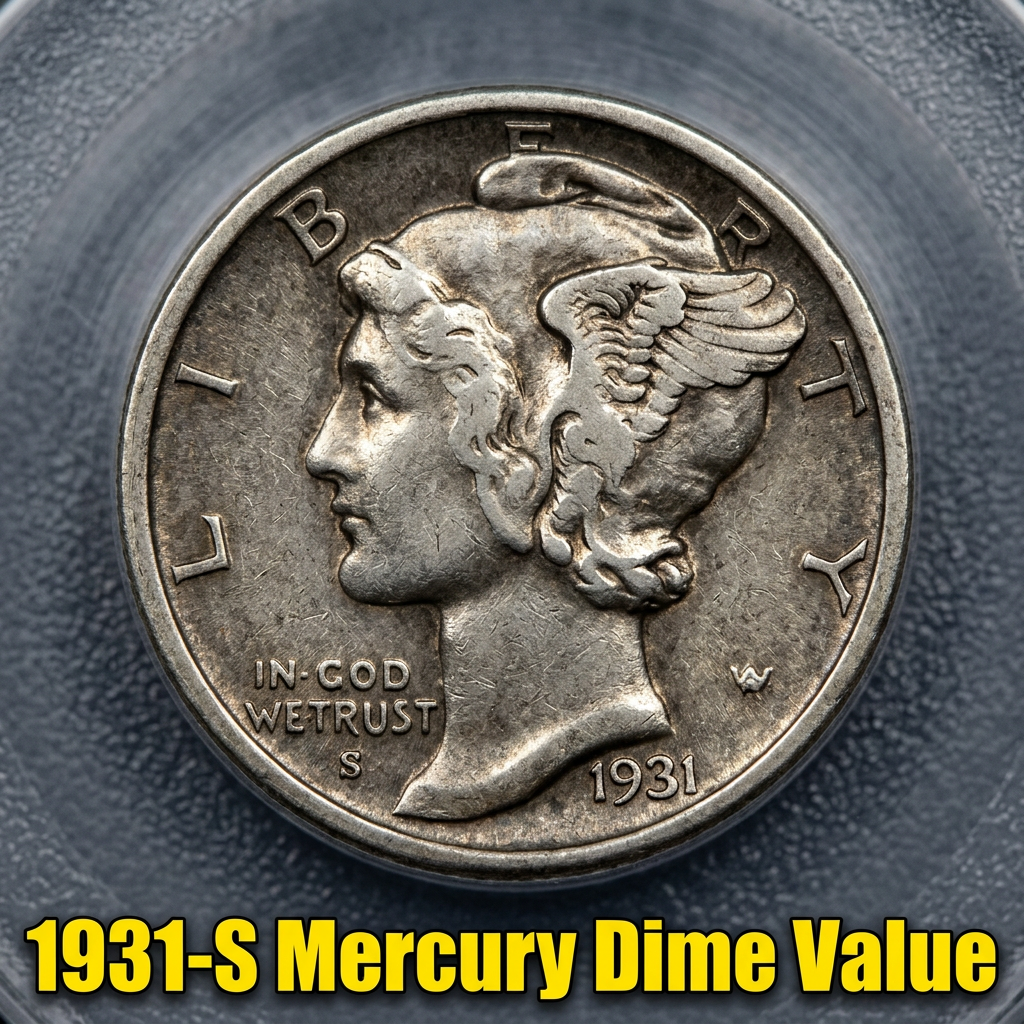

The 1931-S Mercury Dime is worth anywhere from $5 in heavily worn condition to well over $100 in lightly circulated grades — and in pristine mint state, certified examples can fetch $200 or more depending on the strike and luster.
What Is the 1931-S Mercury Dime?
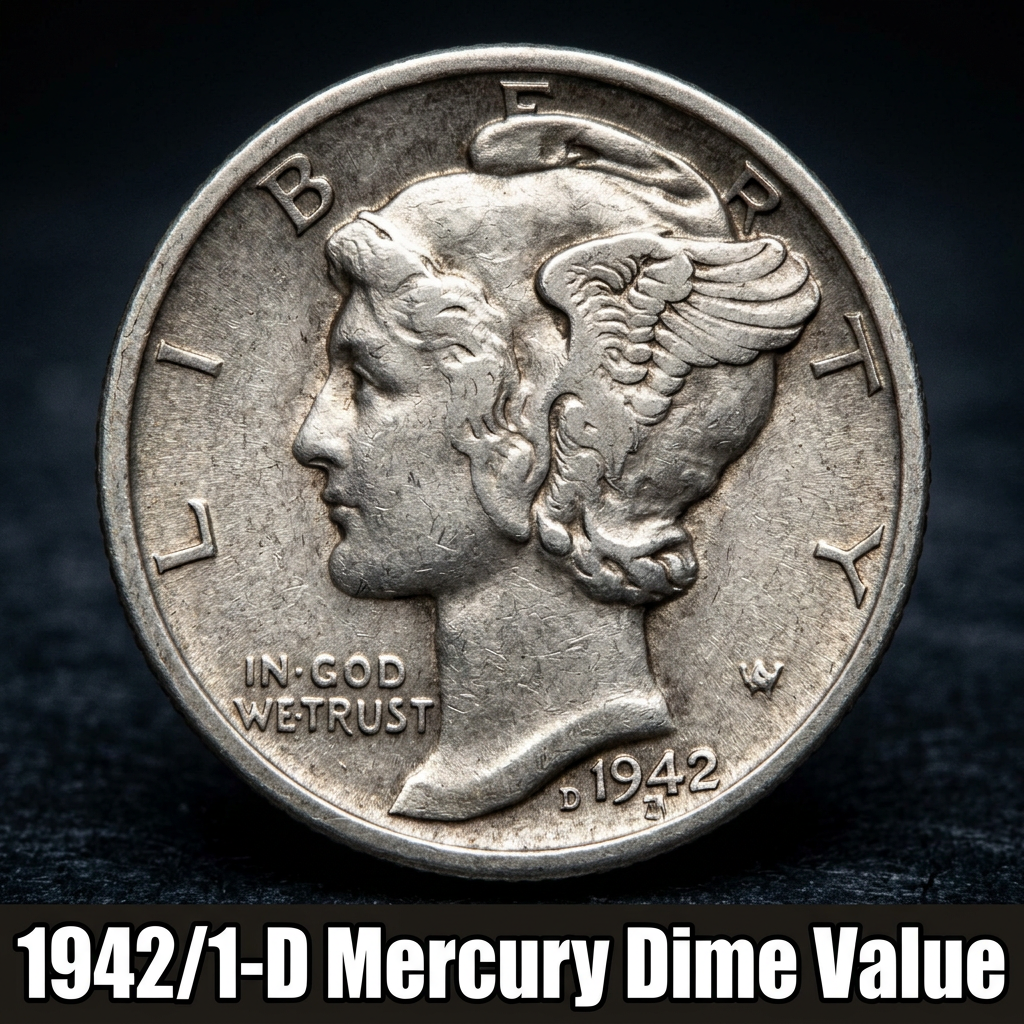
If you’ve found a small silver dime with a winged head on the front, you might be holding a Mercury Dime — officially known as the Winged Liberty Head Dime. The “S” mintmark means it was struck at the San Francisco Mint, and the 1931-S is one of the lower-mintage issues of the entire Mercury Dime series.
Only 1,800,000 pieces were minted that year, making it one of the key dates collectors actively seek out. That relatively small production run, combined with the fact that most of these coins were used heavily during the Great Depression era, means finding one in good condition is genuinely exciting.
If you’re not sure whether the coin you’re holding is actually a 1931-S, you can use a free coin identifier app to scan the coin and get an instant ID before you go any further. It saves a lot of guesswork.
How Much Is a 1931-S Mercury Dime Worth by Grade?
Coin value is almost entirely driven by condition. A heavily worn example — where the design details are nearly flat — might only bring $5 to $8 in silver melt value. But as condition improves, so does the premium collectors are willing to pay.
Here’s a general breakdown of 1931-S Mercury Dime values across common grades:
| Grade | Description | Estimated Value |
|---|---|---|
| Good (G-4) | Heavy wear, date and mintmark visible | $5 – $8 |
| Fine (F-12) | Moderate wear, some detail remains | $10 – $15 |
| Very Fine (VF-20) | Light wear on high points | $18 – $28 |
| Extremely Fine (EF-40) | Slight wear, sharp detail | $35 – $55 |
| About Uncirculated (AU-50) | Minimal wear, most luster present | $60 – $90 |
| Mint State (MS-63) | No wear, some bag marks | $100 – $160 |
| Mint State (MS-65+) | Gem quality, sharp strike | $200 – $400+ |
For a more detailed look at 1931-S Mercury Dime prices across mint state grades, including auction results and certified population data, it helps to consult a dedicated pricing resource.
What Makes the 1931-S Special Compared to Other Mercury Dimes?
The Mercury Dime series ran from 1916 to 1945, and most dates are common enough that they trade close to silver melt value. The 1931-S is different. With under two million struck, it sits among the scarcer issues of the series — not as rare as the famous 1916-D, but still a coin that collectors pay a notable premium for.
Another thing that affects value on this particular date is strike quality. San Francisco coins from this era can sometimes show weak detail in the bands on the reverse (the fasces). A coin with “Full Split Bands” — meaning the horizontal bands across the fasces are completely separated — can command a significant premium, sometimes doubling or tripling the standard value at the same grade level.
CoinKnow is a great tool for identifying these finer details. The app can help you assess strike characteristics and compare your coin’s appearance to grading standards so you have a better sense of what you’re working with before approaching a dealer.
Is Your 1931-S Mercury Dime Silver?
Yes — all Mercury Dimes are made of 90% silver and 10% copper. Each coin contains approximately 0.07234 troy ounces of pure silver. That means even a heavily worn example has real metal value tied to the current silver spot price.
At today’s silver prices (typically ranging from $25 to $35 per troy ounce), the raw silver melt value of any Mercury Dime sits around $1.80 to $2.50 per coin. But for the 1931-S, collector demand pushes values far above that base number in almost every grade.
To get a full picture of the 1931-S dime’s value across all grades and conditions, it’s worth reviewing a comprehensive guide that tracks both melt value and collector premiums together. That combination tells you the real story.
How to Find Out What Your Coin Is Worth
The easiest starting point is to check the date and mintmark — the “S” should appear just to the left of the fasces on the reverse, below the eagle. Then assess the condition as honestly as you can, comparing it to grading photos online.
For a fast and surprisingly accurate estimate, CoinKnow lets you photograph your coin and get an instant valuation based on visible grade, mintmark, and current market data. It’s especially helpful if you’re not familiar with coin grading terminology and want a plain-English answer quickly.
If your coin looks like it might be MS-63 or better, seriously consider submitting it to a professional grading service like PCGS or NGC. A certified grade on a 1931-S can significantly increase its resale value and buyer confidence.
—
FAQ
Q: How do I tell if my Mercury Dime is a 1931-S?
A: Look at the reverse side of the coin, just to the left of the base of the fasces (the bundle of rods). If you see a small “S” mintmark there, and the date on the obverse reads 1931, you have a 1931-S Mercury Dime. A magnifying glass makes this much easier to confirm.
Q: Is the 1931-S Mercury Dime rare?
A: It’s considered a semi-key date in the Mercury Dime series. With only 1.8 million minted, it’s significantly scarcer than common-date Mercury Dimes, which often had mintages of 20 to 50 million. It’s not impossible to find, but it’s definitely not an everyday coin.
Q: Should I clean my 1931-S Mercury Dime before selling it?
A: Never clean an old coin. Cleaning removes the natural patina and surface metal, which actually lowers the coin’s grade and value in the eyes of collectors and grading services. Even a dirty, original-surface coin is worth more than a polished one. Leave it exactly as you found it.