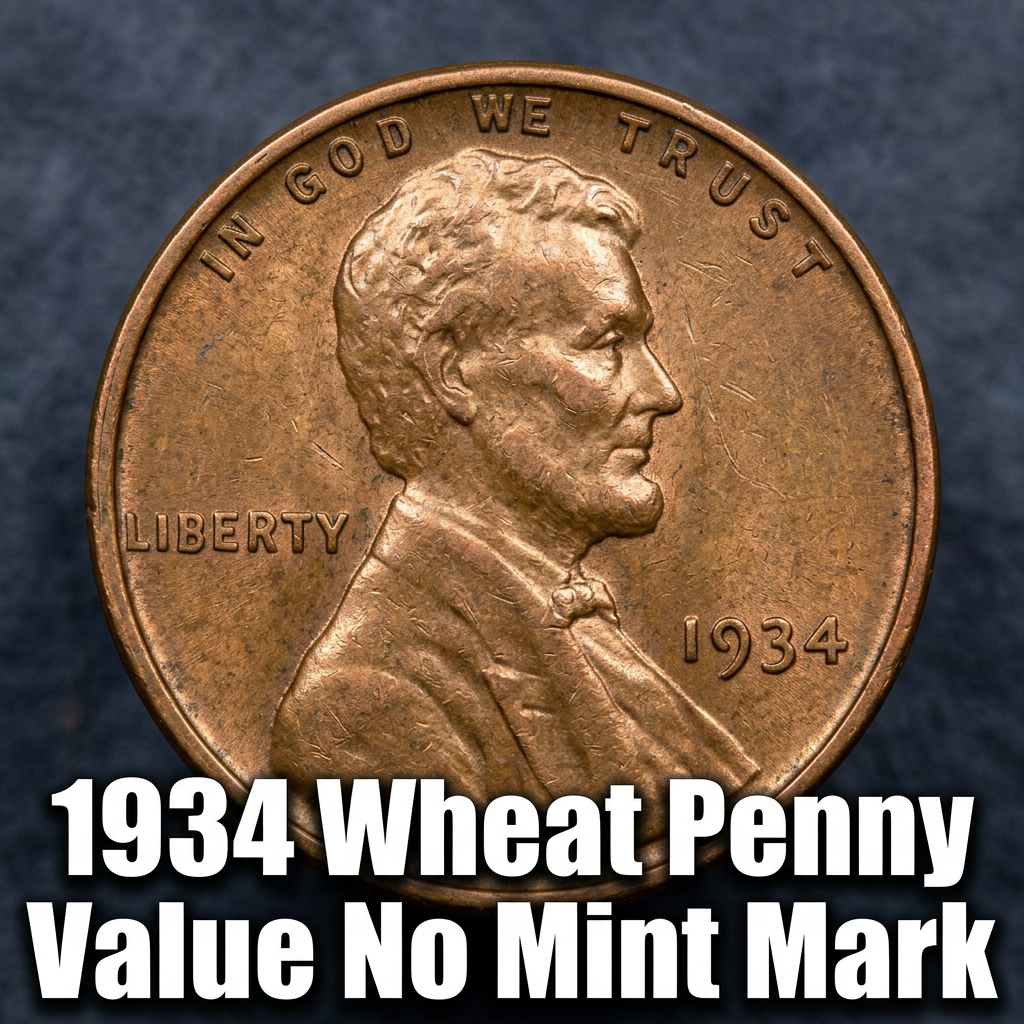

The 1934 Wheat Penny with no mint mark is worth anywhere from $0.10 in heavily worn condition to over $8 in lightly circulated grades — and in top mint state condition, it can climb well past $50 or more. If you found one of these old Lincoln cents in a jar, a drawer, or an inherited coin collection, you’re in the right place to find out exactly what you’ve got.
What Is the 1934 Wheat Penny and Why Does “No Mint Mark” Matter?
The 1934 Lincoln Wheat Penny was struck at the Philadelphia Mint, and coins from Philadelphia during this era carried no mint mark at all. That’s completely normal — it doesn’t mean your coin is rare or defective. The mint marks “D” (Denver) and “S” (San Francisco) would appear on coins made at those facilities, but Philadelphia-made coins simply had no letter stamped on them.
So if you’re holding a 1934 penny and see no letter beneath the date on the front of the coin, you have the Philadelphia issue. This is the most common version of the 1934 Wheat Penny, with over 219 million minted that year.
If you’re not sure which mint struck your coin or need help identifying other old pennies in your collection, a free coin identifier app can give you a quick answer using just your smartphone camera. Tools like CoinKnow make it easy for beginners to get started without any prior coin knowledge.
1934 Wheat Penny No Mint Mark Value by Grade
Coin value depends heavily on condition, also called “grade” in the coin collecting world. A penny that’s been circulated for decades looks very different from one that’s been sitting in a mint bag untouched. Here’s a general breakdown of what the 1934 no mint mark Wheat Penny is worth across different conditions:
| Grade / Condition | Description | Approximate Value |
|---|---|---|
| Good (G-4) | Heavy wear, flat design | $0.10 – $0.25 |
| Fine (F-12) | Moderate wear, some detail | $0.50 – $1.00 |
| Extremely Fine (EF-40) | Light wear, good detail | $2.00 – $4.00 |
| About Uncirculated (AU-55) | Slight wear on high points | $5.00 – $8.00 |
| Mint State (MS-63) | No wear, minor marks | $15.00 – $30.00 |
| Mint State Red (MS-65 RD) | Full original red color | $50.00 – $100.00+ |
For a more detailed look at 1934 Wheat Penny MS-RD price data and auction records, numismatic databases can show you exactly what collectors are paying right now at the highest grades.
How to Tell If Your 1934 Penny Is in Good Shape
Grading coins at home is easier than most people think once you know what to look for. Start by holding your penny under a good light source and examining the raised design elements — Lincoln’s hair, his cheekbone, the wheat stalks on the reverse.
If you can see fine lines in Lincoln’s hair and the words “IN GOD WE TRUST” are fully sharp, your coin is probably in Fine to Very Fine condition. If the coin looks dull and flat with very little detail remaining, it’s likely in Good or Poor grade and worth only a few cents.
Color is another important factor for uncirculated coins. A 1934 Wheat Penny that still has its original copper-red luster — rather than the brown tone that comes from oxidation — is classified as “Red” and commands a much higher price. Even partial red color (“Red-Brown”) adds value compared to a fully brown coin.
Are Any 1934 No Mint Mark Pennies Worth a Lot of Money?
Most 1934 Philadelphia Wheat Pennies are common coins. But there are a few situations where yours could be worth significantly more than average.
First, error coins. If your penny has a doubled image on the date or lettering, that’s called a doubled die variety and can fetch a premium from collectors. Always examine your coin closely with a magnifying glass.
Second, condition is everything in the high-grade market. A 1934 Wheat Penny that grades MS-67 RD (a near-perfect uncirculated red example) has sold for several hundred dollars at major auction houses. These top-pop coins are extremely rare.
If you want to explore the full value breakdown for the 1934 Wheat Penny across all grades and varieties, dedicated coin value resources give you the complete picture in one place. Apps like CoinKnow can also help you photograph your coin and get a fast estimate without visiting a dealer.
Should You Clean or Sell Your 1934 Wheat Penny?
One of the biggest mistakes new collectors make is cleaning old coins. Even if your penny looks dirty or dark, never scrub it with a cloth, water, or any chemical cleaner. Cleaning removes the natural surface patina that forms over decades, and it permanently destroys the coin’s collector value. A cleaned coin can be worth a fraction of what an uncleaned one sells for.
If you think your coin might be valuable — especially if it’s in great condition or shows signs of an error — consider getting it professionally graded by PCGS or NGC. These third-party grading services seal the coin in a protective case and assign an official grade, which gives buyers confidence and often increases what you can sell it for.
CoinKnow is a great starting point before you invest in professional grading — it helps you understand your coin’s likely grade range right from your phone.
FAQ About the 1934 Wheat Penny Value No Mint Mark
Q: Is a 1934 Wheat Penny with no mint mark rare?
A: No, it is not considered rare. The Philadelphia Mint produced over 219 million of these coins in 1934, making them one of the more common Wheat Pennies. However, examples in high mint state grades with full red color are quite scarce and worth real money to collectors.
Q: How do I know if my 1934 penny has a mint mark?
A: Look directly below the date on the obverse (front) of the coin. If you see a “D,” it was made in Denver. If you see an “S,” it came from San Francisco. If there’s no letter at all, you have the Philadelphia issue — the no mint mark variety.
Q: Where is the best place to sell a 1934 Wheat Penny?
A: For common circulated examples, online marketplaces like eBay work well since there’s a large audience of collectors. For higher-grade or error coins, consider consigning to a reputable coin auction house. Always research recent sold prices before listing, and if you’re unsure of your coin’s grade, use a tool like CoinKnow to get a baseline estimate first.