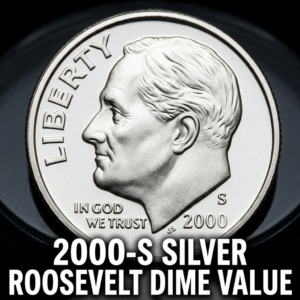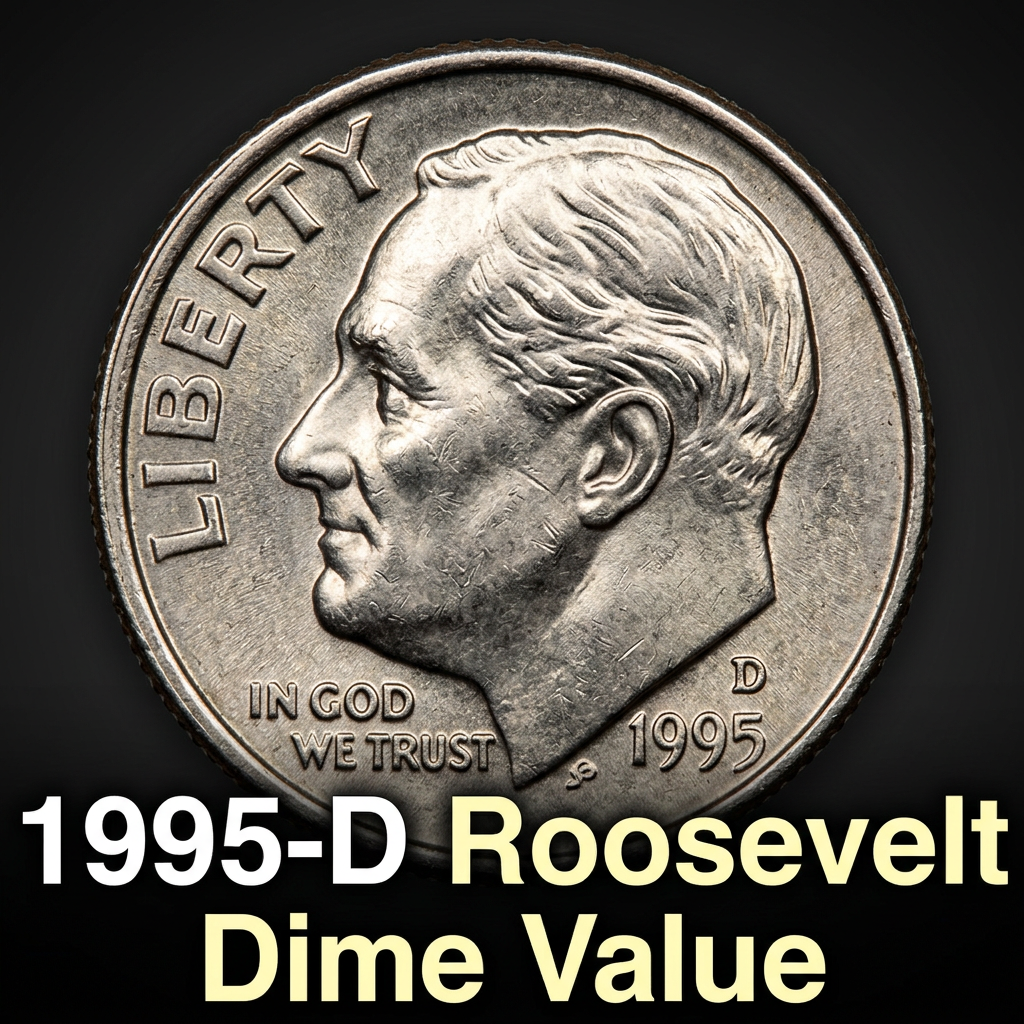

The 1995-D Roosevelt Dime is worth anywhere from face value (10 cents) in circulated condition to around $5 or more in pristine mint state — and a few rare high-grade examples have sold for significantly higher at auction. If you found one in your change jar or a collection, you’re in the right place to find out exactly what it’s worth.
What Is the 1995-D Roosevelt Dime?
The “D” in 1995-D stands for the Denver Mint, one of the main U.S. minting facilities that produced dimes that year. In 1995, the Denver Mint struck over 1.27 billion Roosevelt Dimes — yes, that’s billion with a “B.” Because so many were made, most circulated examples are quite common and carry little premium above face value.
That said, coin collecting is all about condition. A heavily worn 1995-D dime pulled from your pocket is worth 10 cents. But an uncirculated coin that never saw a cash register? That’s a different story entirely.
If you want to quickly identify and value coins like this one, a free coin identifier app can be a fantastic starting point — especially if you’re new to coin collecting and aren’t sure what you’re looking at.
How Much Is the 1995-D Dime Worth in Different Grades?
Coin values depend heavily on grade — a standardized way of describing a coin’s condition on a scale from 1 (barely identifiable) to 70 (perfect). For everyday collectors and casual finders, the most relevant grades fall into a few simple categories.
Here’s a quick value breakdown for the 1995-D Roosevelt Dime:
| Condition / Grade | Estimated Value |
|---|---|
| Circulated (G to EF) | Face value ($0.10) |
| About Uncirculated (AU-55 to AU-58) | $0.25 – $1.00 |
| Mint State (MS-63 to MS-65) | $1.50 – $5.00 |
| Gem Mint State (MS-66 to MS-67) | $5.00 – $30.00 |
| Superb Gem (MS-68 and above) | $100+ |
For a deeper look at certified mint state Roosevelt Dime price data and recent auction records, it’s worth checking dedicated numismatic databases to see what buyers are actually paying right now.
What Makes a 1995-D Dime More Valuable?
Most 1995-D dimes you’ll encounter are worth face value. But a few factors can push value higher — sometimes dramatically so.
Strike quality matters a lot. A dime with sharp, well-defined details on Roosevelt’s portrait and the torch on the reverse will grade higher and fetch more money. Look closely at the bands on the torch — if they’re fully separated (called “Full Bands” or FB), that’s a desirable feature that boosts value.
Eye appeal is another factor. Coins with original luster, no spots, no cleaning, and no contact marks from other coins are prized by collectors. Even a tiny scratch can drop a coin’s grade — and its price — significantly.
Errors are rare on 1995-D dimes but not impossible. Off-center strikes, doubled die varieties, or die cap errors occasionally turn up and can be worth far more than a normal coin. Always examine your coins carefully under good lighting.
CoinKnow is a great tool for checking these details on the go — it helps everyday people identify coins, spot potential errors, and get a realistic value estimate without needing to visit a coin shop first.
Is the 1995-D Dime Worth Keeping?
Honestly, for most people, a circulated 1995-D dime is just 10 cents. But if you’re building a Roosevelt Dime set — one coin from each year and mint — then yes, it absolutely belongs in your collection.
Uncirculated examples are worth holding onto, especially if they look bright and flashy with strong luster. High-grade coins (MS-67 and above) that get professionally certified by PCGS or NGC can sell for real money, sometimes $20–$100 or more depending on the population of coins graded at that level.
For a well-organized breakdown of the full 1995 dime value across mint marks and conditions, you’ll find useful comparison data that helps you put your coin in context.
If you have a handful of coins you’re unsure about, CoinKnow makes it easy to scan and identify them quickly — a handy tool whether you’re a beginner or a seasoned collector looking to save time.
How to Get the Best Price for Your 1995-D Dime
If you believe you have a high-grade example, consider getting it professionally graded by PCGS or NGC. These third-party grading services encapsulate the coin in a tamper-evident holder and assign an official grade, which makes it much easier to sell at full market value.
For circulated coins, don’t bother — the grading fees would far exceed any potential profit. Simply spend it, keep it as a type coin, or donate it to a young collector just getting started.
Online marketplaces like eBay are where most collectors buy and sell modern coins. Searching completed sales for “1995-D Roosevelt Dime MS67” will show you real transaction prices — the most honest measure of what a coin is truly worth today.
And remember, CoinKnow can help you photograph and evaluate your coin before you decide what to do with it — a smart first step before spending money on professional grading.
—
FAQ About the 1995-D Roosevelt Dime
Q: How many 1995-D Roosevelt Dimes were made?
A: The Denver Mint produced approximately 1,274,890,000 Roosevelt Dimes in 1995, making it an extremely common coin in circulated grades.
Q: Does the 1995-D dime contain any silver?
A: No. Standard 1995-D dimes are made of a copper-nickel clad composition. Only special proof sets and silver proof editions from the U.S. Mint contain silver — and those come from San Francisco, not Denver.
Q: Where is the mint mark on a 1995-D dime?
A: Look on the obverse (heads side) of the coin, just above the date on the left side. You’ll see a small “D” indicating it was struck at the Denver Mint.