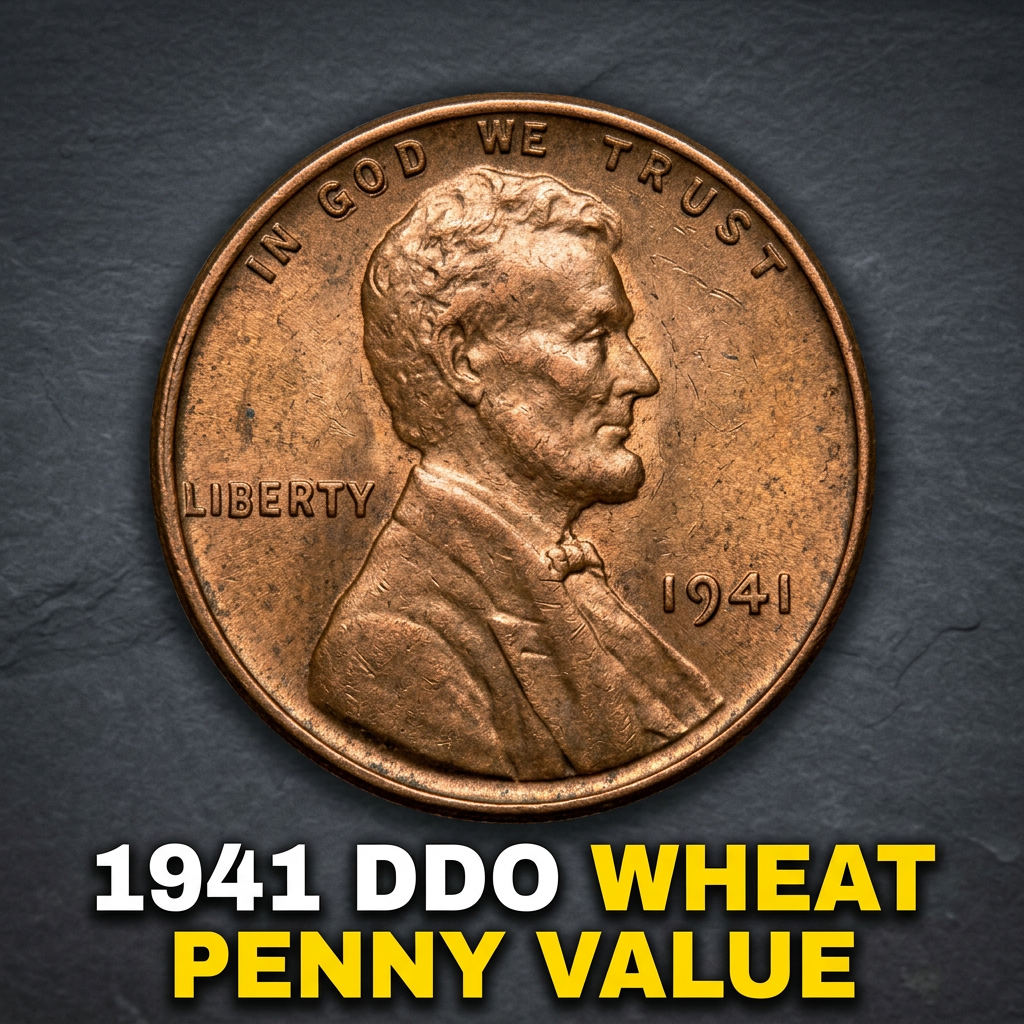

The 1941 DDO Wheat Penny is worth anywhere from $15 in heavily worn condition to well over $200 in fine or uncirculated grades — and top-quality examples with strong doubling have sold for hundreds more at auction. If you stumbled across one of these coins in an old jar or collection, you might be holding something genuinely special.
Before we dive in, if you want a quick way to identify whether your coin has the doubling feature, try using a free coin identifier app to get a fast, reliable read on what you have. It can save you a lot of guesswork.
—
What Makes the 1941 DDO Wheat Penny Special
DDO stands for “Doubled Die Obverse,” which means that during the coin-making process, the die used to strike the front of the coin was impressed more than once at a slightly different angle. The result is a visible doubling on design elements like the date, the motto “IN GOD WE TRUST,” and sometimes Lincoln’s eye or ear.
This isn’t a printing smear or damage — it’s a mint error that happened before the coin ever left the facility. Because it’s a manufacturing variety, it’s recognized by major coin grading organizations and adds real, documented value to the coin.
Not every 1941 Lincoln cent has this feature. Most are regular strike coins worth only a few cents to a couple of dollars. But if you can see distinct doubling on the lettering or date under a loupe or magnifier, you may have the DDO variety — and that changes everything.
—
How Much Is the 1941 DDO Wheat Penny Worth Today
Value depends heavily on condition, which coin graders measure on a scale from 1 (barely recognizable) to 70 (perfect uncirculated). For the 1941 DDO, here’s a general breakdown:
| Grade / Condition | Estimated Value |
|---|---|
| Good (G-4) – Heavy wear | $15 – $30 |
| Fine (F-12) – Moderate wear | $35 – $60 |
| Extremely Fine (EF-40) | $75 – $120 |
| About Uncirculated (AU-55) | $130 – $180 |
| Mint State (MS-63 and above) | $200 – $500+ |
For deeper research, you can explore detailed 1941 Wheat Penny value data by grade and mint mark to compare your coin against certified sale records.
Keep in mind these are estimates. Actual sale prices fluctuate based on market demand, eye appeal, and whether the coin has been professionally graded. CoinKnow can help you track current market trends and see what similar coins have sold for recently.
—
Philadelphia, Denver, and San Francisco — Does the Mint Mark Matter?
In 1941, Lincoln cents were produced at three mints: Philadelphia (no mint mark), Denver (D), and San Francisco (S). The DDO variety is most commonly associated with the Philadelphia issue, but collectors should always check.
The mint mark is located on the obverse (front) of the coin, just below the date. A “D” means Denver; an “S” means San Francisco; no letter means Philadelphia.
For the DDO specifically, the Philadelphia coins tend to carry the most premium because that’s where the variety originates. However, all three mints produced large quantities of 1941 cents, so condition remains the biggest value driver for regular strikes.
If you’re curious about how the 1941-S compares in uncirculated proof-like grades, you can check out certified price data for the 1941-S Wheat Penny in MS Red Proof-Like condition — it’s a useful benchmark for understanding how mint and finish affect value across this series.
—
How to Tell If Your 1941 Penny Has the Doubling
The most reliable way to check for the DDO feature is with a 5x or 10x jeweler’s loupe. Look closely at the date — specifically the “1941” numerals — and at the text “LIBERTY” and “IN GOD WE TRUST” on the obverse.
True doubled die doubling shows notched, shelf-like edges on the letters or numbers. It’s distinct and consistent, not blurry. Machine doubling, on the other hand, looks flat and smeared — and that type adds no extra value.
If you’re unsure what you’re seeing, CoinKnow offers an easy visual comparison tool that helps everyday collectors distinguish genuine DDO coins from mechanical doubling. It’s a great starting point before you invest in professional grading.
Once you’re fairly confident you have a DDO, consider submitting it to PCGS or NGC for official grading. A certified coin is far easier to sell and commands significantly higher prices than an ungraded example.
—
FAQ
Q: How do I know if my 1941 penny is the DDO variety?
A: Look at the date and lettering on the front of the coin with a magnifier. If you see clear, distinct doubling with a notched or shelf-like appearance on the numbers or letters, it may be the DDO variety. A flat or smeared appearance is usually just machine doubling and adds no value.
Q: Is the 1941 DDO Wheat Penny rare?
A: It’s not the rarest coin in the Lincoln cent series, but genuine DDO examples are far less common than regular 1941 cents. In high grades with strong, visible doubling, they attract serious collector interest and command solid premiums.
Q: Should I clean my 1941 DDO penny before selling it?
A: Absolutely not. Cleaning a coin — even gently — removes the natural patina and almost always lowers its value significantly. Collectors and graders can immediately spot a cleaned coin, and it will be graded lower or flagged as “details” grade, which reduces what buyers will pay. Leave it as-is and let a professional assess it.