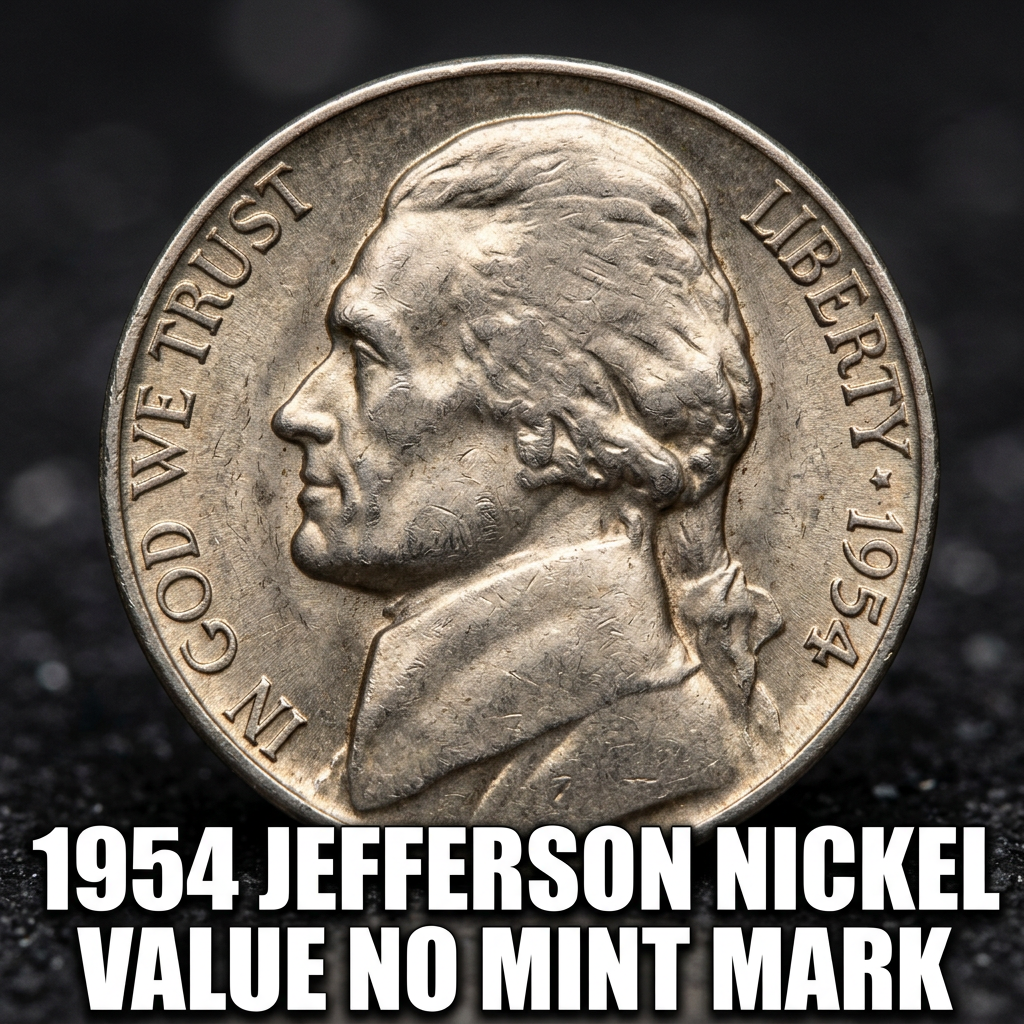

The 1954 Jefferson Nickel with no mint mark is worth anywhere from 10 cents in heavily worn condition to over $50 or more in pristine mint state — and a few exceptional examples have sold for hundreds of dollars at auction. If you found one of these coins in an old jar or inherited a collection, you’re in the right place to find out exactly what it’s worth.
Before we dive into the details, it helps to have the right tools on hand. A free coin identifier app can give you a quick starting point for identifying your coin’s condition and approximate value — no coin expertise required.
—
What Is the 1954 Jefferson Nickel With No Mint Mark?
The 1954 Jefferson Nickel with no mint mark was struck at the Philadelphia Mint. In 1954, Philadelphia was still the main production facility for U.S. nickels, and coins minted there carried no mint mark at all — which is perfectly normal and doesn’t make them rare on its own.
That year, the Philadelphia Mint produced over 47 million Jefferson Nickels, making them relatively common in circulated grades. However, “common” doesn’t always mean “worthless.” Coins in high mint state grades — especially MS-65 and above — can still command strong prices among collectors.
The coin features Felix Schlag’s classic portrait of Thomas Jefferson on the obverse and his famous Monticello home on the reverse, a design that ran from 1938 all the way to 2003.
—
How Much Is a 1954 Jefferson Nickel Worth Today?
The value of your 1954 Jefferson Nickel depends almost entirely on its condition, also called its “grade.” Here’s a simple breakdown:
| Grade / Condition | Estimated Value |
|---|---|
| Good (G-4) | $0.10 – $0.25 |
| Fine (F-12) | $0.25 – $0.50 |
| Extremely Fine (EF-40) | $0.75 – $1.50 |
| About Uncirculated (AU-55) | $2 – $5 |
| Mint State (MS-63) | $8 – $20 |
| Mint State (MS-65) | $30 – $60 |
| Mint State (MS-66+) | $100 – $300+ |
For the most up-to-date pricing data, you can check current 1954 Jefferson Nickel mint state price records to see recent auction results across different grade levels.
—
How to Judge the Condition of Your 1954 Nickel
This is where most everyday coin finders get stuck — and understandably so. Grading a coin isn’t something you learn overnight. But there are a few things you can look for at home.
Check Jefferson’s hair detail. On a well-preserved coin, you should be able to see the individual lines in Jefferson’s hair above his ear. If those lines are smooth and worn away, the coin is in lower grade.
Look at Monticello’s steps. The steps on the reverse of the coin are another key grading point. On higher-grade coins, the steps appear sharp and distinct. Worn coins will show these steps blending together.
Avoid cleaning the coin. This is critical. A cleaned coin — even one that looks shiny — is worth significantly less to collectors than an original, uncleaned example. If your coin looks suspiciously bright, it may have been polished at some point.
If you’re unsure about the grade, CoinKnow offers a handy grading guide and coin lookup feature that walks you through the process step by step.
—
Are Any 1954 No Mint Mark Nickels Worth More?
Yes — certain varieties and error coins from 1954 can be worth significantly more than standard examples.
Full Steps (FS) designation is one of the most important value drivers for Jefferson Nickels. Coins that show five or six fully struck steps on Monticello qualify for a “Full Steps” designation from grading services like PCGS or NGC. A 1954 Philadelphia nickel with Full Steps in MS-65 can be worth several times more than a non-FS example at the same grade level.
Die errors and doubled die varieties also pop up on 1954 nickels occasionally. These aren’t common, but if you notice any doubling in the lettering or date, it could indicate an error worth investigating further.
For a complete look at 1954 nickel value details including error varieties and Full Steps premiums, specialized databases can help you narrow things down quickly.
CoinKnow is another great resource here — its database includes known error varieties and lets you compare your coin’s features against documented examples.
—
Where to Sell a 1954 Jefferson Nickel
If your 1954 Jefferson Nickel turns out to be in nice condition, you have several good options for selling it.
eBay is one of the most active marketplaces for coins at this price level. Search completed listings to see what similar coins have actually sold for — not just what sellers are asking.
Local coin dealers are worth visiting if you’d prefer a quick, in-person transaction. They won’t always offer top dollar, but they provide immediate payment and expert advice.
Coin shows are another option, especially if your coin is a high-grade or Full Steps example that might attract multiple bidders.
For lower-grade circulated coins worth less than $1, it’s generally not worth the effort to sell individually. These are better kept as part of a starter collection or given to a young coin enthusiast in the family.
—
FAQ
Q: Is a 1954 Jefferson Nickel with no mint mark rare?
A: Not particularly. Over 47 million were minted at Philadelphia in 1954, making circulated examples quite common. However, high-grade specimens and Full Steps examples are genuinely scarce and can bring strong prices from collectors.
Q: How do I know if my 1954 nickel has Full Steps?
A: Look at the steps beneath the columns on Monticello on the reverse. If you can clearly count five or six distinct, unbroken steps, your coin may qualify for the Full Steps designation. A loupe or magnifying glass helps. You can also use CoinKnow to compare your coin’s reverse to reference images.
Q: Should I get my 1954 Jefferson Nickel graded professionally?
A: It depends on the coin’s condition. If your nickel looks uncirculated and shows strong detail — especially Full Steps — professional grading by PCGS or NGC could significantly increase its resale value. For a coin worth less than $5 in circulated condition, the grading fee generally isn’t worth it.