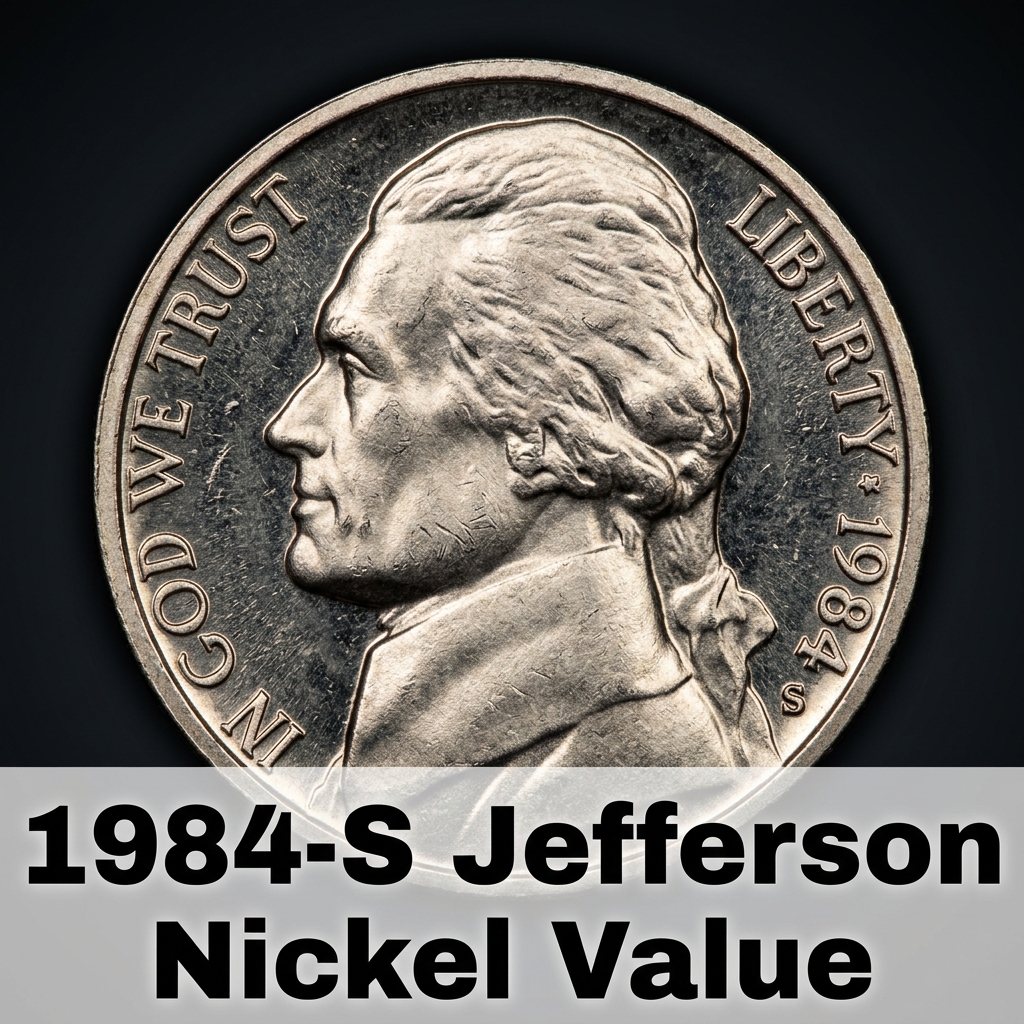

The 1984-S Jefferson Nickel is worth anywhere from $1 to $5 for a typical proof example, but high-grade specimens can fetch $10 to $30 or more depending on condition. If you found one of these coins and are wondering whether it’s a keeper, you’re in the right place — let’s break it down in plain English.
What Makes the 1984-S Jefferson Nickel Special
The “S” in 1984-S stands for San Francisco, and that tells you something important right away: this coin was never meant for everyday pocket change. The San Francisco Mint struck these nickels exclusively as proof coins in 1984, sold directly to collectors in proof sets.
Proof coins are made using specially polished dies and planchets, giving them sharp, mirror-like fields and frosted raised designs. They look stunning, even decades later.
If you stumbled across one of these in an old collection or inherited proof set, there’s a good chance it’s in excellent condition — and that matters a lot when it comes to value. Using a free coin identifier app can help you confirm exactly what you have before making any decisions about selling.
1984-S Jefferson Nickel Value by Grade
Coin values depend heavily on condition, which is measured using the Sheldon scale from 1 (Poor) to 70 (Perfect). Proof coins are graded slightly differently — you’ll see grades like PR-65 or PR-69 on certified examples.
Here’s a general value guide for the 1984-S Jefferson Nickel:
| Grade | Description | Estimated Value |
|---|---|---|
| PR-65 | Gem Proof, minor imperfections | $1 – $3 |
| PR-67 | Superb Gem Proof | $4 – $8 |
| PR-68 | Near-perfect surfaces | $8 – $15 |
| PR-69 | Virtually flawless | $15 – $30 |
| PR-70 | Perfect Proof | $50+ |
Most 1984-S nickels you find in an old proof set will be in the PR-65 to PR-67 range, which puts their value somewhere between $1 and $8. Not a fortune, but certainly worth keeping separate from regular change.
For the most up-to-date auction data, you can check out recent 1984 Jefferson Nickel price trends by grade to see what buyers are actually paying right now.
How Many 1984-S Jefferson Nickels Were Made
The U.S. Mint produced approximately 3,065,110 proof 1984-S Jefferson Nickels. While that might sound like a lot, keep in mind that most were sold in collector sets and carefully preserved — making well-preserved examples more common than you’d think.
However, truly flawless PR-70 coins are still rare. The difference between a PR-69 and a PR-70 can mean a significant jump in value at auction.
The coin itself features the classic Felix Schlag design — Thomas Jefferson on the obverse and Monticello on the reverse — unchanged from when it debuted in 1938. It’s a design that collectors have appreciated for decades.
CoinKnow is a great tool for looking up mintage data, grade populations, and recent sale prices — all in one place — if you want to go deeper on any coin in your collection.
Should You Get Your 1984-S Nickel Graded
Professional grading by services like PCGS or NGC can increase the marketability of your coin significantly, but it’s not always worth the cost for common-date proofs.
Grading fees typically start around $20–$30 per coin. If your 1984-S nickel is likely to grade PR-65 or PR-66, submitting it for grading might actually cost more than the coin is worth.
That said, if you believe you have an exceptional example — one that looks nearly flawless with deep cameo contrast between the mirrored fields and frosted devices — it might be worth exploring. A PR-69 or PR-70 can sell for multiples of a lower-grade example.
For a detailed breakdown of the full 1984 nickel value including proof and business strike comparisons, that resource covers everything you need before deciding whether grading makes financial sense.
CoinKnow also helps collectors track whether a coin is worth grading based on current market comps — handy before you spend money on submission fees.
Tips for Storing and Protecting Your 1984-S Nickel
If you found this coin still sealed in its original U.S. Mint proof set packaging, do not remove it. The original packaging helps preserve the coin’s grade and adds to its collectibility.
If it’s already loose, store it in an inert coin flip or hard plastic holder — never in PVC-based flips, which can cause chemical damage over time.
Avoid cleaning the coin at all costs. Even a gentle wipe can create microscopic scratches that drop a PR-68 down to a PR-65 in the eyes of a grader. When in doubt, leave it alone.
CoinKnow offers storage tips, market alerts, and a personal collection tracker that makes managing your coins much easier, whether you’re a casual finder or a serious collector.
FAQ
Q: Is the 1984-S Jefferson Nickel rare?
A: It’s not considered rare in terms of survival, since over 3 million were minted and most were preserved in proof sets. However, high-grade PR-69 and PR-70 examples are genuinely scarce and worth more to collectors.
Q: Can I spend a 1984-S Jefferson Nickel as regular currency?
A: Technically yes — it’s still legal tender worth 5 cents. But given that even a basic proof example is worth $1–$3 to collectors, you’d be better off setting it aside rather than dropping it in a vending machine.
Q: How do I tell if my nickel is a proof coin?
A: Look for a sharp, mirror-like background (called the field) and a frosted, almost matte finish on the raised portrait and design. Proof coins also carry a clear “S” mintmark on the obverse, just to the right of Jefferson’s portrait. A bright light and a magnifying glass will make these details easy to spot.