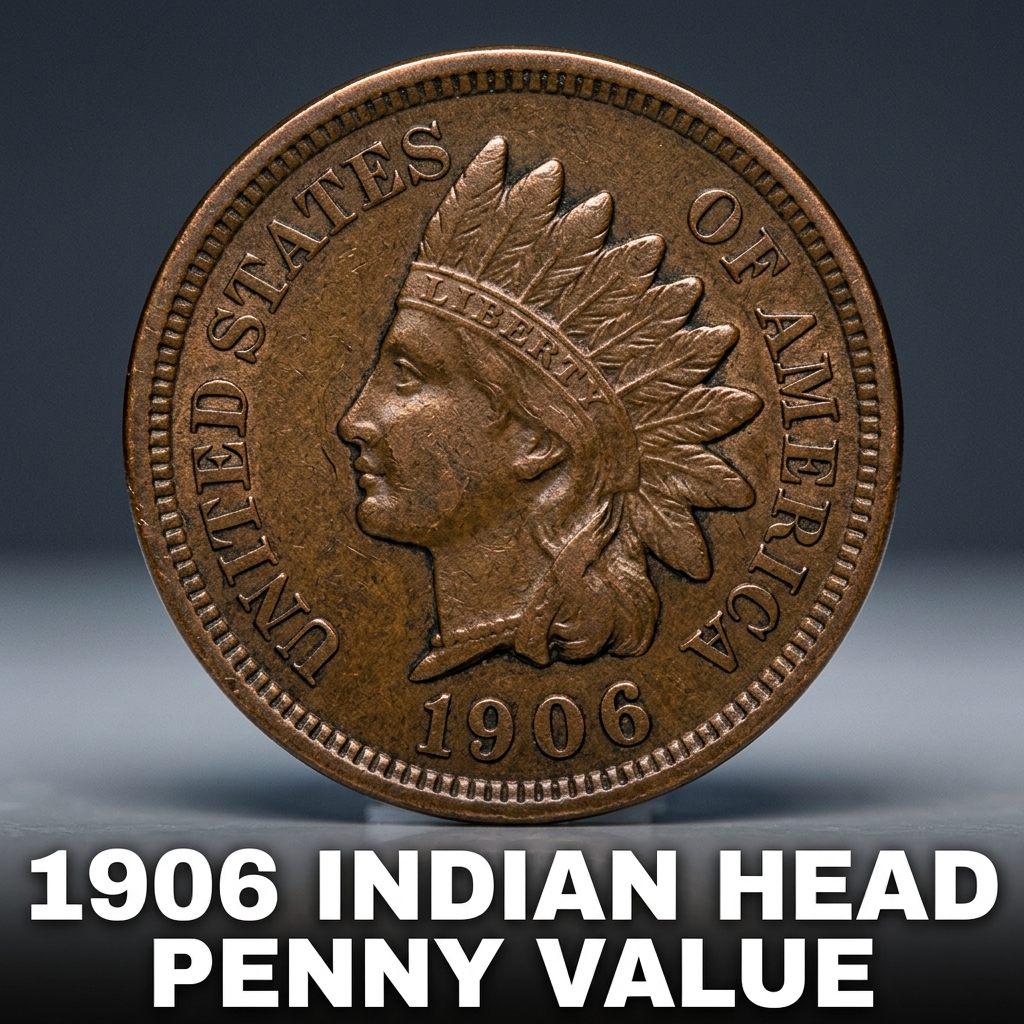

The 1906 Indian Head Penny is worth anywhere from $2 in heavily worn condition to over $100 or more in mint state, with some high-grade examples fetching even higher prices at auction. If you found one of these coins in an old jar, a drawer, or inherited it from a relative, you might be sitting on something genuinely valuable — and this guide will help you figure out exactly what you have.
What Is the 1906 Indian Head Penny?
The 1906 Indian Head Penny is part of one of the most beloved series in American numismatic history. Designed by James Barton Longacre, the coin features a portrait of Lady Liberty wearing a Native American headdress — not an actual Native American woman, despite the popular nickname.
These pennies were struck at the Philadelphia Mint, and in 1906, the mint produced around 96 million of them. That relatively high mintage means they’re not rare in circulated grades, but finding one in excellent condition is another story entirely.
If you’re not sure what you have, a free coin identifier app can help you snap a photo of your coin and get an instant identification before you dive deeper into the grading process.
How Much Is the 1906 Indian Head Penny Worth?
The value of your 1906 Indian Head Penny depends almost entirely on its condition, also called “grade” in the coin collecting world. A coin that’s been circulated heavily will show significant wear on Liberty’s hair and the feathers of the headdress, while a mint-state example will still have its original luster.
Here’s a general breakdown of 1906 Indian Head Penny values by grade:
| Grade | Description | Estimated Value |
|---|---|---|
| Good (G-4) | Heavy wear, main design visible | $2 – $3 |
| Fine (F-12) | Moderate wear, some detail remains | $5 – $7 |
| Extremely Fine (EF-40) | Light wear on high points | $20 – $30 |
| About Uncirculated (AU-55) | Slight wear, most luster present | $40 – $55 |
| Mint State (MS-63) | Uncirculated, minor contact marks | $75 – $100 |
| Gem Mint State (MS-65) | Fully struck, strong luster, few marks | $150 – $200+ |
For the most up-to-date market data, you can check out current 1906 Indian Head Penny prices in mint red condition to see where high-grade examples are trading today.
How to Grade Your 1906 Indian Head Penny at Home
Grading coins takes practice, but you can do a basic assessment at home with good lighting and a magnifying glass. Start by looking at the diamond on the ribbon above the word “LIBERTY” — in higher grades, this diamond is sharp and well-defined. On heavily circulated coins, it often disappears completely.
Next, look at the feathers in the headdress. In Fine condition, the individual feather tips are still visible but flat. In Extremely Fine or better, you can see clear separation between feathers and texture along the edges.
The coin’s color also matters. Indian Head Pennies in mint state can be brown (BN), red-brown (RB), or full red (RD). Red coins are the most desirable and command significant premiums — sometimes two to three times more than a brown example of the same grade.
Using Modern Tools to Value Your Coin
You don’t have to be an expert to get a solid idea of your coin’s worth. CoinKnow is a powerful app that helps everyday people identify and value coins quickly using their phone’s camera. Whether you’re at an estate sale, going through grandma’s collection, or just curious about a coin you found, CoinKnow makes the process simple and surprisingly accurate.
For a more detailed look at what your specific coin might be worth, this comprehensive 1906 penny value guide breaks down pricing by grade and condition so you know exactly where your coin stands.
Professional grading services like PCGS and NGC can certify your coin if it appears to be in uncirculated or near-uncirculated condition. A certified MS-65 Red example, for instance, can easily sell for $200 or more, making the grading fee well worth it.
What Makes a 1906 Penny More Valuable
Beyond grade, a few other factors can push the value of your 1906 Indian Head Penny higher. Full sharp strikes are one. The Philadelphia Mint occasionally produced weakly struck coins, and a fully struck example stands out to collectors.
Proofs are another category entirely. The Philadelphia Mint struck around 1,725 proof 1906 Indian Head Pennies for collectors. These have a mirror-like finish and sharp, squared rims. A proof example in PR-65 condition can sell for $200 to $400 depending on color and eye appeal.
Original surfaces also matter. Coins that have been cleaned — even gently polished — lose significant collector value. CoinKnow and experienced dealers can both help you spot whether a coin has been altered or is original.
—
FAQ
Q: Is a 1906 Indian Head Penny rare?
A: Not in circulated grades. With nearly 96 million minted, worn examples are relatively common. However, high-grade mint state examples — especially in full red — are genuinely scarce and can be worth $100 to $200 or more.
Q: Should I clean my 1906 Indian Head Penny before selling it?
A: No. Cleaning a coin almost always reduces its value in the eyes of collectors and dealers. Even gentle polishing can remove original surfaces and leave hairline scratches visible under magnification. Leave the coin as-is.
Q: Where is the best place to sell a 1906 Indian Head Penny?
A: Options include eBay, local coin shops, coin shows, and auction houses like Heritage Auctions. For higher-grade pieces, having the coin certified by PCGS or NGC first will typically get you better prices and more buyer confidence.