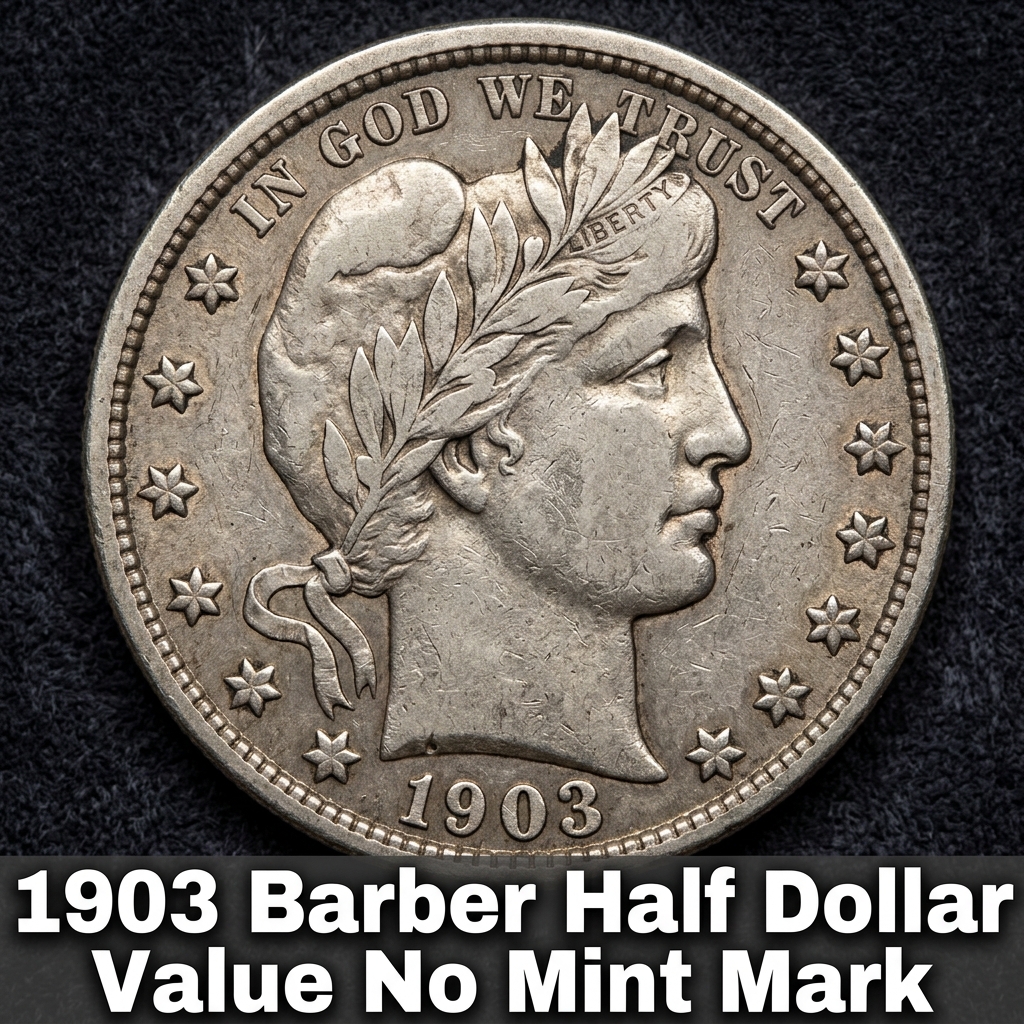

The 1903 Barber Half Dollar (no mint mark) is worth anywhere from $15 in heavily worn condition to well over $500 in higher mint state grades — and rare specimens in top condition can fetch even more at auction. If you just found one of these silver coins tucked away in a drawer or inherited collection, you’re in the right place to find out exactly what you’ve got.
What Makes the 1903 Barber Half Dollar Special
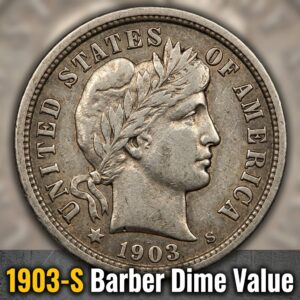
The 1903 Barber Half Dollar was struck at the Philadelphia Mint, which is why it carries no mint mark — Philadelphia coins never did during this era. Designed by Charles E. Barber, the coin features Lady Liberty wearing a laurel wreath on the obverse and a heraldic eagle on the reverse. These coins were made for everyday circulation, so most surviving examples show significant wear.
The series ran from 1892 to 1915, and the 1903 Philadelphia issue had a mintage of just over 2.2 million coins. That’s not a tiny number, but decades of circulation have made well-preserved examples genuinely scarce today.
If you’re not sure whether your coin has a mint mark or not, you can use a free coin identifier app to scan the coin and instantly get details about its origin, mint location, and estimated value — no coin expertise required.
How Much Is the 1903 Barber Half Dollar Worth Today
The value of the 1903 Barber Half Dollar with no mint mark depends heavily on its condition, also called its “grade” in the coin world. Even a well-worn example is worth money simply because it contains 90% silver — that base metal value alone sits around $8 to $10 at current silver prices.
But collector value goes far beyond melt value. A coin graded Good (G-4) typically sells for around $15 to $20. Step up to Fine (F-12), and you’re looking at $35 to $55. Extremely Fine (EF-40) examples can bring in $100 or more, and uncirculated coins in Mint State grades are where things get exciting.
Here’s a quick value breakdown to give you a clearer picture:
| Grade | Description | Estimated Value |
|---|---|---|
| Good (G-4) | Heavy wear, main design visible | $15 – $22 |
| Very Good (VG-8) | Moderate wear, some detail | $28 – $40 |
| Fine (F-12) | Even wear, clear lettering | $38 – $58 |
| Extremely Fine (EF-40) | Light wear on high points | $95 – $140 |
| About Uncirculated (AU-50) | Slight wear, mostly lustrous | $175 – $250 |
| Mint State (MS-63) | No wear, minor contact marks | $450 – $650+ |
These figures reflect current retail market trends and can shift with silver prices and collector demand. For a broader look at silver coin values from this same era, check out this helpful guide on 1903 Morgan Dollar value and what similar early 1900s silver coins are selling for — it gives great context for understanding the market.
How to Grade Your 1903 Barber Half Dollar at Home
You don’t need to be an expert to get a rough idea of your coin’s grade. Start by looking at the high points of the design — on the obverse, that’s the top of Liberty’s head and the cheekbone area. On the reverse, check the eagle’s breast feathers and the tops of the wings.
If those areas are smooth and flat with little to no detail, your coin is likely in Good to Fine condition. If you can still see some hair strands above Liberty’s ear and individual feathers on the eagle, you might have a Very Fine or better coin on your hands.
CoinKnow makes this process a lot easier. The app lets you photograph your coin and uses AI technology to estimate its grade and current market value — it’s a great starting point before you head to a professional appraiser.
Should You Clean Your Barber Half Dollar
Please don’t. This is one of the most common mistakes people make with old coins, and it can seriously hurt the value of your 1903 Barber Half Dollar no mint mark coin. Even gentle cleaning with soap removes the natural patina that collectors prize, and harsh cleaning can leave hairline scratches that drop a coin by several grade levels.
A coin that looks “dirty” to an untrained eye often has original surfaces that a seasoned collector will pay a premium for. Leave it exactly as you found it.
If you’re unsure what you have, CoinKnow is a fast, free way to scan your coin and get an honest assessment before making any decisions.
Where to Sell a 1903 Barber Half Dollar
If you’ve decided to sell, you have several solid options. Online auction platforms like eBay work well for circulated examples where buyers can compare prices easily. For higher-grade coins worth $200 or more, consider submitting to PCGS or NGC for professional grading — a certified coin in a holder almost always sells faster and for more money.
Local coin shops are convenient, but be aware they typically pay 50% to 70% of retail value since they need to make a profit on resale. Coin shows can connect you with serious collectors who may pay closer to full market value.
—
Frequently Asked Questions
Q: How do I know if my 1903 Barber Half Dollar has no mint mark?
A: Look at the reverse of the coin, just below the eagle’s tail feathers. If there is no letter there, it was minted in Philadelphia and has no mint mark — which is normal and expected for this coin.
Q: Is the 1903 Barber Half Dollar with no mint mark rare?
A: It’s not considered rare in worn grades, with a mintage of over 2.2 million. However, finding one in Extremely Fine or Mint State condition is genuinely uncommon, and those examples command strong collector premiums.
Q: What is the silver melt value of a 1903 Barber Half Dollar?
A: The coin contains 0.3617 troy ounces of pure silver. At current silver prices around $28 to $30 per ounce, the melt value sits roughly between $10 and $11 — but collector value almost always exceeds that for any identifiable example.