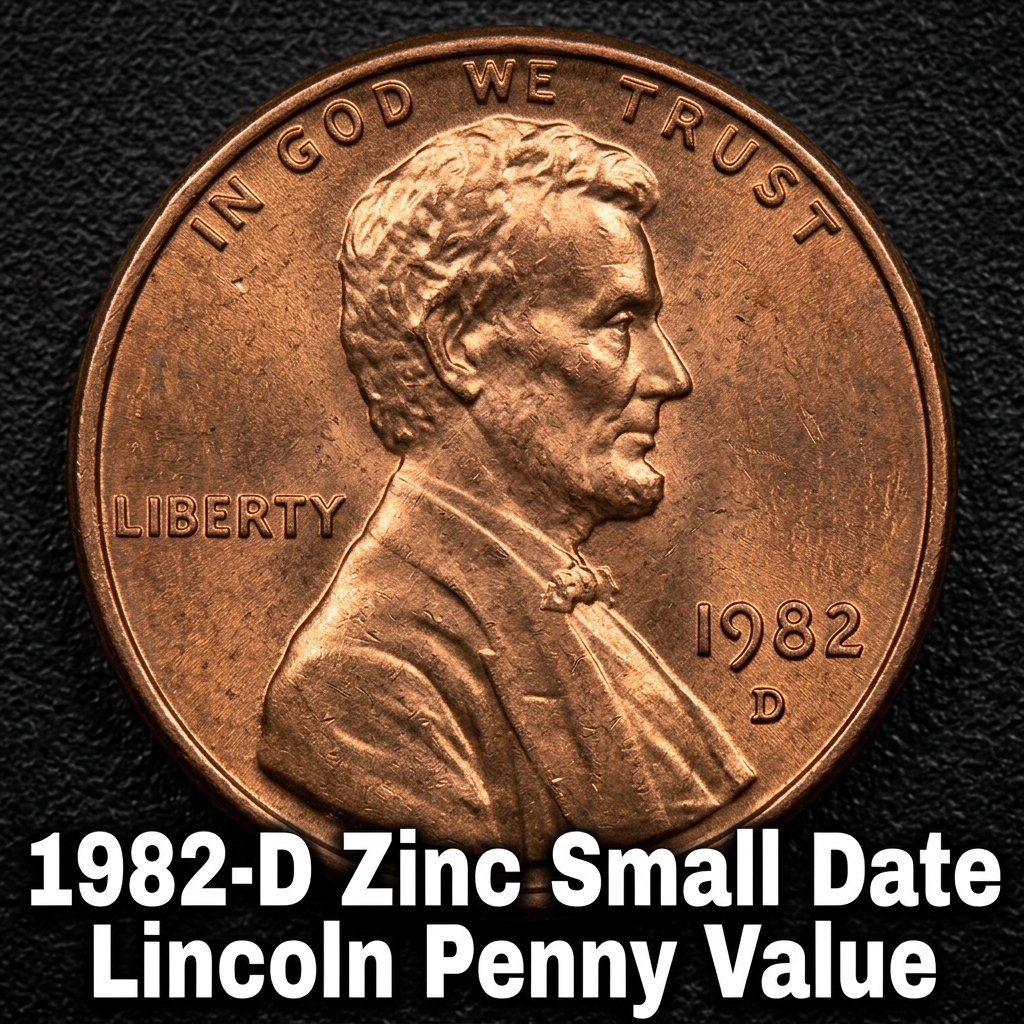

The 1982-D Zinc Small Date Lincoln Penny is worth anywhere from a few cents in heavily worn condition to $5–$15 in well-preserved uncirculated grades, with top-tier examples grading MS67 Red occasionally fetching $100 or more at auction. If you just found one in your change jar or inherited a coin collection, you’re in the right place — let’s break down exactly what this coin is worth and what makes it special.
What Makes the 1982-D Zinc Small Date So Interesting
The year 1982 was a turning point in U.S. coinage history. The U.S. Mint switched from making Lincoln pennies out of 95% copper to a new zinc core with a thin copper plating — a change driven by rising copper prices. But here’s where it gets complicated: during that same year, the Mint produced pennies with both the old copper composition and the new zinc composition, AND with two different sized dates — a “Large Date” and a “Small Date.”
That means collectors have to pay attention to four variables in 1982: the date size, the mint mark (Philadelphia or Denver), and the metal composition. The 1982-D Zinc Small Date is one of the most sought-after of these varieties because it’s relatively scarce compared to its counterparts.
To identify it, look at the “2” in the date. On the Small Date version, the top of the “2” is level and the digit sits higher in the field. The Large Date has a curvier “2” that dips lower. It’s a subtle difference, but it matters — a lot — to value.
If you’re unsure which variety you have, using a free coin identifier app can help you narrow it down quickly using just your smartphone camera. Tools like CoinKnow are especially handy for beginners trying to sort through a batch of 1982 pennies.
1982-D Zinc Small Date Penny Value by Grade
The condition of your coin — what collectors call its “grade” — has a massive impact on value. A penny pulled from circulation and showing heavy wear is worth just face value or slightly above. But an uncirculated example that was never spent and shows original mint luster can be worth real money.
Here’s a general value guide for the 1982-D Zinc Small Date Lincoln Penny:
| Grade | Description | Estimated Value |
|---|---|---|
| Good (G-4) | Heavy wear, flat details | $0.01–$0.05 |
| Fine (F-12) | Moderate wear, lettering clear | $0.05–$0.25 |
| Extremely Fine (EF-40) | Light wear on high points | $0.50–$1.50 |
| MS-63 Red | Uncirculated, minor marks | $3–$6 |
| MS-65 Red | Gem uncirculated, strong luster | $8–$15 |
| MS-67 Red | Superb gem, near perfect | $100+ |
For more detailed 1982 Lincoln Penny price data across all grades and varieties, certified auction records can give you the most accurate picture of what buyers are actually paying.
How to Check If Your 1982 Penny Is the Zinc Version
Since the copper and zinc versions of the 1982 penny look nearly identical, you’ll need a simple test to confirm composition. The easiest method is the weight test: a copper penny weighs 3.1 grams, while a zinc penny weighs just 2.5 grams. A basic digital scale (the kind used for kitchen measurements) is more than accurate enough.
If you don’t own a scale, listen to the sound. Drop your penny on a hard surface — copper pennies produce a higher-pitched ring, while zinc pennies sound noticeably duller and flatter. It’s not the most scientific method, but it works surprisingly well once you’ve trained your ear.
You can also use CoinKnow to scan your coin and pull up composition details, mint mark info, and current market values all in one place. It’s one of the fastest ways to research a coin without needing any prior knowledge.
Are 1982-D Zinc Small Date Pennies Hard to Find?
Relative to other 1982 Lincoln penny varieties, yes. While millions of 1982-D pennies were minted, the Zinc Small Date variety is less common in high grades because collectors and the general public didn’t always set aside examples at the time. Most of these coins entered circulation and accumulated wear quickly.
In circulated condition, finding one isn’t difficult — they still show up in rolls of pennies from banks. But finding a true gem-quality example grading MS-65 Red or better is genuinely challenging. That’s what drives collector demand and pushes prices higher for top-grade specimens.
The complete 1982 penny value breakdown across all seven varieties shows just how much variation exists within a single year — making 1982 one of the most fascinating years for Lincoln cent collectors.
Tips for Selling Your 1982-D Zinc Small Date Penny
If your coin looks uncirculated and still has original reddish mint color, it may be worth having professionally graded by PCGS or NGC before selling. Graded coins in certified slabs typically sell for more because buyers can trust the assessment.
For circulated examples, selling through eBay or a local coin dealer is perfectly reasonable. Just make sure you photograph both sides clearly and note the variety in your listing title — “1982-D Zinc Small Date” is the search term serious buyers will use.
CoinKnow can help you estimate a fair asking price before you list anything, pulling in recent comparable sales so you’re not flying blind.
FAQ
Q: How do I know if my 1982-D penny is the Small Date variety?
A: Look closely at the date. On the Small Date, the top of the “2” is flat and the numerals appear slightly smaller and higher in the field. Comparing your coin side-by-side with reference images online is the easiest way to confirm the variety.
Q: Is the 1982-D Zinc Small Date penny worth more than face value?
A: In circulated condition, usually only marginally more — perhaps a few cents to a dollar depending on wear. Uncirculated examples, especially those grading MS-65 Red or higher, can be worth $10–$100 or more to collectors.
Q: Should I clean my 1982-D penny before selling it?
A: No — never clean a coin you’re thinking of selling. Cleaning damages the surface and removes the original luster that collectors and graders look for. A cleaned coin will almost always sell for less than an unclean one, even if it looks brighter to the untrained eye.