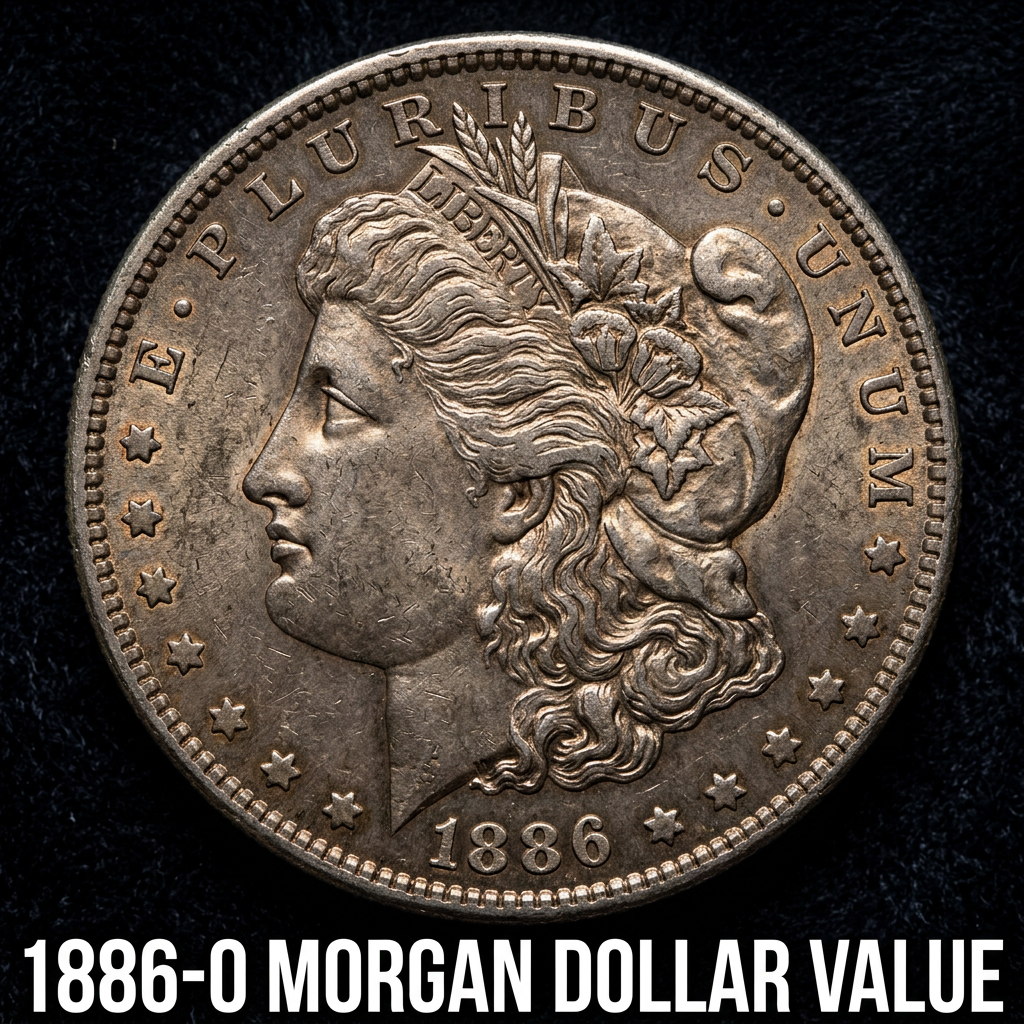

The 1886-O Morgan Dollar is worth anywhere from $30 in heavily worn condition to well over $5,000 or more in higher mint state grades — and in rare cases, top-condition examples have sold for tens of thousands at auction. If you found one of these silver dollars in an old coin jar, a relative’s collection, or tucked away in a drawer, you may be holding something genuinely valuable. Read on to find out exactly what you’ve got.
What Makes the 1886-O Morgan Dollar Special
The 1886-O Morgan Dollar was struck at the New Orleans Mint, which is what the “O” mintmark stands for. You’ll find that mintmark on the reverse side of the coin, just above the “DO” in “DOLLAR.” This coin is part of the famous Morgan Dollar series, which ran from 1878 to 1904 and then again briefly in 1921.
What sets the 1886-O apart from other Morgan Dollars is its surprisingly low survival rate in high grades. Even though the New Orleans Mint produced over 10 million of these coins in 1886, most of them circulated heavily and ended up well-worn. Finding one in excellent condition is harder than you’d think, which is a big part of why high-grade examples command serious premiums.
If you’re not sure what grade your coin is in, using a free coin identifier app can give you a quick first look before you spend money on professional grading.
How Much Is the 1886-O Morgan Dollar Worth by Grade
Coin value is almost entirely about condition. The grading scale goes from Poor (P-1) all the way to Perfect Mint State (MS-70). For everyday collectors and people who just found a coin, here’s what you need to know in plain terms.
A coin that’s been circulated heavily — where the design is visible but worn smooth in spots — is called a “Good” grade coin. One that’s nearly pristine with sharp details and original luster is graded “Mint State.” The difference in value between these two can be enormous.
Below is a general value guide for the 1886-O Morgan Dollar based on grade:
| Grade | Description | Estimated Value |
|---|---|---|
| G-4 (Good) | Heavy wear, design visible | $30 – $45 |
| VG-8 (Very Good) | Moderate wear, major features clear | $45 – $65 |
| F-12 (Fine) | Even wear, all lettering visible | $65 – $100 |
| XF-40 (Extremely Fine) | Light wear on high points only | $150 – $250 |
| MS-60 (Mint State) | Uncirculated, some marks | $400 – $700 |
| MS-63 (Choice Uncirculated) | Bright luster, few blemishes | $1,000 – $2,500 |
| MS-65 (Gem Uncirculated) | Exceptional eye appeal | $5,000 – $15,000+ |
You can find detailed 1886-O Morgan Dollar price data by mint state grade to see how specific MS grades break down in the current market.
Why the 1886-O Is a Condition Rarity
Here’s something that surprises a lot of people: a coin can be common in low grades but extremely rare in high grades. That’s exactly the situation with the 1886-O Morgan Dollar.
The New Orleans Mint wasn’t always known for producing sharply struck, high-quality coins. Many 1886-O dollars came out of the mint with weak strikes — meaning the fine details on Liberty’s hair and the eagle’s feathers just weren’t as crisp as coins struck in Philadelphia. On top of that, most of these coins went straight into circulation and were used as everyday money.
This means that even among uncirculated examples that somehow avoided use, many still show strike weakness or bag marks from storage. A truly well-struck, fully lustrous gem-quality 1886-O is a genuinely scarce coin, and collectors will pay a significant premium to own one.
How to Check the Current Value of Your 1886-O Silver Dollar
Coin prices change with the silver market, collector demand, and recent auction results. The values listed in this guide are general estimates based on historical trends, but for the most accurate and up-to-date information, you’ll want to check a dedicated resource.
CoinKnow is a great app to start with — it’s built specifically to help everyday people understand what their coins are worth. Whether you’re a first-time finder or a casual collector, CoinKnow makes it easy to look up coins by date and mintmark and get current market values in plain language.
You can also explore a full breakdown of 1886 silver dollar values across all mint varieties to compare the O-mint coin against its Philadelphia and San Francisco counterparts.
Tips Before You Sell or Grade Your 1886-O
Before you do anything with your coin, here are a few things worth keeping in mind.
First, never clean your coin. It might seem like polishing it up would make it look better and increase the value, but it does the opposite. Cleaning destroys the original surface and can reduce the value dramatically — sometimes by 50% or more. Even a lightly cleaned coin will be flagged by professional graders.
Second, if your coin looks like it might be in uncirculated or near-uncirculated condition, consider having it graded by a professional grading service like PCGS or NGC. The fee is worth it when dealing with a coin that could potentially be worth hundreds or thousands of dollars.
Third, download CoinKnow and do a quick scan of your coin before making any decisions. It’s a fast, free way to get a general value estimate and understand what you’re working with before you approach a dealer or auction house.
—
Frequently Asked Questions About the 1886-O Morgan Dollar
Q: How do I know if my 1886 Morgan Dollar is from New Orleans?
A: Flip the coin to the reverse (eagle side) and look just above the letters “DO” in “DOLLAR.” If you see a small “O” mintmark, it was struck at the New Orleans Mint. No mintmark means it came from Philadelphia, and an “S” means San Francisco.
Q: Is the 1886-O Morgan Dollar rare?
A: In circulated grades, it’s fairly common and affordable. But in gem uncirculated condition (MS-65 and above), it’s considered a condition rarity and can be worth thousands of dollars. The combination of weak strikes and heavy circulation makes high-quality survivors genuinely scarce.
Q: Where is the best place to sell an 1886-O Morgan Dollar?
A: For lower-grade circulated examples, a local coin dealer or eBay is a reasonable option. For higher-grade or potentially uncirculated coins, you’ll get better results through a major auction house like Heritage Auctions or Stack’s Bowers, especially after professional grading. Always get more than one offer before selling.