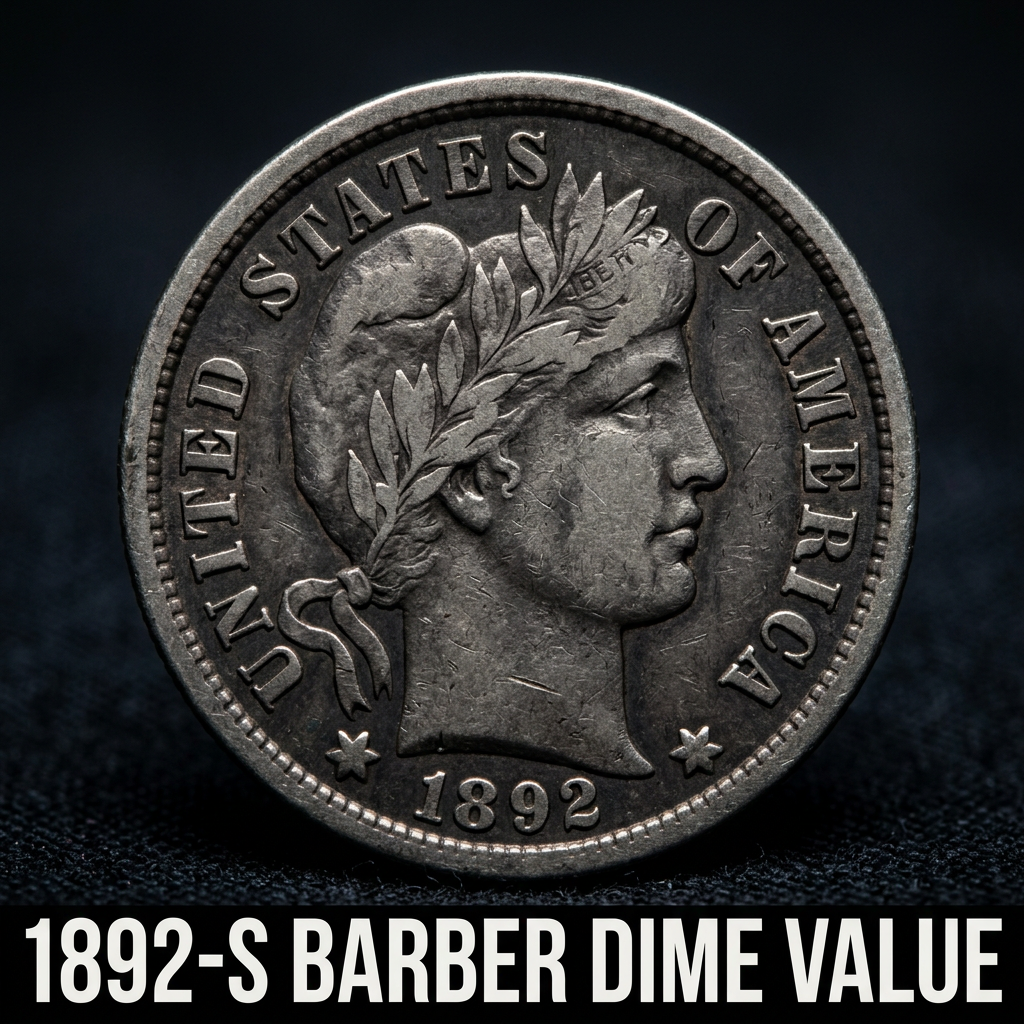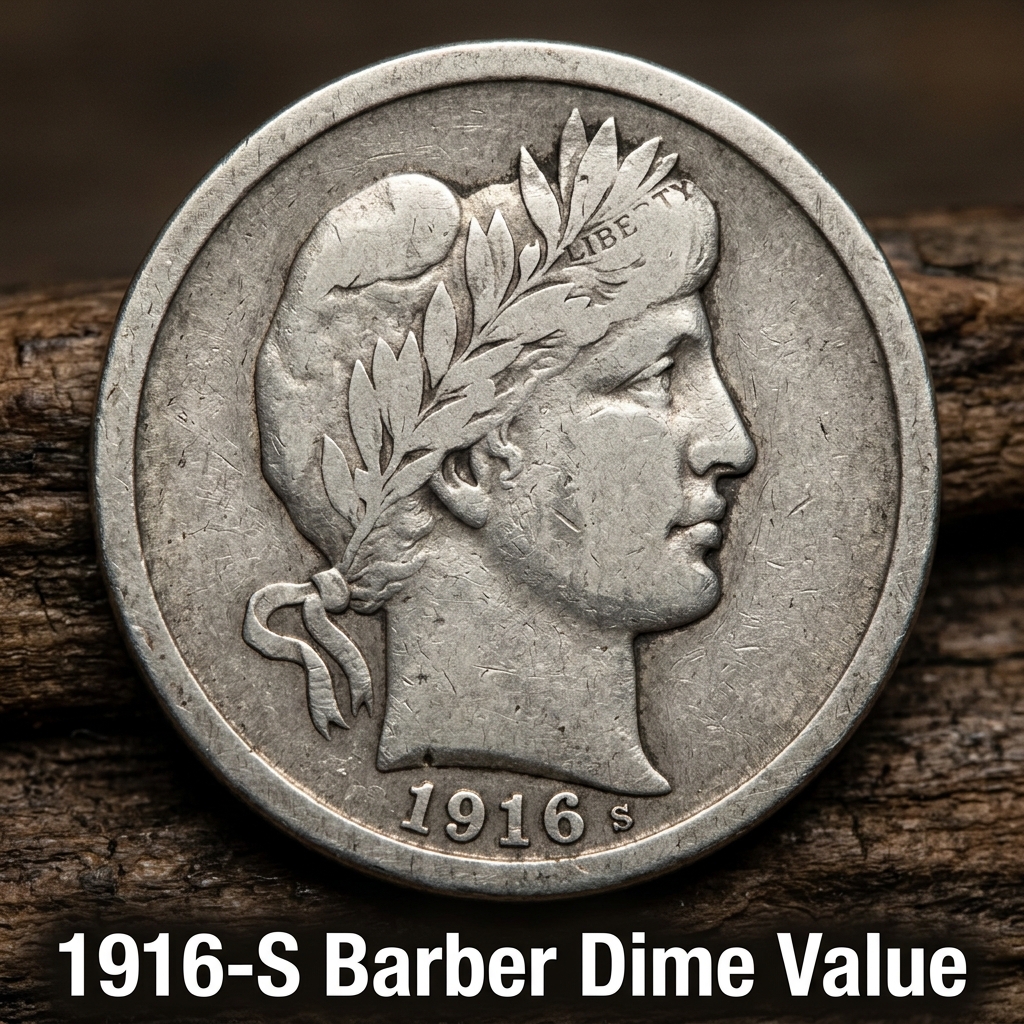

The 1916-S Barber Dime is worth anywhere from $10 in heavily worn condition to well over $200 in fine grades — and in mint state, prices can climb into the thousands. If you pulled one of these old silver dimes out of a jar, a drawer, or your grandfather’s collection, you’re holding something genuinely interesting. This guide will walk you through everything you need to know about its value in plain, straightforward terms.
What Makes the 1916-S Barber Dime Special
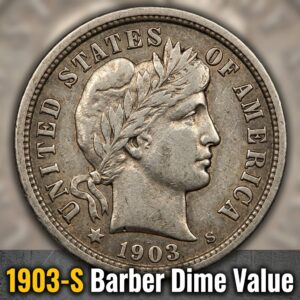
The 1916-S Barber Dime was struck at the San Francisco Mint and carries the small “S” mintmark on the reverse, just below the eagle. It was the final year of the Barber dime series, which ran from 1892 to 1916. That makes this coin historically significant — it’s literally the last chapter of an era in American coinage.
Because 1916 was the last year of production, collectors have long sought out complete Barber dime sets, and the 1916-S is a key date in that journey. The San Francisco mint struck about 5.8 million of these dimes that year, which isn’t a tiny number — but decades of circulation, melting, and natural attrition have made surviving high-quality examples harder to find.
If you’re not sure whether the coin you have is actually a Barber dime or something else, try using a free coin identifier app to confirm the design and mint details before you start looking up values.
How Coin Grade Affects the 1916-S Barber Dime Value
Coin grading is the biggest factor in determining what your 1916-S Barber Dime is worth. The grading scale runs from Poor (P-1) at the bottom all the way up to Mint State 70 (MS-70) at the top. For Barber dimes, the hair detail above Lady Liberty’s ear is the key wear indicator — if that’s smooth and flat, the coin has seen a lot of pocket time.
Here’s a general value breakdown based on condition:
| Grade | Description | Estimated Value |
|---|---|---|
| Good (G-4) | Heavy wear, design visible | $10 – $18 |
| Very Good (VG-8) | Moderate wear, some detail | $18 – $35 |
| Fine (F-12) | Light wear on high points | $35 – $65 |
| Extremely Fine (EF-40) | Slight wear, most detail sharp | $90 – $175 |
| About Uncirculated (AU-55) | Trace wear only, nice luster | $175 – $275 |
| Mint State (MS-63) | Uncirculated, minor marks | $400 – $800+ |
For a deeper look at how these numbers compare across auction results and dealer pricing, check out this detailed breakdown of 1916 Barber Dime values by grade and mint mark — it’s a solid resource that covers all three mint marks from that year.
Silver Content and Melt Value
Even in poor condition, your 1916-S Barber Dime has inherent value simply because it’s made of 90% silver. Each Barber dime weighs 2.5 grams and contains approximately 0.0723 troy ounces of pure silver.
With silver prices fluctuating around $28–$30 per troy ounce at the time of writing, the melt value of your coin is roughly $2.00 to $2.20. That’s the floor — the minimum it’s worth purely based on metal content.
Of course, any 1916-S Barber Dime in collectible condition is worth far more than melt value. You’d only be looking at melt value for a coin that’s severely damaged, corroded beyond recognition, or drilled and worn as jewelry. For most coins people find in old collections, numismatic value beats melt value significantly.
Tips for Getting the Best Price for Your 1916-S Dime
If you’ve determined your coin is in decent shape and you’re thinking about selling, a few strategies can help you get closer to full market value.
First, avoid cleaning the coin. This is the number one mistake people make. Cleaned coins lose collector appeal and can drop significantly in value — even a light wipe with a cloth can leave microscopic scratches that experts spot immediately.
Second, consider getting it professionally graded by PCGS or NGC if it appears to be in AU or better condition. The cost of grading is typically $30–$50, but a certified MS-63 coin could sell for $400 or more versus $150 for an uncertified one.
CoinKnow is a great tool for getting a quick ballpark on your coin’s value before you commit to professional grading or take it to a dealer. It uses image recognition and up-to-date market data to give you a realistic estimate in seconds.
For circulated examples, reputable coin dealers, eBay completed listings, and local coin shows are all solid options. Always compare at least three recent sold prices before agreeing to a deal.
Frequently Asked Questions
Q: How do I know if my dime is a 1916-S Barber Dime?
A: Flip the coin to the reverse and look for a small “S” mintmark beneath the eagle, just above the “ONE DIME” text. The obverse shows Lady Liberty wearing a cap with the word “LIBERTY” on the band — if that detail is worn away, the coin is in low grade. If you’re unsure, CoinKnow can help you identify it instantly using your phone’s camera.
Q: Is the 1916-S Barber Dime rare?
A: It’s not considered a rare coin in low grades, but it is the final-year issue of the Barber series, which makes it desirable to collectors. High-grade examples (MS-63 and above) are genuinely scarce and command strong premiums at auction.
Q: Where is the best place to sell a 1916-S Barber Dime?
A: For coins in circulated grades, eBay and local coin dealers offer the most convenience. For higher-grade coins, professional auction houses like Heritage Auctions or Stack’s Bowers will expose your coin to the most serious buyers. Always do your research first — CoinKnow can give you a quick value estimate so you walk into any negotiation informed.