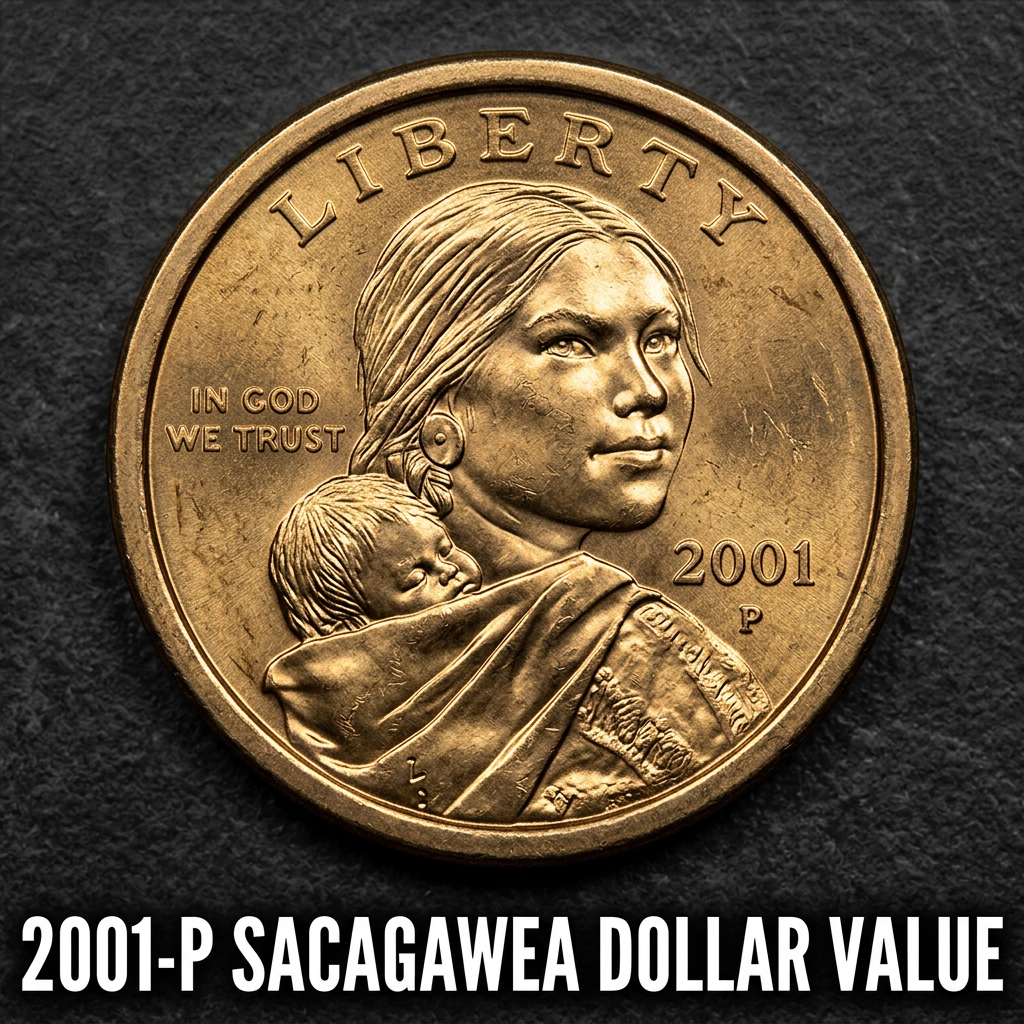

The 2001-P Sacagawea Dollar is worth anywhere from $1 in circulated condition to over $200 or more in top certified mint state grades. If you found one of these golden coins tucked away in a drawer or inherited it from a relative, you’re in the right place to find out exactly what it might be worth.
The Sacagawea dollar is one of the most recognizable modern coins in American history, and the 2001-P version has some interesting details that can make certain examples quite valuable to collectors.
What Is the 2001-P Sacagawea Dollar?
The 2001-P Sacagawea Dollar was struck at the Philadelphia Mint, which is what the “P” mintmark stands for. The coin features a portrait of Sacagawea, the young Shoshone woman who guided Lewis and Clark on their famous expedition, with her infant son Jean Baptiste on her back.
The reverse side shows a bald eagle in flight, surrounded by seventeen stars representing the states at the time of the Lewis and Clark journey.
These coins were produced as part of the Golden Dollar program, which launched in 2000 as a replacement for the unpopular Susan B. Anthony dollar. The U.S. Mint struck over 62 million of the 2001-P Sacagawea dollars for general circulation, which is why most examples you encounter today are common.
However, condition is everything in coin collecting, and that’s what separates a $1 coin from a $150 one.
How Much Is a 2001-P Sacagawea Dollar Worth Today
For most people who find a 2001-P Sacagawea dollar in their change or coin jar, the coin is worth face value — one dollar. Circulated examples with wear and scratches generally don’t command a premium above that.
But uncirculated coins tell a very different story. A 2001-P Sacagawea dollar that was never used in everyday commerce and has been well preserved can be worth significantly more.
Here’s a general value breakdown based on condition:
| Grade / Condition | Estimated Value |
|---|---|
| Circulated (G to XF) | $1.00 (face value) |
| Uncirculated (MS-60 to MS-64) | $2 – $10 |
| Gem Uncirculated (MS-65) | $15 – $40 |
| Superb Gem (MS-66 to MS-67) | $50 – $200+ |
| Proof (PR-69 or PR-70) | $10 – $50+ |
You can find detailed 2001-P Sacagawea Dollar MS grade price data by condition if you want to dig deeper into certified coin auction records and market trends.
Errors and Varieties That Can Make It More Valuable
One thing that excites collectors about the Sacagawea dollar series is the possibility of error coins. While the 2001-P issue doesn’t have a widely documented famous error like the 2000-P “Cheerios Dollar,” there are always striking errors, die cracks, and off-center strikes that can pop up and dramatically increase a coin’s value.
If your coin looks odd in any way — lettering that seems off, an unusual strike, or something strange with the edge — it could be worth getting it examined.
This is where the free coin identifier app can really come in handy. Instead of guessing, you can scan your coin and get instant information about what you’re holding. CoinKnow is a popular choice among everyday collectors for exactly this reason — it’s fast, beginner-friendly, and free to try.
How to Know What Your Coin Is Really Worth
The biggest mistake people make is assuming all old or golden-colored coins are valuable. With over 62 million 2001-P Sacagawea dollars minted, supply is high. Value comes from condition, errors, and certified grades.
Here are a few tips to assess your coin:
– Look for luster. An uncirculated coin will have a bright, satiny or frosty sheen. If it looks dull or worn, it’s likely circulated.
– Check the edges. Sacagawea dollars have edge lettering that reads “E PLURIBUS UNUM.” Missing or weak edge lettering could indicate an error.
– Avoid cleaning it. Cleaning a coin can permanently reduce its value — even if you think you’re helping it look better.
For a more thorough breakdown of values, this complete 2001 Sacagawea Dollar value guide covers circulated and uncirculated prices in detail.
If you want professional-level accuracy, CoinKnow uses image recognition technology to help identify your coin’s type and condition in seconds. Many users find it eye-opening when they discover a coin they thought was worth a dollar is actually worth ten times that in the right grade.
Should You Get It Graded?
If your 2001-P Sacagawea dollar looks flawless — truly uncirculated with no marks, great luster, and sharp details — it may be worth sending to a professional grading service like PCGS or NGC.
Graded MS-67 examples have sold for over $100 at auction. A professional grade gives buyers confidence and can significantly boost resale value.
That said, for most people, the cost of grading (usually $20–$50 per coin minimum) only makes sense if your coin is clearly a gem. Use CoinKnow or another coin identification tool first to get a rough sense of quality before spending money on certification.
Frequently Asked Questions
Q: Is the 2001-P Sacagawea Dollar rare?
A: No, it is not considered rare. Over 62 million were struck at the Philadelphia Mint for circulation. However, high-grade examples (MS-67 and above) are scarce and can be worth $100 or more.
Q: What makes a 2001-P Sacagawea Dollar worth more than face value?
A: Condition is the biggest factor. Uncirculated coins with strong luster and no contact marks are worth more. Error coins — such as off-center strikes or missing edge lettering — can also command a premium.
Q: Where can I sell my 2001-P Sacagawea Dollar if it’s valuable?
A: eBay, coin shows, and local coin dealers are common options. For certified high-grade coins, major auction houses like Heritage Auctions or Stack’s Bowers can get you the best price. Always research current sold listings before selling.