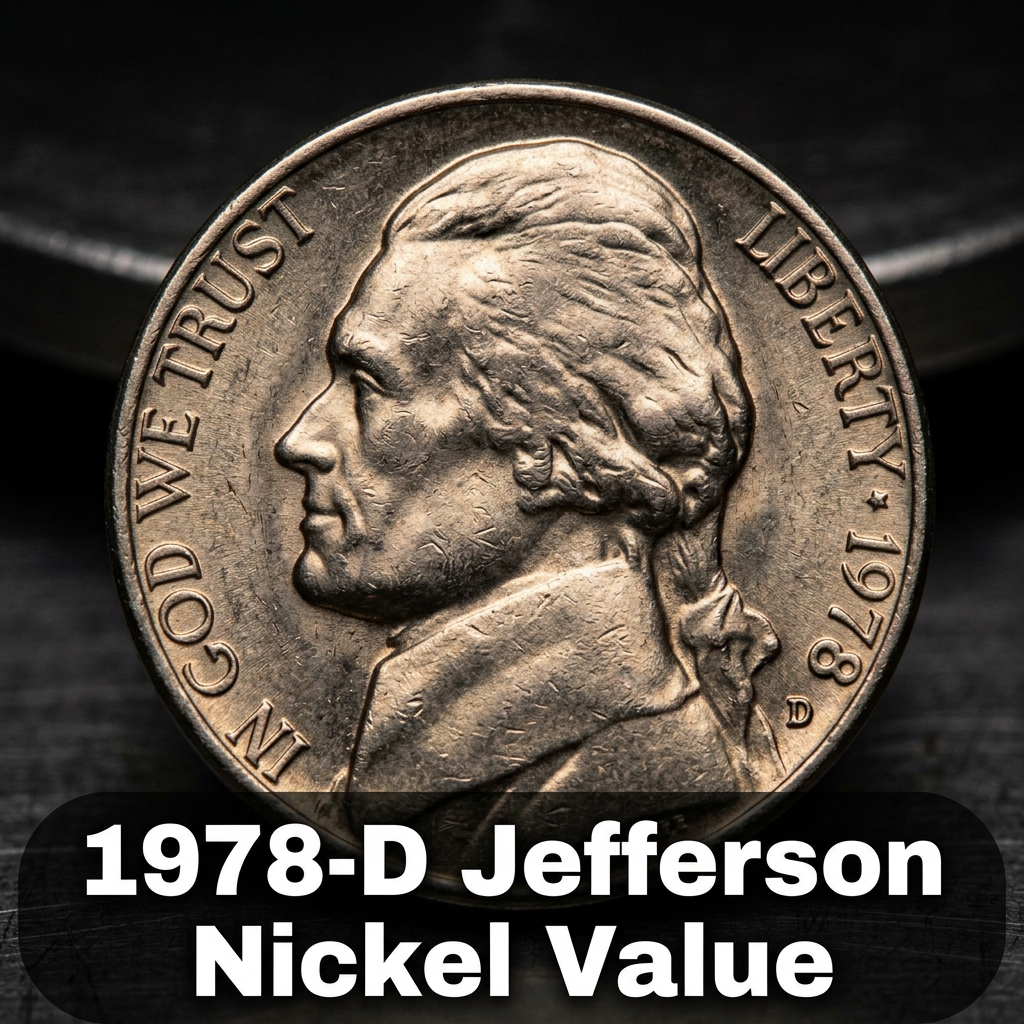

The 1978-D Jefferson Nickel is worth anywhere from 5 cents in heavily circulated condition to over $100 or more in top-tier mint state grades. Most people find these coins in pocket change and wonder if they’ve stumbled onto something valuable — and for the right grade, they just might have.
If you dug this coin out of an old jar or inherited a collection, you’re in the right place. We’ll walk you through exactly what affects the value of a 1978-D nickel, what to look for, and how to figure out what yours might fetch. One quick and easy way to get started is to use a free coin identifier app right from your phone — no coin shop visit required.
What Is the 1978-D Jefferson Nickel?
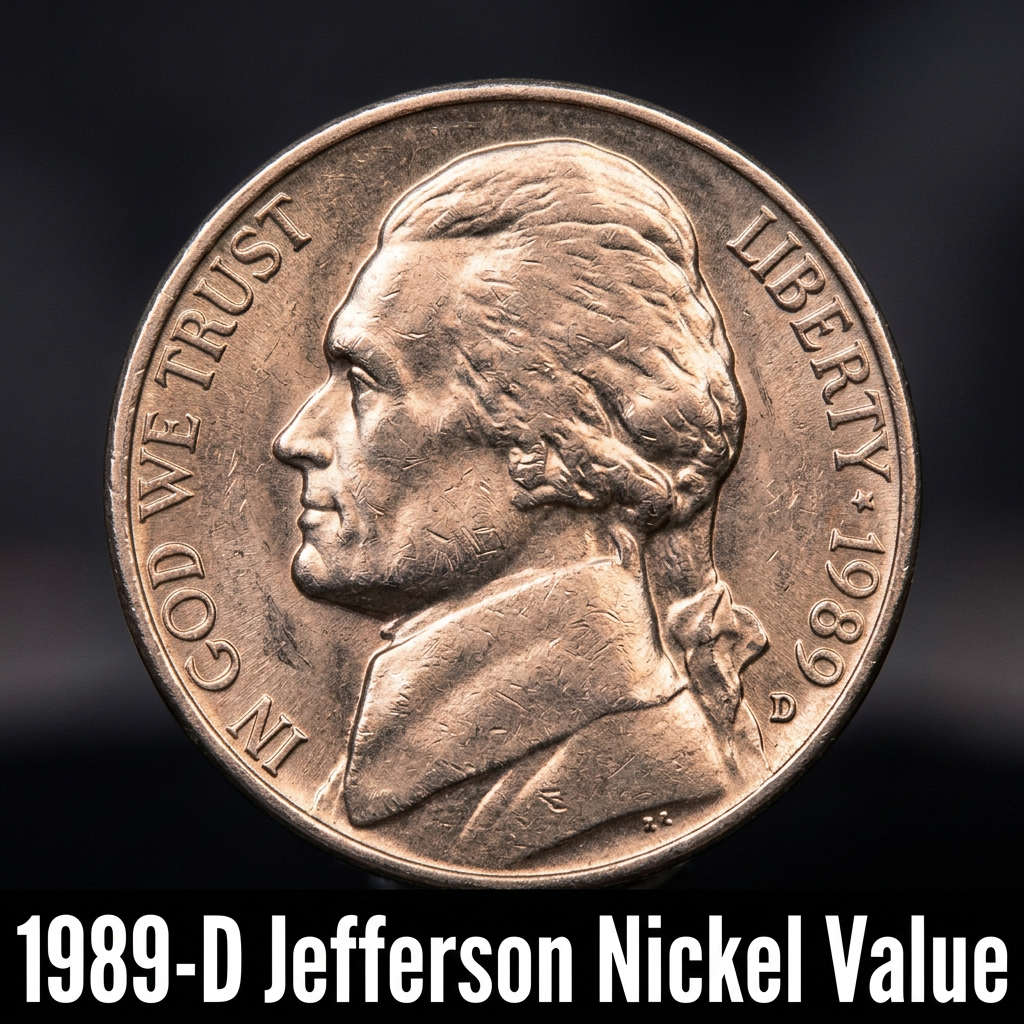
The 1978-D Jefferson Nickel was struck at the Denver Mint, which is why it carries the small “D” mintmark on the coin’s obverse, just to the right of Jefferson’s portrait. In 1978, Denver produced over 313 million of these nickels, making them a very common coin in general circulation.
Because so many were made, most examples you find today have been well-worn through years of everyday use. That said, “common” doesn’t always mean “worthless.” Condition is everything in the coin world, and an uncirculated 1978-D nickel in pristine condition can still command a solid premium among collectors.
The coin features the classic design by Felix Schlag — Thomas Jefferson on the obverse and Monticello on the reverse. That design had been in use since 1938 and remained largely unchanged through this era.
1978-D Jefferson Nickel Value by Grade
The condition of your coin — officially called its “grade” — has the biggest impact on what it’s worth. Coin graders use a 70-point scale, with MS (Mint State) grades reserved for uncirculated coins.
Here’s a general value breakdown based on grade:
| Grade | Condition Description | Estimated Value |
|---|---|---|
| Good (G-4) | Heavy wear, flat details | Face value (~$0.05) |
| Fine (F-12) | Moderate wear, some detail | $0.10 – $0.25 |
| Extremely Fine (EF-40) | Light wear on high points | $0.50 – $1.00 |
| MS-63 | Uncirculated, minor marks | $2 – $5 |
| MS-65 | Gem uncirculated | $10 – $25 |
| MS-67 | Superb gem, nearly perfect | $75 – $150+ |
For the most current auction results and certified sale prices, you can check out detailed 1978-D Jefferson Nickel price data by mint state grade to see how these coins are actually performing on the market today.
What Makes a 1978-D Nickel Worth More Than Face Value
Several factors can push your coin’s value above the ordinary. The most important is grade — a coin that never circulated and still has its original mint luster is dramatically more valuable than a well-worn example.
Beyond condition, strike quality matters. Some 1978-D nickels were struck with exceptional sharpness, and those details on Monticello’s windows and columns make a huge difference to serious collectors.
Eye appeal also plays a role. Coins with no visible scratches, marks, or cleaning will always bring better prices. If someone once cleaned your nickel with a cloth or polish, that actually lowers its value — even if it looks shiny to you.
Errors and varieties are another thing to watch for. While no major recognized varieties exist for the 1978-D nickel, small die chips or doubling effects can occasionally add a small collector premium. Always examine your coin under good lighting or a magnifier.
How to Check If Your 1978-D Nickel Is Uncirculated
Tilt the coin under a single light source at different angles. An uncirculated coin will have a continuous, unbroken cartwheel luster — a shimmering flow of light across the entire surface.
If you see flat, dull patches where the metal looks worn down, especially on Jefferson’s cheekbone and hair or the steps of Monticello on the reverse, your coin has circulated. That’s completely normal for most 1978-D nickels, and it just means yours falls in the face-value-to-a-dollar range.
CoinKnow is a great tool here — the app lets you photograph your coin and get an instant grade estimate along with current value data. It’s designed for everyday people, not just experienced collectors, so the results are easy to understand.
For a full breakdown of what your specific coin might be worth depending on its condition, this comprehensive 1978 nickel value guide with condition-based pricing covers all the details you need.
Is It Worth Getting a 1978-D Nickel Graded?
Professional grading services like PCGS or NGC can authenticate and grade your coin, sealing it in a tamper-evident holder. This is called “slabbing” a coin.
For most 1978-D nickels, professional grading isn’t cost-effective. The grading fee typically runs $20–$40 or more per coin, which exceeds the value of the average example. However, if you genuinely believe your coin is MS-66 or higher — meaning it’s virtually flawless — then getting it certified could be worthwhile.
CoinKnow can help you assess whether your coin is even in that ballpark before you spend money on third-party grading. Snap a photo, get an honest estimate, and then decide whether the investment makes sense.
FAQ
Q: Is a 1978-D Jefferson Nickel rare?
A: No, it’s not rare. Over 313 million were minted in Denver alone. However, finding one in high uncirculated grades like MS-67 is uncommon, and those examples can be worth $75 to $150 or more.
Q: Can I find a 1978-D nickel in circulation today?
A: Yes, it’s still possible, though less common than it once was. These coins were made for everyday use, and plenty are still floating around in old jars, drawers, and coin rolls. If you find one that looks especially bright and unscratched, set it aside — it might be uncirculated.
Q: Does the “D” mintmark add value to the 1978 nickel?
A: The “D” mintmark simply indicates Denver Mint production. Both the Philadelphia (no mintmark) and Denver versions from 1978 have similar values across most grades, so the mintmark alone doesn’t create a major premium either way.