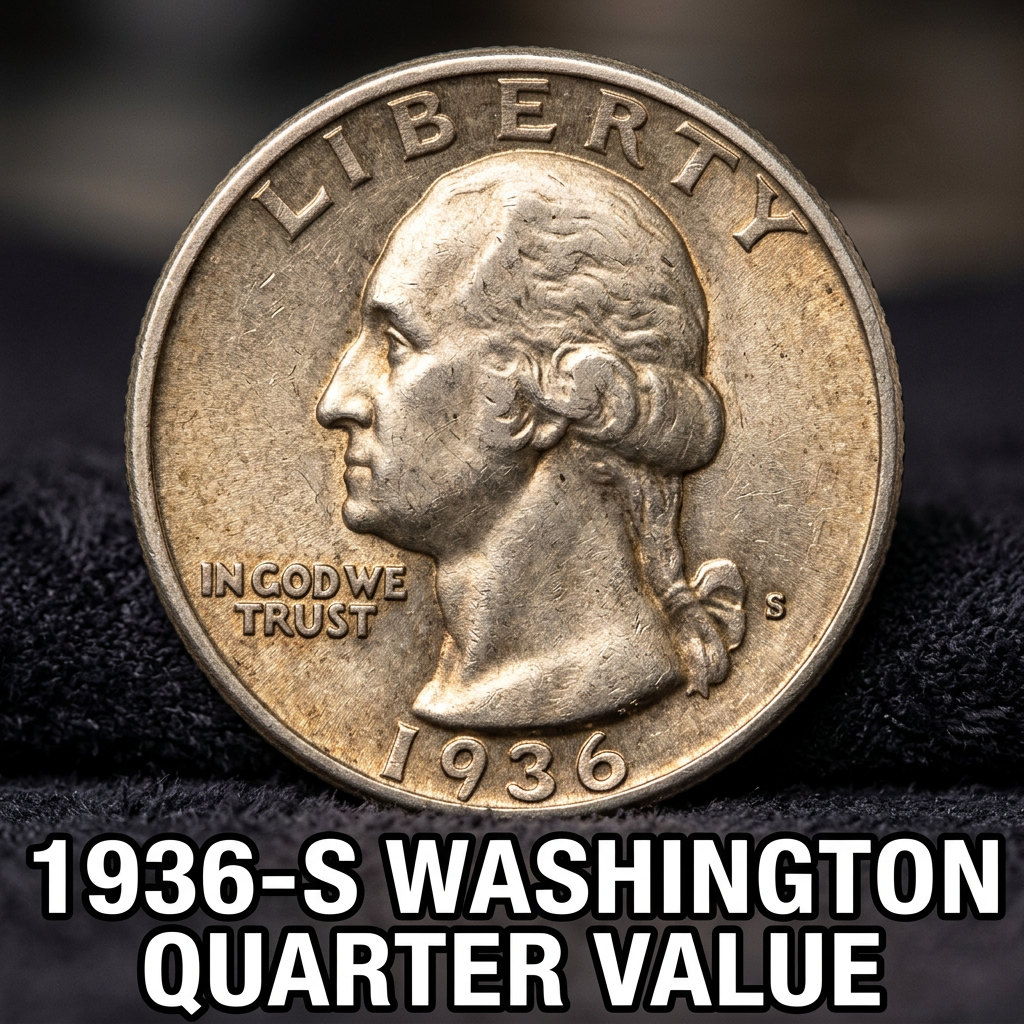

The 1936-S Washington Quarter is worth anywhere from $8 in heavily worn condition to well over $500 in high-grade mint state — and top-tier examples have sold for thousands at auction. If you found one of these coins in an old collection or tucked away in a drawer, you may be sitting on something genuinely valuable.
What Makes the 1936-S Washington Quarter Special
The 1936-S Washington Quarter was struck at the San Francisco Mint, identified by the small “S” mintmark on the reverse, just below the eagle. This was only the second year of production for the Washington Quarter series, which began in 1932 to honor the 200th anniversary of George Washington’s birth.
San Francisco produced 3,828,000 quarters that year — a relatively modest mintage compared to the Philadelphia issue. Lower mintages generally mean fewer surviving examples, especially in high grades, which is part of why collectors are willing to pay a premium for this coin.
The coin was designed by sculptor John Flanagan and features Washington’s portrait on the obverse and a heraldic eagle on the reverse. It’s struck in 90% silver, giving it an intrinsic metal value even in worn condition.
If you’ve got one of these and you’re not sure what you’re looking at, a free coin identifier app can help you confirm the date, mintmark, and grade before you make any decisions about selling or keeping it.
How Much Is the 1936-S Washington Quarter Worth?
Value depends heavily on condition. Coin collectors use a grading scale from 1 (barely identifiable) to 70 (perfect). For everyday people, the simplest way to think about it is: circulated (worn), lightly circulated, and mint state (uncirculated).
Here’s a quick breakdown of estimated values:
| Grade / Condition | Description | Estimated Value |
|---|---|---|
| Good (G-4) | Heavy wear, design visible | $8 – $12 |
| Very Fine (VF-20) | Moderate wear, details clear | $20 – $35 |
| Extremely Fine (EF-40) | Light wear on high points | $40 – $65 |
| About Uncirculated (AU-55) | Slight wear, much luster | $75 – $130 |
| Mint State (MS-63) | Uncirculated, minor marks | $175 – $350 |
| Gem Mint State (MS-65+) | Exceptional luster, sharp strike | $500 – $2,000+ |
For a deeper look at certified auction results and current 1936-S Washington Quarter price data across mint state grades, it’s worth checking recent sales on professional grading platforms.
Understanding Coin Grades Without Being an Expert
Most people who find old quarters aren’t professional numismatists, and that’s totally fine. Here’s a quick real-world tip: if Washington’s hairline details above his ear are still visible and the lettering is sharp, you likely have a coin in VF or better condition.
Look at the reverse too. If the eagle’s feathers and the lines in the shield are well-defined, that’s a good sign.
One of the easiest ways to get a fast read on your coin is to use CoinKnow, a mobile app designed for exactly this situation. Just snap a photo and it uses AI to identify the coin and give you a grade estimate. It won’t replace professional grading, but it gives you a solid starting point before you spend money on a professional appraisal.
Silver Value and Why It Matters
Even a heavily worn 1936-S Washington Quarter has real silver content. The coin is 90% silver and weighs 6.25 grams, giving it approximately 0.1808 troy ounces of pure silver.
With silver prices fluctuating around $28–$32 per troy ounce in recent times, the raw metal value (also called “melt value”) of this coin sits around $5–$6 at minimum. That means even the most beat-up examples aren’t worth less than that.
In practice though, collector demand keeps the price well above melt for most 1936-S quarters. It’s a coin that numismatists actively seek, so you’re rarely looking at melting it for silver profit.
Where to Sell and What to Expect
If you’re thinking about selling, knowing the actual 1936 Washington Quarter value based on current market trends will help you negotiate confidently. Don’t walk into a coin shop blind — dealers will offer wholesale prices, typically 50–70% of retail value.
Better options for maximizing your return include eBay (research completed listings, not asking prices), coin shows, and online auctions through platforms like Heritage Auctions or Stack’s Bowers. For high-grade examples, getting the coin certified by PCGS or NGC first will usually increase buyer confidence and final sale price significantly.
CoinKnow can also help you identify whether your coin is worth the cost of professional grading before you commit to the expense.
—
FAQ
Q: How do I know if my quarter is the 1936-S or another mint?
A: Flip the coin to the reverse and look below the eagle’s tail feathers. You’ll see either an “S” (San Francisco), “D” (Denver), or no mintmark at all (Philadelphia). The 1936-S has a small “S” in that location.
Q: Is the 1936-S Washington Quarter rare?
A: It’s not considered rare in circulated grades, but it does have a lower mintage than the Philadelphia issue. In high mint state grades (MS-65 and above), it becomes genuinely scarce and commands strong collector premiums.
Q: Should I clean my 1936-S quarter before selling it?
A: Absolutely not. Cleaning a coin — even gently — removes the natural patina and surface metal, which dramatically reduces its value to collectors. A naturally toned, uncleaned coin is always preferred. Leave it exactly as you found it and let a professional assess it first.