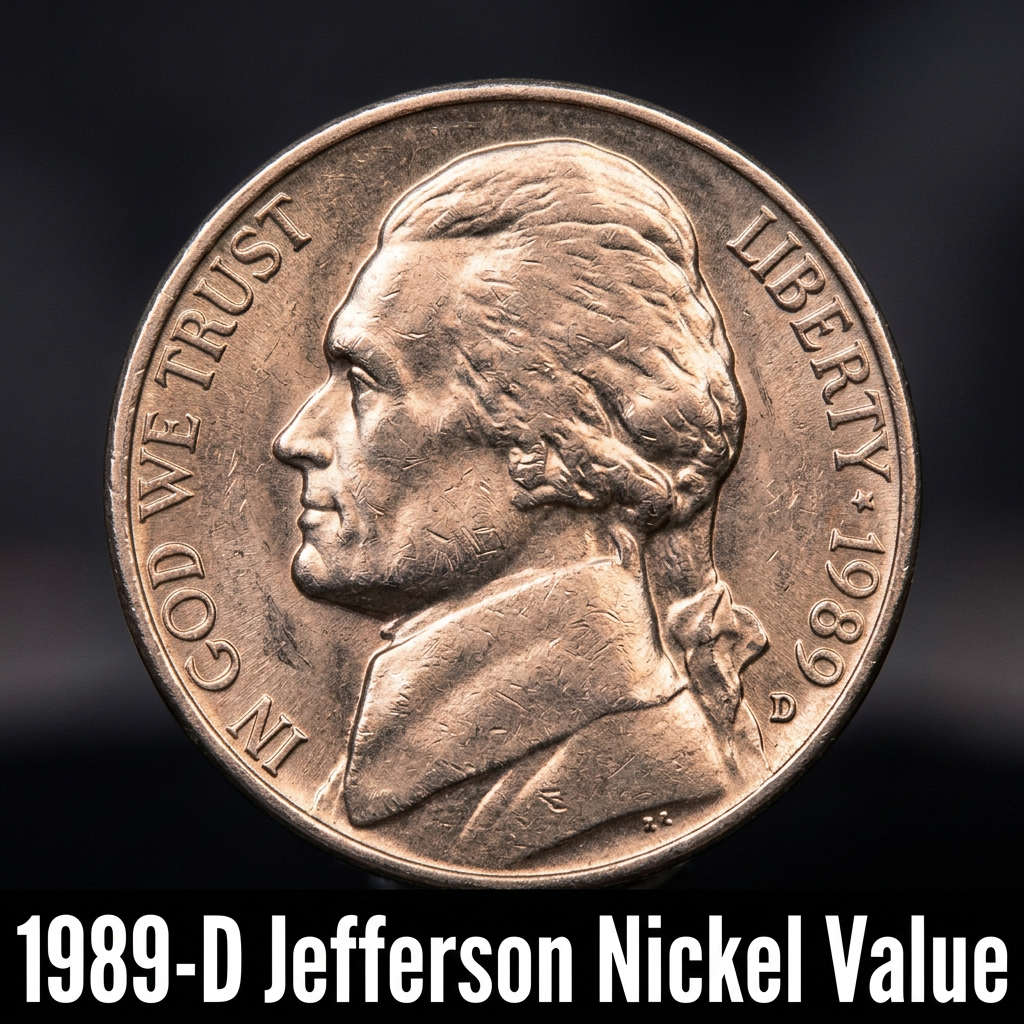

The 1989-D Jefferson Nickel is worth anywhere from face value (5 cents) in heavily worn condition to around $1–$5 in typical circulated grades, with top mint state examples fetching $15 to $30 or more depending on the grade and eye appeal. If you just found one of these in a coin jar or old collection, you’re in the right place — let’s break down exactly what it’s worth and why.
If you want a quick, reliable answer on any coin you’ve found, a free coin identifier app can scan your coin in seconds and give you an instant value estimate without needing to visit a coin dealer.
What Is the 1989-D Jefferson Nickel?
The 1989-D Jefferson Nickel was minted at the Denver Mint, which is indicated by the small “D” mintmark found on the obverse (front) of the coin, just to the right of the date. In 1989, the Denver Mint produced over 896 million nickels, making this a very common coin in circulation.
Because so many were made, most examples you’ll find in pocket change are worth exactly five cents. However, condition is everything in coin collecting. A nickel that has never been used — pulled straight from a mint roll and stored carefully — can still carry a small premium for collectors who want a perfect example for their sets.
The coin features Felix Schlag’s classic portrait of Thomas Jefferson on the front and Monticello (Jefferson’s Virginia home) on the reverse. This design ran from 1938 all the way to 2004, making the 1989-D just one piece of a long and popular series.
1989-D Jefferson Nickel Value by Grade
Coin values are largely driven by condition, which collectors measure using a standardized grade scale from 1 (barely identifiable) to 70 (perfect). Here’s a simple breakdown of what the 1989-D Jefferson Nickel is typically worth at different grades:
| Grade / Condition | Description | Estimated Value |
|---|---|---|
| Circulated (G–VF) | Worn from everyday use | Face value – $0.10 |
| Extremely Fine (EF-45) | Light wear on high points | $0.25 – $0.50 |
| Mint State (MS-63) | Uncirculated, some bag marks | $1 – $3 |
| Mint State (MS-65) | Gem uncirculated, strong luster | $5 – $12 |
| Mint State (MS-67) | Superb gem, virtually flawless | $20 – $35+ |
For the most up-to-date market figures, you can check recent 1989 Jefferson Nickel auction prices and graded sale records to see what buyers are actually paying right now.
Are Any 1989-D Nickels Worth More Than Face Value?
For most people, a worn 1989-D nickel from their change jar isn’t going to pay the bills. But there are a few situations where one of these common coins can surprise you.
Full Steps (FS) designations are where things get interesting. On Jefferson Nickels, the steps of Monticello on the reverse must be sharply struck and fully visible to earn this special designation from grading services like PCGS or NGC. A 1989-D Jefferson Nickel graded MS-66 Full Steps can be worth $50 to $100 or more — a dramatic jump from a regular example at the same grade.
Error coins are another thing to watch for. Doubled die errors, off-center strikes, or coins struck on the wrong planchet can all add significant value. These are rare, but they do exist — and that’s exactly the kind of thing a sharp-eyed collector (or a coin app) can help you spot.
CoinKnow is a great tool for situations like this. It can help you identify whether your coin has any of these valuable varieties just by analyzing a photo, saving you a trip to a coin dealer.
How to Tell If Your 1989-D Nickel Is Worth Grading
Before spending $30–$50 on professional grading services, it’s worth doing a quick self-assessment. Hold your coin under a good light and look at Monticello’s steps — if you can count five or six clean, uninterrupted steps, that’s a promising sign.
Also check the coin’s luster. Mint state coins should have a soft, flowing shine across the entire surface. If it looks dull, scratched, or cleaned, the value drops sharply. Cleaning a coin — even with good intentions — is one of the most damaging things you can do to its collectible value.
You can also get a quick baseline using detailed 1989 nickel value information by grade and variety before deciding if professional grading makes financial sense for your specific coin.
CoinKnow can walk you through this process step by step — it’s designed specifically for everyday people who find old coins and want real answers without the jargon.
1989-D Jefferson Nickel vs. Other Years
Compared to rare key dates like the 1950-D (low mintage, highly sought after) or wartime silver nickels from 1942–1945, the 1989-D is not a key date. It’s a common-date coin. But “common” doesn’t mean worthless — it just means you’ll need a high-grade or Full Steps example to stand out in the market.
Collectors building complete Jefferson Nickel sets by date and mint still need a solid 1989-D, and a gem Full Steps example in a PCGS or NGC holder is genuinely hard to find. That’s the sweet spot for this coin.
FAQ
Q: Is the 1989-D Jefferson Nickel made of silver?
A: No. The 1989-D Jefferson Nickel is composed of 75% copper and 25% nickel. Silver Jefferson Nickels were only made from 1942 to 1945 as a wartime measure, and they carry a large mintmark above Monticello on the reverse to distinguish them.
Q: How do I know if my 1989-D nickel has Full Steps?
A: Look at the reverse and examine the staircase at the base of Monticello. If you can see five or six clearly defined, unbroken horizontal lines (steps), your coin may qualify for a Full Steps designation. A loupe or magnifying glass helps, and apps like CoinKnow can assist with identifying strong strike details from a photo.
Q: Should I clean my 1989-D nickel before selling it?
A: Absolutely not. Cleaning a coin removes its original surface and luster, which dramatically lowers its value to collectors. Even a coin that looks dirty or dull is better left alone — professional buyers and grading services can always tell when a coin has been cleaned, and it will be noted as a problem coin that sells for far less.