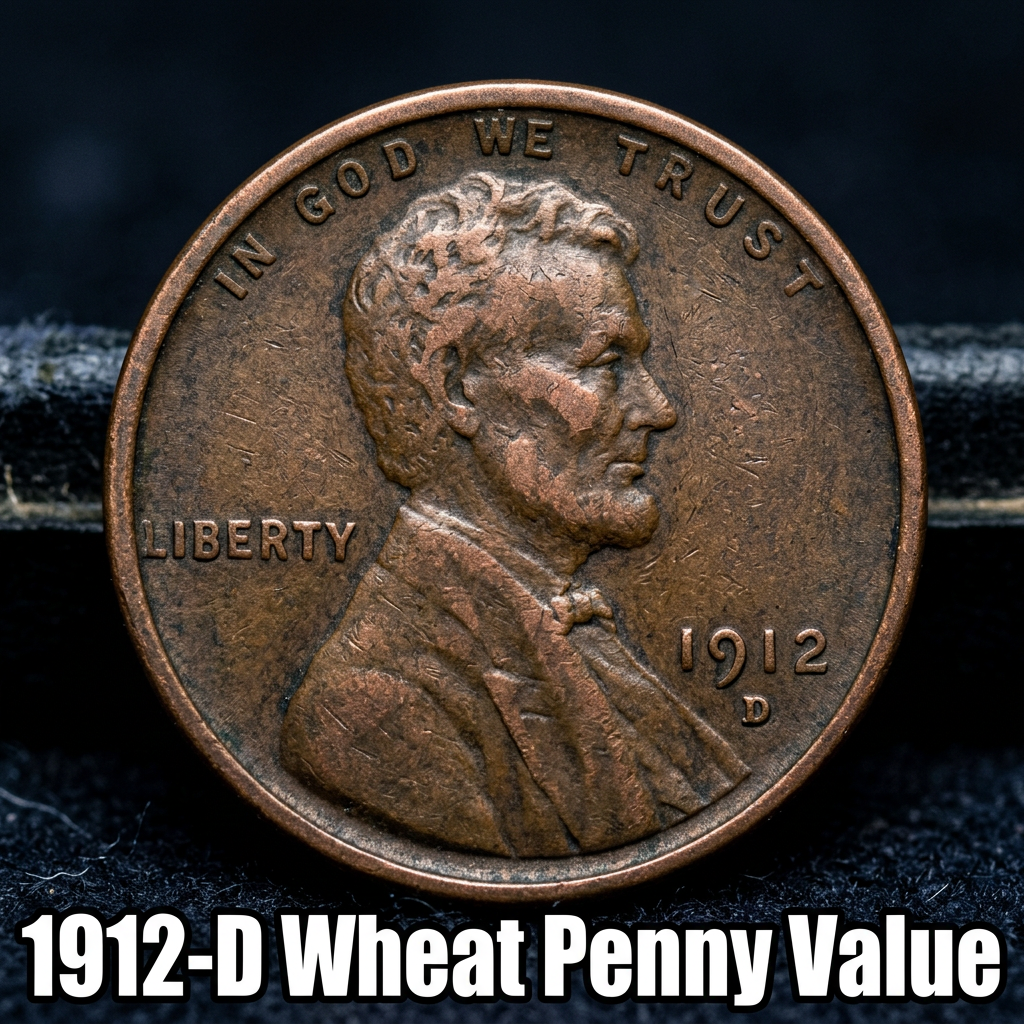

The 1912-D Wheat Penny is worth anywhere from $2 in heavily worn condition to over $100 or more in well-preserved mint state — and if you’ve got one sitting in a coin jar or old collection, it’s definitely worth a closer look. This little Denver-minted cent has been charming collectors for over a century, and today it’s one of the more sought-after early Lincoln Wheat pennies from the pre-World War I era.
What Makes the 1912-D Wheat Penny Special?
The 1912-D Wheat Penny was struck at the Denver Mint, which you can identify by the small “D” mintmark located on the obverse (front) of the coin, just below the date. Denver didn’t produce nearly as many pennies as the Philadelphia Mint that year — only about 10.4 million were made, compared to Philadelphia’s 68.1 million.
That lower mintage makes the “D” version noticeably scarcer, which is exactly why collectors are willing to pay more for it than the common Philadelphia issue.
If you’ve recently dug one of these out of an old drawer or coin roll and you’re wondering what you’ve got, you’re not alone. Thousands of everyday Americans discover old coins like this every year. A great starting point is using a free coin identifier app right on your phone — it can help you confirm what you’re holding before you go any further.
How Much Is the 1912-D Wheat Penny Worth by Grade?
Coin value depends heavily on condition, which collectors call “grade.” A coin that’s been in circulation for decades will show lots of wear — flattened details, scratches, maybe some discoloration. A coin that was saved early and kept in good condition can look almost as fresh as the day it was minted.
Here’s a general breakdown of 1912-D Wheat Penny values by grade:
| Grade / Condition | Description | Estimated Value |
|---|---|---|
| Good (G-4) | Heavy wear, main details visible | $2 – $4 |
| Fine (F-12) | Moderate wear, lettering clear | $8 – $15 |
| Extremely Fine (EF-40) | Light wear on high points only | $25 – $45 |
| About Uncirculated (AU-55) | Slight wear, nearly full luster | $50 – $75 |
| Mint State Red (MS-63 RD) | Uncirculated, original red color | $100 – $175+ |
| Gem Mint State (MS-65 RD) | Exceptional eye appeal, full red | $300 – $500+ |
For a deeper look at 1912-D Wheat Penny price data across mint state grades, including how red versus brown designation affects auction results, numismatic pricing resources can be a big help.
How to Check the Condition of Your 1912-D Penny
Grading a coin at home takes a bit of practice, but here’s a simple way to get started. Hold the coin under a single light source and tilt it slowly. On a well-preserved coin, you’ll see luster — a soft, flowing shine across the surface. On a circulated coin, the high points (like Lincoln’s cheekbone and beard) will look flat or dull.
Look at the wheat stalks on the reverse too. If you can see the individual lines running through each stalk, the coin is in better shape.
Don’t clean your coin. Even gentle rubbing can destroy microscopic surface detail and dramatically reduce its value to collectors. A “cleaned” coin is always worth less than a naturally worn one.
The CoinKnow app is a handy tool for getting a quick grade estimate at home — just snap a photo and let it analyze the coin’s surface details for you.
What Factors Push the 1912-D Penny Value Higher?
Beyond the basic grade, a few other things can bump up what your 1912-D Wheat Penny is worth. Original red color is the big one — copper coins start out red-orange and slowly turn brown over time. A coin that still has most of its original red color (called “RD” by graders) is much rarer and more desirable than a brown example of the same grade.
Error coins can also command a premium. While major errors on this date are uncommon, doubled dies or off-center strikes occasionally turn up and can be worth multiples of the standard value.
Provenance — meaning the coin’s history and where it came from — can matter too, especially if it came from a famous collection.
If you want a full breakdown of what the 1912 penny is worth across all mint marks and grades, a dedicated coin value reference is your best bet. And for ongoing coin identification and valuation on the go, CoinKnow has become one of the most popular tools among casual collectors and first-time finders alike.
Should You Get Your 1912-D Wheat Penny Graded?
If your coin looks like it’s in extremely fine condition or better — meaning the details are crisp, the surfaces are clean, and there’s some original luster — it may be worth submitting to a professional grading service like PCGS or NGC. Certified coins sell for more and give buyers confidence.
For coins in lower circulated grades, professional grading usually isn’t worth the cost. In that case, you can confidently use CoinKnow to estimate value, learn more about the coin’s history, and decide whether to sell, keep, or add it to a collection.
Either way, the 1912-D Wheat Penny is a genuine piece of American history — minted just a couple of years after Abraham Lincoln’s portrait first appeared on U.S. coinage.
—
FAQ
Q: How do I know if my penny is the 1912-D and not a different mint mark?
A: Look just below the date on the front of the coin. If you see a small “D,” it was minted in Denver. An “S” means San Francisco, and no letter means Philadelphia. A magnifying glass or loupe makes this much easier to read.
Q: Is a 1912-D Wheat Penny worth cleaning up before selling?
A: No — please don’t clean it. Even a light polish removes the coin’s original surface and significantly lowers its collector value. Buyers and grading services can tell when a coin has been cleaned, and they will discount the price accordingly.
Q: Where’s the best place to sell a 1912-D Wheat Penny?
A: eBay is a common option for lower-grade examples, while coin shows and local dealers work well for mid-range coins. For higher-grade or certified specimens, major auction houses like Heritage Auctions or Stack’s Bowers will reach the most serious buyers and often yield better results.