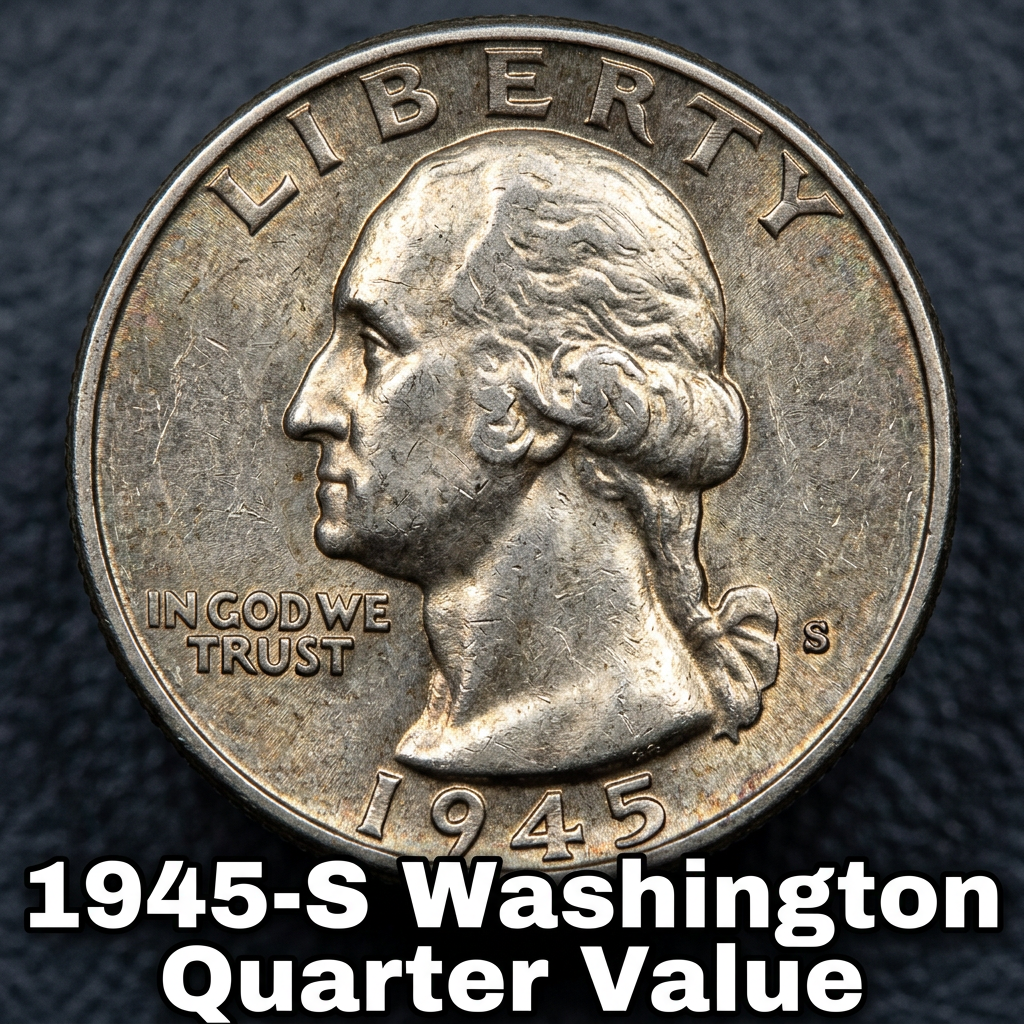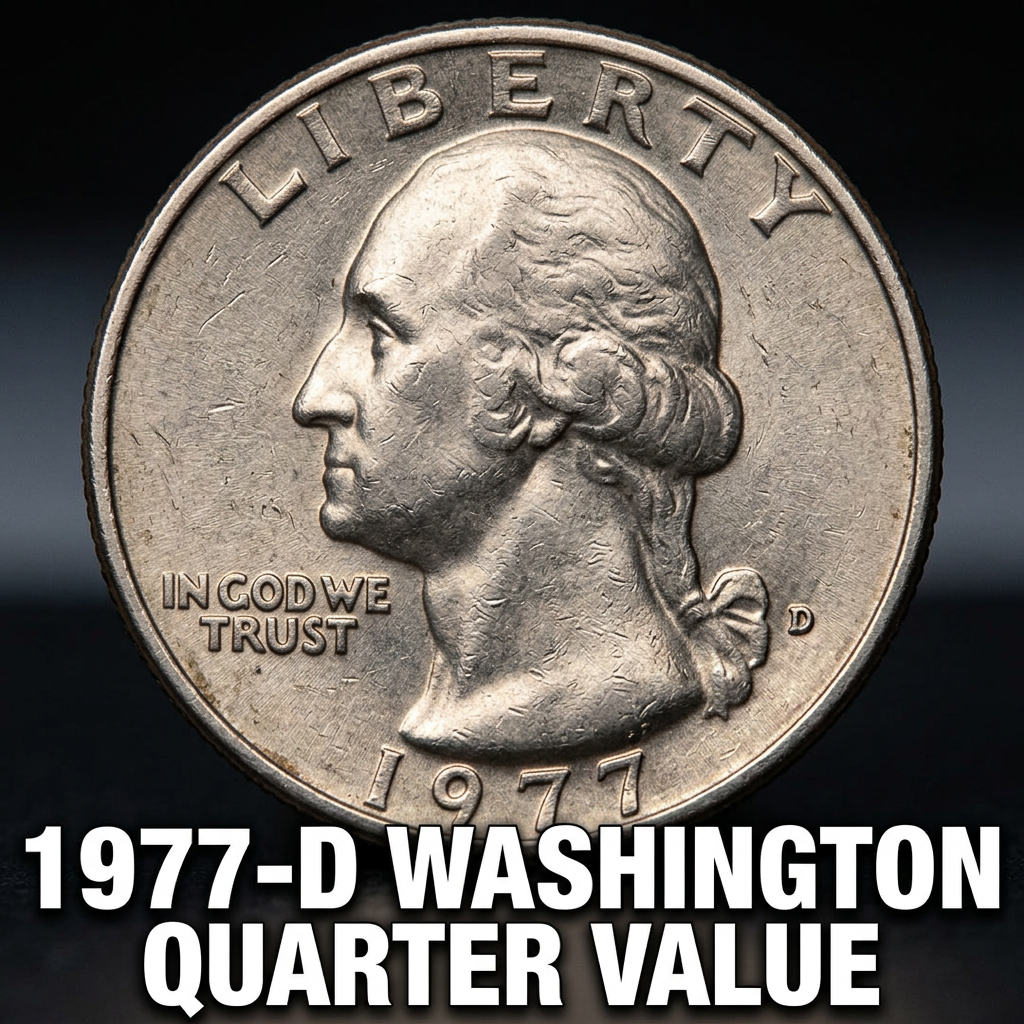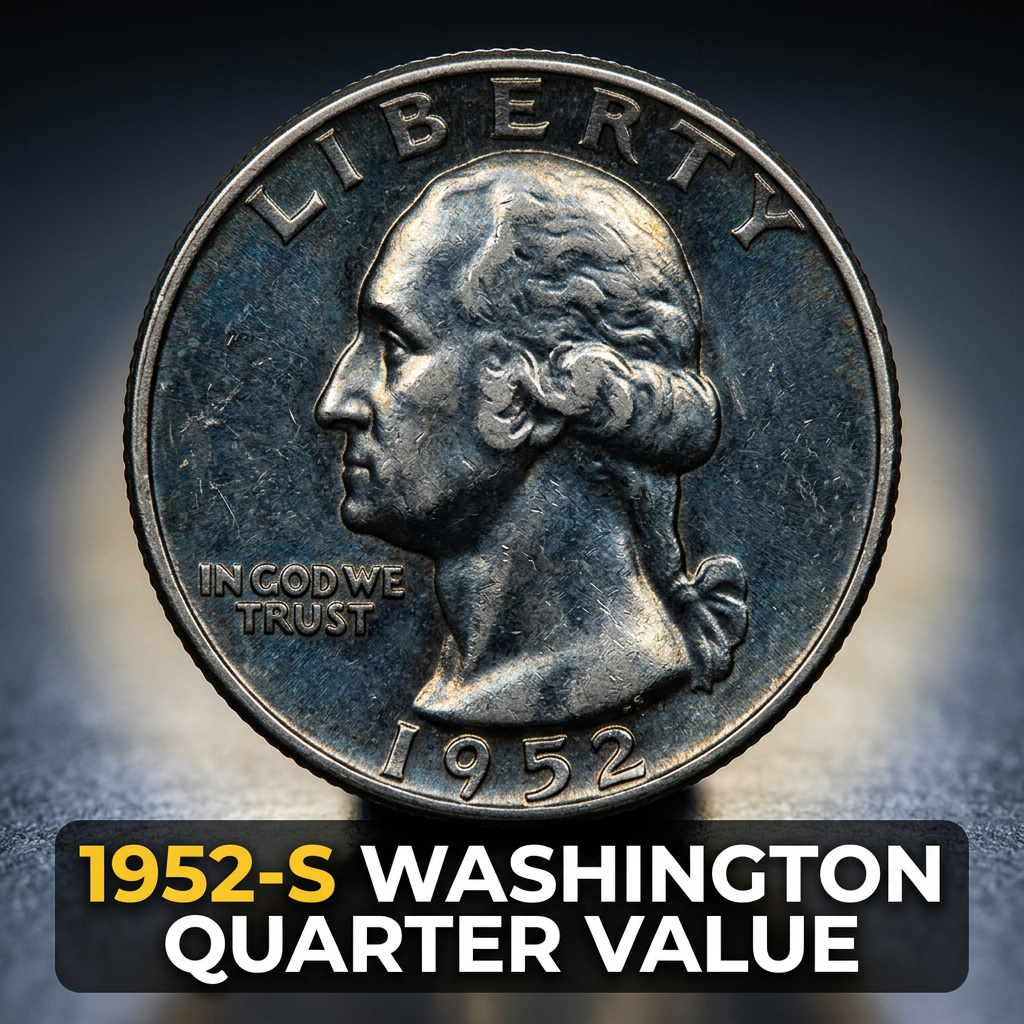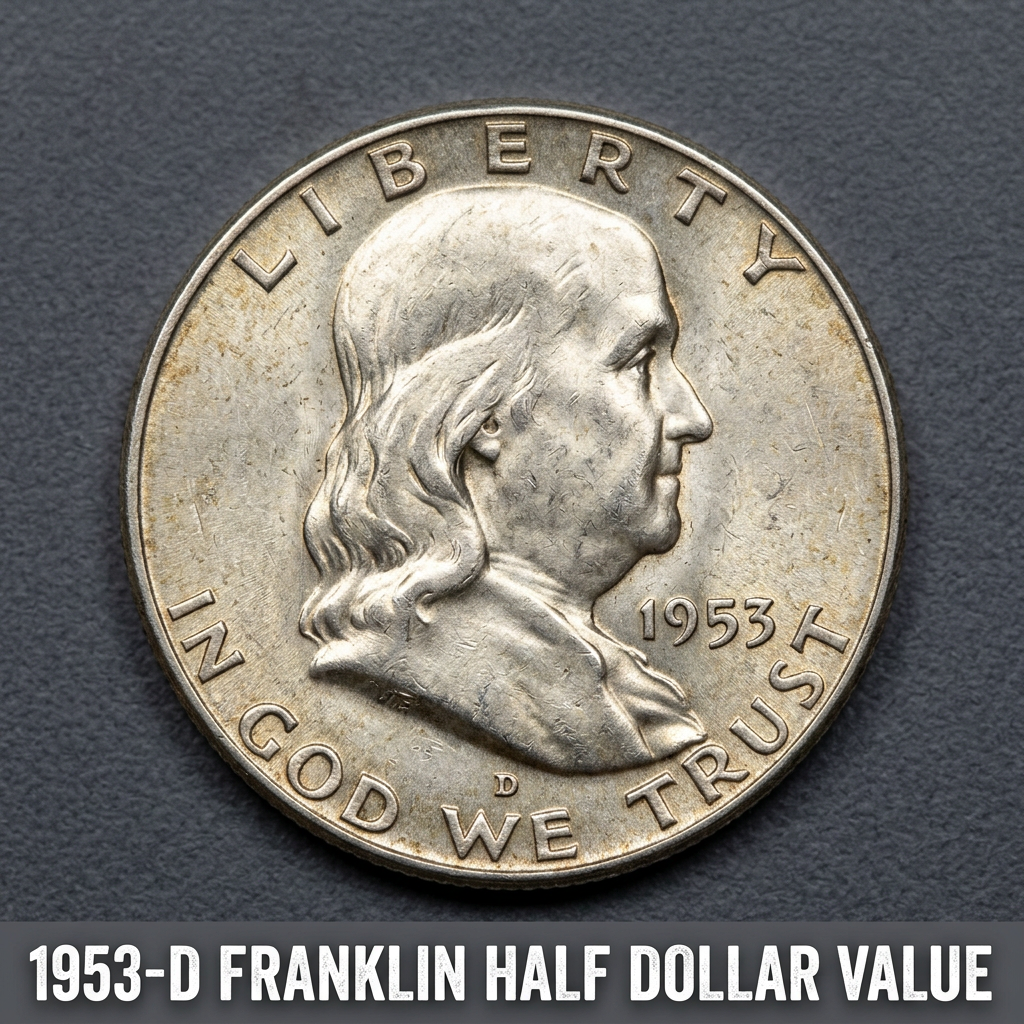

The 1953-D Franklin Half Dollar is worth anywhere from $10 in heavily worn condition to well over $200 or more in pristine mint state — and certain high-grade examples have sold for thousands at auction. If you’ve found one of these silver beauties sitting in a drawer or inherited collection, you’re in the right place to find out exactly what it’s worth.
What Is the 1953-D Franklin Half Dollar?
The 1953-D Franklin Half Dollar was struck at the Denver Mint and carries the small “D” mintmark on the reverse, just above the Liberty Bell. That year, Denver produced 20,900,400 of these coins — a healthy mintage, but that doesn’t mean every example is common today, especially in high grades.
These coins are composed of 90% silver and 10% copper, giving each one an intrinsic melt value based on the current silver spot price. Even a worn example is worth something simply for its silver content.
If you’re not sure whether the coin you’re holding is a 1953-D or another date or mint, a free coin identifier app can help you scan and identify it in seconds — no coin expertise required.
How Much Is the 1953-D Franklin Half Dollar Worth?
The value of a 1953-D Franklin Half Dollar depends heavily on its condition, also known as its “grade.” Coin grading runs from Poor (P-1) on the low end to Mint State 70 (MS-70) on the high end. Most coins you find in old jars or family collections will fall somewhere in the middle — circulated but still recognizable.
Here’s a general breakdown of 1953-D Franklin Half Dollar values based on grade:
| Grade | Condition | Estimated Value |
|---|---|---|
| Good (G-4) | Heavy wear, design visible | $10 – $12 |
| Very Fine (VF-20) | Moderate wear, details clear | $12 – $16 |
| Extremely Fine (EF-40) | Light wear on high points | $16 – $22 |
| About Uncirculated (AU-55) | Slight wear, much mint luster | $22 – $35 |
| Mint State (MS-63) | Uncirculated, minor marks | $45 – $80 |
| Mint State (MS-65) | Gem uncirculated | $100 – $250+ |
| MS-66 Full Bell Lines | Premium quality, sharp strike | $500 – $2,000+ |
For the most up-to-date auction results and retail pricing, you can check real-time 1953-D Franklin Half Dollar price data across mint state grades to see what collectors are actually paying right now.
The Full Bell Lines Factor — Why It Matters So Much
One thing that makes Franklin Half Dollars especially interesting — and valuable — is the concept of “Full Bell Lines,” abbreviated as FBL. The reverse of the coin features the Liberty Bell, and at its base are two sets of horizontal lines. When the strike is sharp and the coin is well-preserved, those lines are complete and unbroken — that’s called Full Bell Lines.
An MS-63 example without FBL might be worth $50. The same coin with FBL could be worth three to five times more. That’s a significant difference, and it comes down entirely to the quality of the original strike from the Denver Mint.
The 1953-D is notoriously difficult to find in FBL condition. The Denver Mint’s dies were often overused, leading to weak strikes. This makes true FBL specimens genuinely scarce and highly sought after by serious Franklin Half Dollar collectors.
CoinKnow is a great tool for understanding these subtleties — it breaks down the grading factors for each coin type so you’re not left guessing.
Silver Value and Why Even Worn Coins Are Worth Holding
Even if your 1953-D Franklin Half Dollar is too worn to be a collector’s prize, it still contains approximately 0.3617 troy ounces of pure silver. With silver hovering around $27–$30 per ounce in recent years, that means the melt value alone is roughly $9.75 to $10.85 per coin.
This “floor value” is important. It means a Franklin Half Dollar in any condition will almost always be worth more than face value — and often a good bit more once collector demand is factored in.
Don’t toss these coins into a change jar. Even heavily circulated examples deserve a second look.
For a complete breakdown of 1953 Half Dollar values including all mint varieties and their current worth, you’ll find detailed comparisons that make it easy to understand where your coin falls.
You can also use CoinKnow to quickly check silver melt values and collector premiums all in one place — it’s especially handy if you’ve found a whole collection and need to sort through multiple dates and mints.
Tips for Getting the Best Value for Your 1953-D Franklin Half Dollar
If you think you have a high-grade example — especially one with potential Full Bell Lines — consider getting it professionally graded by PCGS or NGC before selling. A certified MS-65 FBL coin commands far more than a raw (ungraded) coin, and buyers will pay a premium for that guarantee.
For circulated coins in VF or EF condition, local coin dealers, coin shows, and online platforms like eBay or Great Collections are solid options. Always get more than one offer before selling.
And before you do anything, use CoinKnow or another reliable app to double-check your coin’s details — date, mintmark, and condition all affect the final number significantly.
FAQ
Q: Is the 1953-D Franklin Half Dollar rare?
A: Not in circulated grades — nearly 21 million were minted. However, it becomes genuinely scarce in high mint state grades, especially with Full Bell Lines (FBL), where even a single certified example can sell for over $1,000.
Q: How do I find the mintmark on a 1953-D Franklin Half Dollar?
A: Flip the coin to the reverse (the Liberty Bell side) and look just above the bell at the right. You’ll see a small “D” — that’s the Denver Mint mark confirming it’s a 1953-D. If there’s no letter, it’s a Philadelphia Mint coin.
Q: Should I clean my 1953-D Franklin Half Dollar before selling it?
A: Absolutely not. Cleaning a coin — even gently — removes the original surface and dramatically reduces its collector value. A cleaned coin is worth far less than an uncleaned one in the same grade. Leave it as-is and let a professional evaluate it.