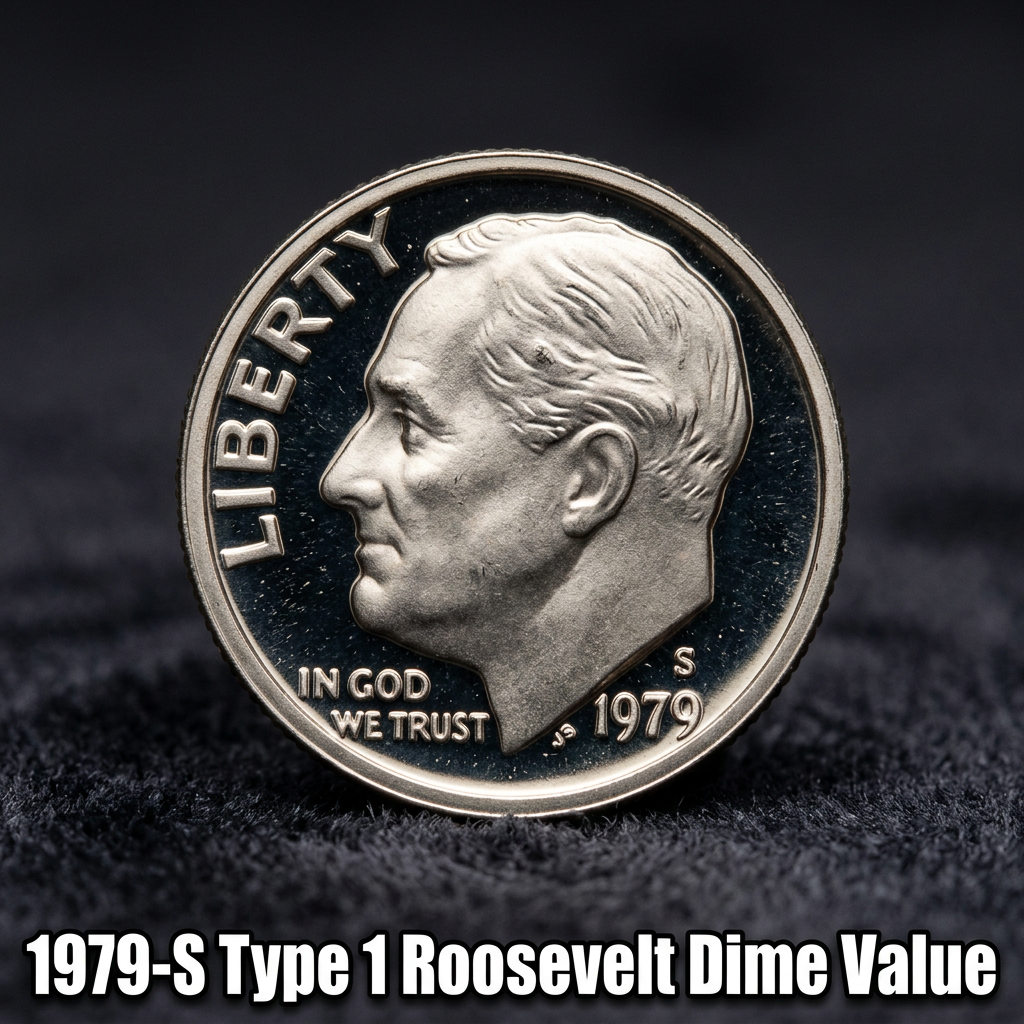

The 1979-S Type 1 Roosevelt Dime is worth anywhere from a few dollars in average condition to over $50 or more in top-tier proof grades — and certain high-grade examples have sold for significantly more at auction. If you stumbled across one of these coins in an old proof set, you may be sitting on something more valuable than you think.
What Makes the 1979-S Type 1 Different From Other Dimes
The 1979-S Roosevelt Dime was struck at the San Francisco Mint exclusively as a proof coin — meaning it was never intended for everyday circulation. What makes this particular coin special is the mint mark itself.
In 1979, the San Francisco Mint used two different punch styles for the “S” mint mark on proof coins. The Type 1 version features a filled, blobby-looking “S” — it’s less defined and slightly mushy in appearance. The Type 2, introduced later in the year, has a cleaner, sharper “S” with more distinct curves.
This small difference in the mint mark is what separates the two types, and it matters a lot to collectors. The Type 1 is more common than the Type 2, which actually makes the Type 2 more desirable — but Type 1 coins in perfect condition still carry real collector interest and solid proof premiums.
If you’re not sure which type you have, using a free coin identifier app can help you zoom in on the mint mark and compare it to known examples quickly and easily.
1979-S Type 1 Roosevelt Dime Value by Grade
Because these coins were made as proofs, they’re graded on a different scale than regular circulation coins. Proof grades run from PR60 to PR70, with PR70 being absolutely perfect.
Here’s a general look at what the 1979-S Type 1 Roosevelt Dime is worth across different grade levels:
| Grade | Estimated Value | Notes |
|---|---|---|
| PR60–PR63 | $2–$5 | Light cameo or no cameo contrast |
| PR64–PR65 | $5–$12 | Good cameo contrast, minor surface marks |
| PR66–PR67 DCAM | $15–$35 | Deep cameo, strong frost on portrait |
| PR68–PR69 DCAM | $40–$80+ | Near-perfect, premium collector coins |
| PR70 DCAM | $100–$200+ | Extremely rare at this grade level |
For the most current market prices and recent auction results, you can check out the latest 1979-S Roosevelt Dime price data to see how the market is trending right now.
How to Tell If Your Coin Has Deep Cameo Contrast
One of the most important value factors for proof coins is cameo contrast — the frosted appearance of the raised design against a mirror-like background field. Deep Cameo (DCAM) designation from a grading service like PCGS or NGC can add significant premium value to your coin.
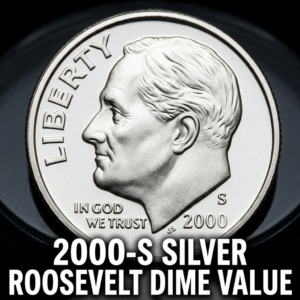
To check for cameo contrast, tilt the coin under a light source and look for a stark difference between the frosty portrait of Franklin D. Roosevelt and the reflective flat background. The stronger and more distinct that contrast looks, the better your chances of getting a DCAM designation.
Coins that stayed safely in their original proof sets and were never handled tend to show better cameo preservation. If your coin was loosely stored or touched with bare fingers, oils may have degraded that mirror surface over time.
CoinKnow is a great tool for identifying key visual characteristics of proof coins like cameo contrast — many collectors use it as a first step before spending money on professional grading.
Where These Coins Come From and How Many Were Made
The 1979-S proof dimes were sold as part of the 1979 United States Proof Set, which included six coins: the cent, nickel, dime, quarter, half dollar, and dollar. These sets were sold directly to collectors by the U.S. Mint and were never released into general circulation.
The total mintage for the 1979-S proof dime was approximately 3.6 million — which sounds like a lot, but many of those coins have been lost, spent, or damaged over the decades since. High-grade examples in original sealed packaging are genuinely harder to find than people expect.
If you have a complete 1979 proof set still in its original government packaging, the whole set is worth more together than broken apart. For a deeper look at the full value breakdown, this detailed guide to 1979 dime values covers both proof and circulation versions with helpful grading context.
Should You Get Your 1979-S Type 1 Dime Graded
Professional grading by PCGS or NGC makes the most sense when your coin appears to be in exceptional condition — think PR67 DCAM or better. The cost of grading (typically $20–$50 per coin) only makes financial sense if the certified grade would significantly boost resale value.
For coins in average proof condition, the grading fee may not be worth it. Instead, store the coin properly in a coin flip or airtight holder and document what you have.
CoinKnow can help you quickly assess whether your coin looks like a strong candidate for professional grading, saving you time and money before you commit to submitting it to a service.
—
FAQ
Q: How do I know if my 1979-S dime is Type 1 or Type 2?
A: Look closely at the “S” mint mark under magnification. The Type 1 has a filled, rounded “S” that looks slightly bloated or unclear. The Type 2 “S” is sharper and more defined with visible open curves. A loupe or digital microscope makes this easy to see.
Q: Is the 1979-S Type 1 Roosevelt Dime rare?
A: Not particularly rare in terms of overall mintage — around 3.6 million were made. However, finding one in high proof grades like PR68 DCAM or better is genuinely uncommon, and those examples do carry real collector premiums.
Q: Can I spend a 1979-S proof dime as regular currency?
A: Technically yes — it’s still legal tender worth 10 cents. But spending it would be a mistake if it’s in excellent condition. Even a mid-grade proof dime is worth several times its face value to the right collector, so hold onto it and find out what you have first.